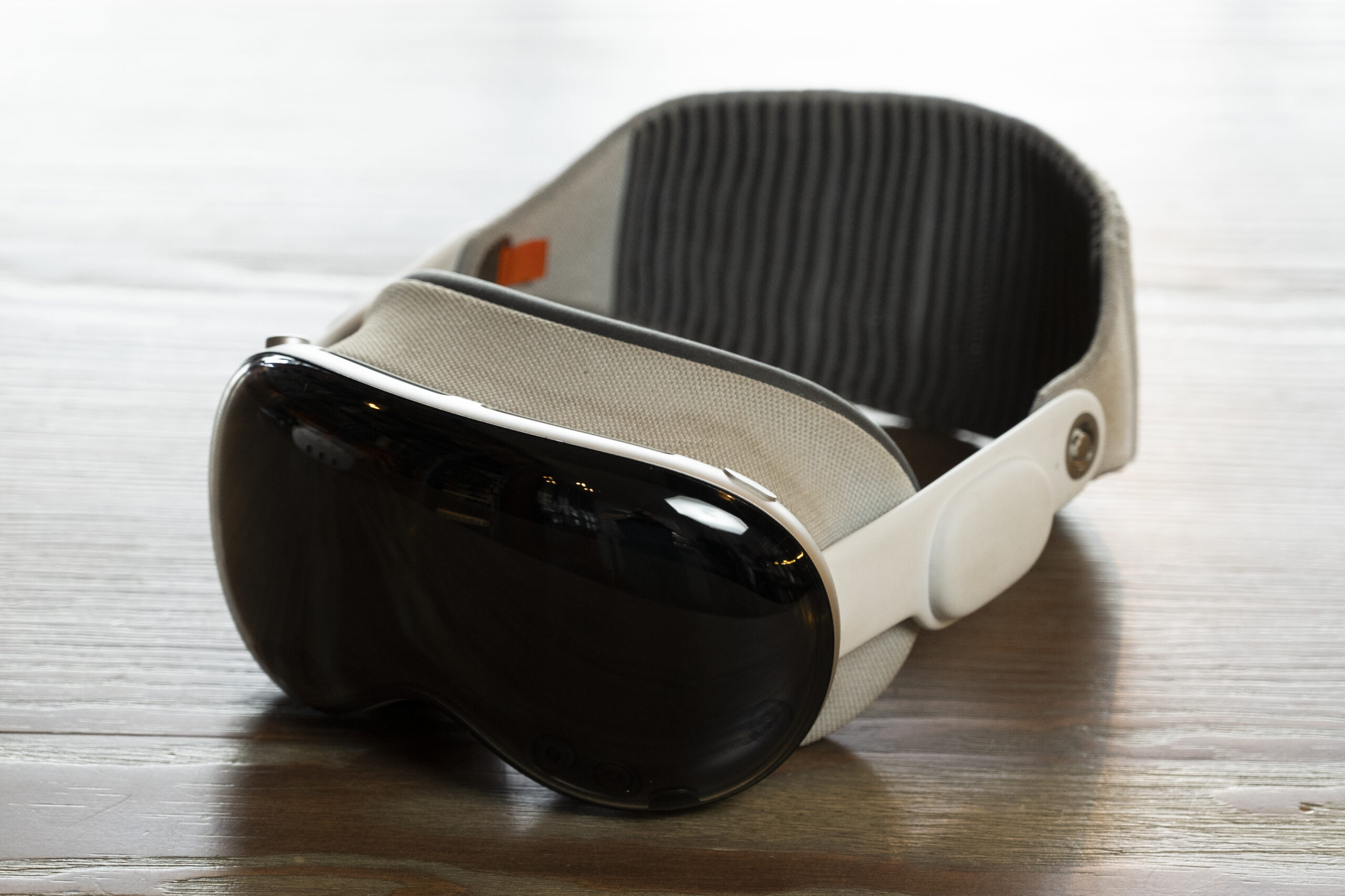
Gurman’s September update: the August Vision Products Group cuts reached security, audio, Siri integration, testing, and visionOS—not just gaming and immersive video. The headset and OS stay. Mass-market headsets do not look like Ternus’s priority.
On September 1, MacRumors and AppleWorld.today reported a sharper read of Bloomberg’s Mark Gurman: Apple’s Vision Pro layoffs were broader than the August account suggested. The earlier story already put about 100 cuts inside the Vision Products Group and another ~100 across Siri and related software. The new reporting says those Vision-linked reductions also hit device security, audio engineering, Siri integration, testing, and visionOS staff outside the headline gaming and immersive-video units.
That matters for XR because visionOS is not a headset-only stack. Gurman’s sources say the same OS line is expected to underpin Apple’s smart glasses. Softening the shared software bench is not the same as killing the platform—but it is not a signal that Apple is doubling down on enclosed spatial computing either.
What August already established
MacRumors’ August 21 recap of Gurman laid out the first cut: Apple was “largely shutting down” the Vision Pro gaming team and paring the group that produces immersive video. Immersive shoots that can cost millions were described as a poor fit for a device with thin active use. Apple’s plan, per that reporting, was fewer in-house videos and more reliance on third-party 3D content.
Engadget’s August coverage put the combined Vision-plus-Siri software impact above 200 roles. Apple’s on-record line, carried across outlets, was careful and familiar:
“While we will create new roles as part of this change, it will also impact a limited number of existing roles. We are grateful to these team members for their contributions, and we are committed to supporting them throughout their transition, including opportunities to apply for other roles at Apple.”
Employees were also told Vision Pro and visionOS were not being eliminated. That assurance is still part of the September update. The product line is being narrowed and restaffed, not formally cancelled.
Ternus, Meade, and a category on probation
The September MacRumors piece adds the executive texture. Paul Meade, who ran Vision Pro and smart glasses work, left Apple for OpenAI in June. Inside the Vision organization, people have spent months lobbying new CEO John Ternus to keep investing even as sales lag. Colleagues who have spoken with Ternus about the headset, Gurman reports, say he was skeptical from the start—too bulky, too expensive for a mass audience.
That skepticism is the through-line. Ternus is still said to support the smart glasses project, code-named N50 and aimed at next year. He is also described as willing to walk away from head-worn devices as a category if they never catch on. AppleWorld’s write-up of the same Gurman reporting frames that stance against earlier language that the category was “on ice.” The practical reading for the industry: glasses remain the near-term bet; the enclosed headset is tolerated, not championed.
Glasses in 2027. A real successor later—if at all
Two hardware tracks sit behind the staffing story:
- N50 smart glasses — still targeted for 2027, AI-forward, and not expected to carry the Vision Pro’s 3D gaming or immersive video ambitions.
- N224 — an overhauled Vision Pro successor, not expected before late 2028, and now sitting under a CEO who has already shown he can starve the category.
That split explains the gaming and immersive-video shutdowns as strategy, not only cost cutting. If the next consumer form factor Apple wants to sell is glasses without heavy 3D entertainment, those teams become optional. Shared visionOS work still matters for glasses—which is why the broader software and integration cuts in the September reporting are the more interesting part of the story for anyone shipping on Apple’s spatial stack.
What this means for XR right now
Apple is not exiting spatial computing in a press-release sense. visionOS continues, Vision Pro stays on price lists, and glasses remain on a public timeline. What changed in August and sharpened on September 1 is the internal weighting: fewer people making expensive immersive content, fewer people on headset gaming, and a wider soft cut across Vision-adjacent software roles while leadership’s appetite for bulky headsets looks limited.
For developers and studios, that is a clear demand signal. First-party Apple immersive video and gaming investment is shrinking. Third-party content and enterprise/productivity use cases are the residual case for the headset. The consumer narrative Apple wants next year is wearable AI glasses, not another attempt to make a $3,000-class visor mainstream.
None of this is Apple announcing a kill date. It is Apple behaving like a company that already decided where the next dollar of XR R&D goes—and it is not 3D cinema inside a sealed headset.
Sources: MacRumors (Sept. 1, 2026); AppleWorld.today; MacRumors (Aug. 21, 2026); Engadget. Primary reporting credited to Bloomberg’s Mark Gurman.