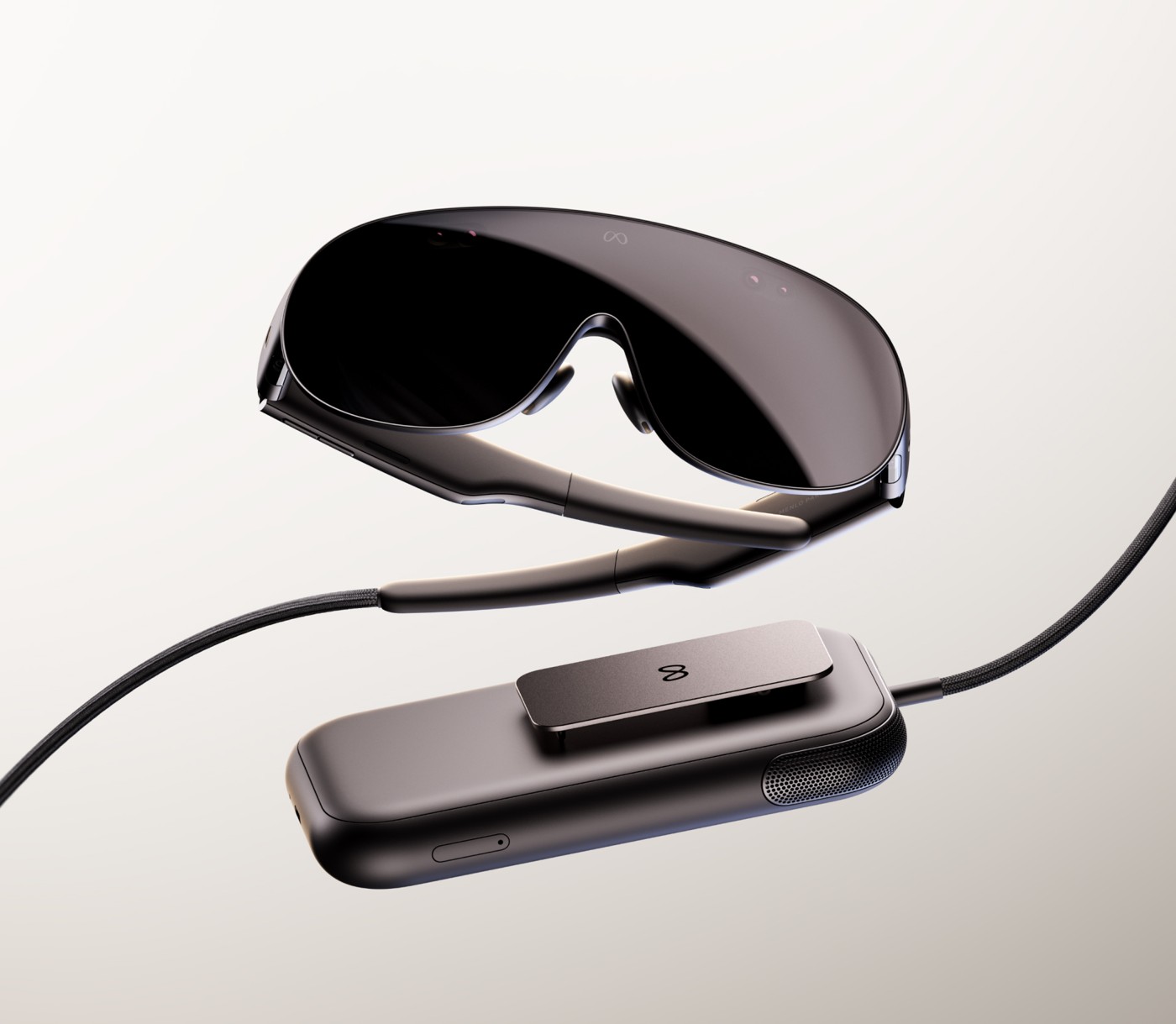
A FREE web tool now lets Quest 3 owners PREVIEW how MUCH of a scene Meta VR Glasses will SHOW before they spend $1,299.99 on a headset that does NOT ship until SPRING 2027. Duuro Plays’ Meta VR Glasses FOV Simulator runs in Meta Quest Browser, places a head-locked MASK over a 360-degree scene, and flips between Quest 3’s full view and Meta’s PUBLISHED 70° × 66° window with ONE press of the A button. Road to VR’s Scott Hayden pointed readers to it on October 5.
The tool answers a REAL question. But it simulates ONLY the most GENEROUS number Meta has published, and its own pages still contain OPTICAL claims that Road to VR has already called WRONG.
What the simulator does
Owners open duuro.net/fov in Quest Browser, tap Enter VR, and accept the standard WebXR prompt. Duuro’s guide, dated September 24, says the app is built with Three.js and custom shaders and offers FOUR 360-degree scenes, including a multitasking “lab” with floating windows and degree rings, a cinema room, a city skyline, and an alpine landscape. A PASSTHROUGH mode can lay the same mask over the real room.
Duuro is CANDID about the limits. The tool page says the demo “cannot reproduce the glasses’ actual optics, brightness, resolution, or open peripheral vision.” The guide adds that a Quest headset still BLOCKS the wearer’s natural periphery, so even the passthrough mode CANNOT recreate the OPEN sides of a glasses frame. The page also labels its “44% of Quest 3” figure, which multiplies horizontal by vertical degrees, as “a simple proxy, not a measured visible-area percentage.”
Meta’s 70 degrees is a CEILING, not an AVERAGE
The larger issue is WHICH number the mask uses. Meta’s developer page on Meta VR Glasses field of view and display values, updated September 25, calls 70° × 66° the NOMINAL straight-ahead field of view and TELLS developers to “treat this value as an upper bound.” It says eye-to-lens distance and GAZE direction can SHRINK the visible area, and it lists a SEPARATE “p90 perceived target” of 58° × 54°. As we reported on September 30, Meta does NOT define the POPULATION behind “p90.”
Duuro’s presets, as read on October 7, do NOT include that 58° × 54° target. The tool does have manual horizontal and vertical sliders, so a user could dial it in by HAND, but the DEFAULT Meta VR Glasses preset is the UPPER BOUND.
Meta also ships its OWN previews for developers. The metavr device fov-sim enable command in Meta VR CLI applies the 70° × 66° CROP at the DEVICE level on a developer-mode Quest 3, Quest 3S, or Quest Pro, and adding --perceived SWITCHES to 58° × 54°. Meta says the override RESETS on reboot and that Horizon OS v209 or later is REQUIRED for the crop to cover compositor layers. For web apps, Meta’s Immersive Web SDK guide offers a fieldOfViewMask setting that masks a WebXR scene on a Quest, with the SAME caveat Duuro gives: it “does not reproduce lens-edge shape.”
The optics claim Road to VR flagged is STILL live
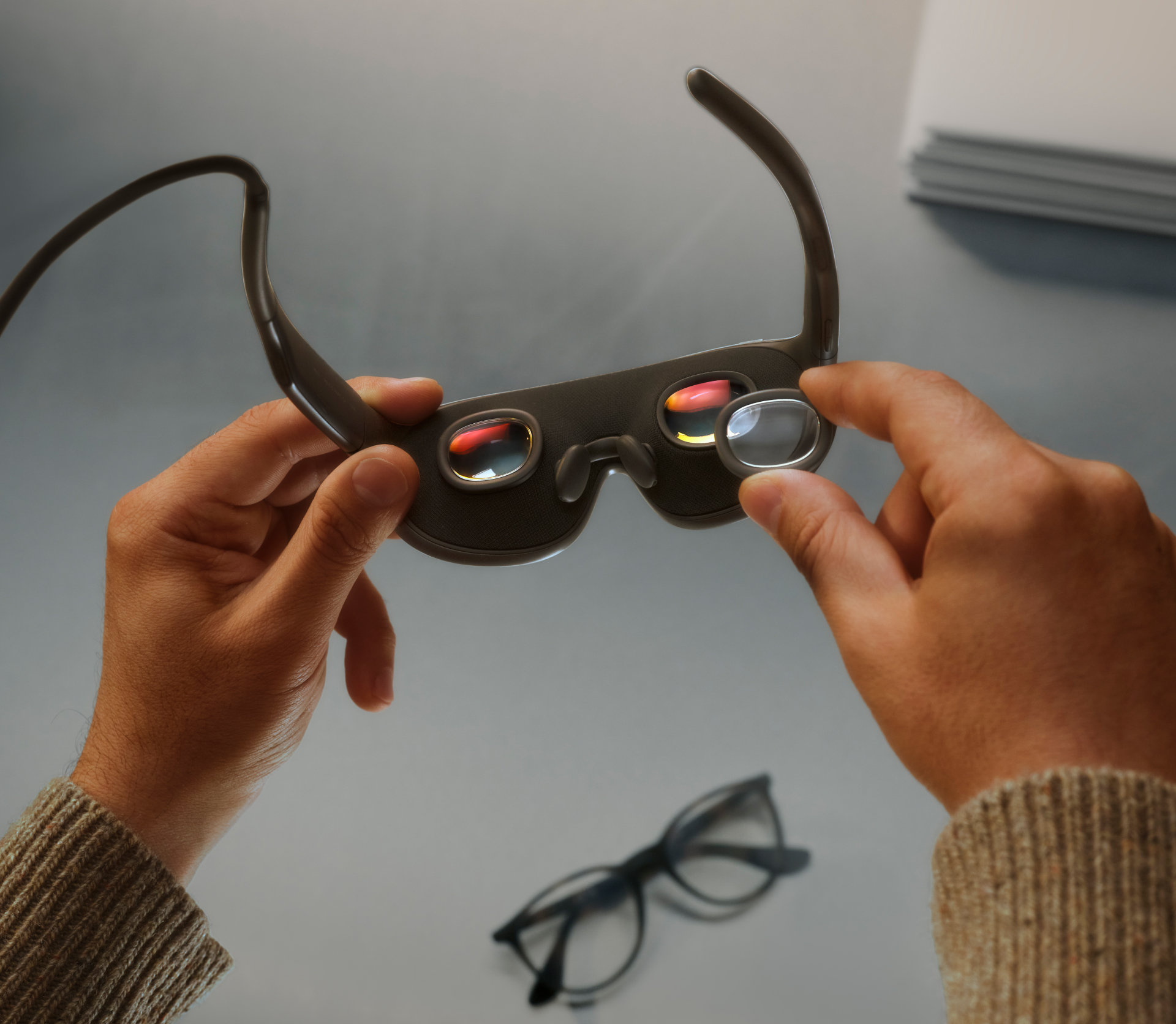
Road to VR added a CORRECTION to its own coverage: Meta VR Glasses use SMALLER pancake lenses paired with micro-OLED panels, “and not silicon carbide waveguides,” and it says the tool’s creator “confused Meta VR Glasses with the company’s Orion AR glasses prototype.” When we read the tool page on October 7, its Meta VR Glasses preset STILL described “silicon carbide waveguide optics,” and a slider was still labeled “Corner Radius (Waveguide Optics).” The guide ALSO still refers to a “micro-OLED waveguide window.”
Several figures also DISAGREE between Duuro’s two pages:
- Diagonal: the tool page shows a 96° DIAGONAL for 70° × 66°. Duuro’s GUIDE says about 87°, and Road to VR says about 88°.
- Apple Vision Pro: the tool preset is 100° × 90°. The guide’s comparison table lists about 100° × 73°.
- Panel: the tool page’s sharpness example uses “e.g. 2,560 × 2,560” pixels. Meta PUBLISHES 2412 × 2288 per eye, which the guide uses.
NONE of these changes what the mask does. The mask CUTS the view at the angles a user SELECTS. But they matter to anyone quoting the page as a SPEC sheet. Readers should also know that the tool page PROMOTES a Duuro creator code for Quest purchases.
What a buyer can learn from it
Used CAREFULLY, the simulator gives a USEFUL first look at whether a 70-degree window feels CRAMPED for gaming or acceptable for a virtual screen. Road to VR notes that Quest 3’s wider view comes from BULKIER optics in a 515-gram package, while Meta pitches VR Glasses at about 100 GRAMS. The FAIR test is to run the mask at BOTH 70° × 66° and 58° × 54°. Even then, it will NOT show the SHARPER micro-OLED image or the open periphery that Meta is selling. Only a SHIPPED unit will SETTLE that.
Sources: Road to VR (Scott Hayden, Oct 5, 2026); Duuro Plays FOV Simulator and guide (read Oct 7, 2026); Meta Horizon developer docs; Meta IWSDK testing guide.