Meta’s Horizon developer docs now put a hard per-eye DISPLAY RESOLUTION on Meta VR Glasses — 2412 × 2288 pixels — and clarify that the Connect-era 70° × 66° figure is an UPPER BOUND, not a layout promise. Mixed News (Chris Steven, Sep 30) flags the same stack: panel grid, render extent, and a tighter p90 PERCEIVED TARGET of 58° H × 54° V.

Meta VR Glasses remain a spring 2027 product; these figures are developer-page specs, not retail measurements. Photo: Meta
2412 × 2288 is the PANEL grid — not your render target
Meta labels 2412 × 2288 pixels per eye as the PHYSICAL DISPLAY pixel grid. It is not an app window size and not a required render-target size. Developers should not derive pixel offsets from that number. The diagonal and refresh rate are still ABSENT from the same page — Mixed News notes both gaps remain open.
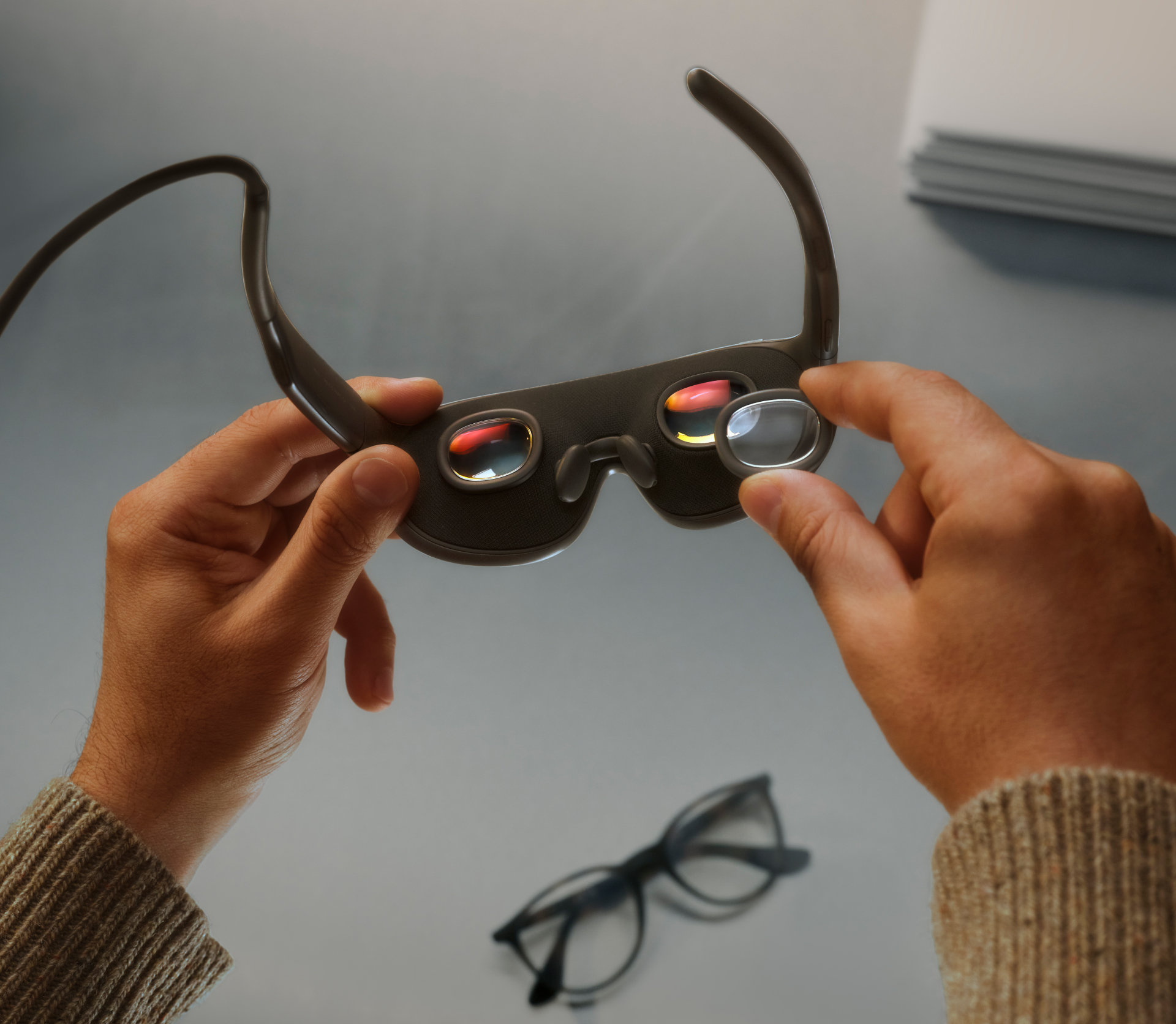
Lens and display detail matter because fit and pupil position shrink what users actually see. Photo: Meta
Three FOV numbers — NOMINAL, RENDER, PERCEIVED
Meta’s own field-of-view page separates three measures:
- NOMINAL straight-ahead FOV: 70° H × 66° V — treat as an UPPER BOUND. Fit, eye position, and gaze can SHRINK the visible area.
- Per-eye RENDER extent: 74° H × 68° V — angular extent used for rendering, not a guarantee the wearer sees the full area.
- p90 PERCEIVED TARGET: 58° H × 54° V — the design and test target Meta points developers toward via simulation.
Meta says greater eye-to-lens distance REDUCES the visible area (especially vertically), and looking toward an edge moves the pupil off lens center so the lens can clip the view before the panel does. That is why UI placed at the 70° edge is a RISK.

Primary actions belong near center; edge-only controls need a second path. Photo: Meta
How to SIMULATE the p90 target on device
Meta’s in-headset FOV simulation guide documents the command-line override. For the p90 perceived target, run:
metavr device fov-sim enable --perceived
That path is for when a test plan explicitly calls for 58° × 54°. The broader 70° × 66° sim uses metavr device fov-sim enable without the flag. Meta does not define the population behind “p90,” so the statistical claim stays underspecified.
Design guidance follows the SMALLER number
Meta tells developers to keep primary ACTIONS and status near the CENTER of view, avoid dense clusters of small targets near the boundary, and provide a SECOND route to any action that only appears at an edge. In short: layout for the perceived target, not the marketing upper bound.
Product context — price and timing unchanged
Meta VR Glasses remain listed at US $1,299.99 with a SPRING 2027 release. None of these FOV or resolution figures are independent measurements of a shipped unit; they are what Meta has published for developers while the hardware is still months out. Expect the developer page to MOVE again before retail.
Sources: Meta Horizon — Field of view essentials; Meta — In-headset FOV simulation; Mixed News — Meta VR Glasses 2412×2288 and 58° perceived (Chris Steven, Sep 30, 2026).
1 thought on “Meta Locks VR Glasses at 2412×2288 Per Eye — and a Tight 58° Design Target”