Pico Space Pro just cleared a U.S. radio gate that its canceled September debut never reached. Per UploadVR, FCC filings for a new Pico mixed-reality system landed under IDs 2A5NV-AA1Z0 (headset) and 2A5NV-B3110 (external main unit) — one day before the Beijing launch event Pico had already scrapped.
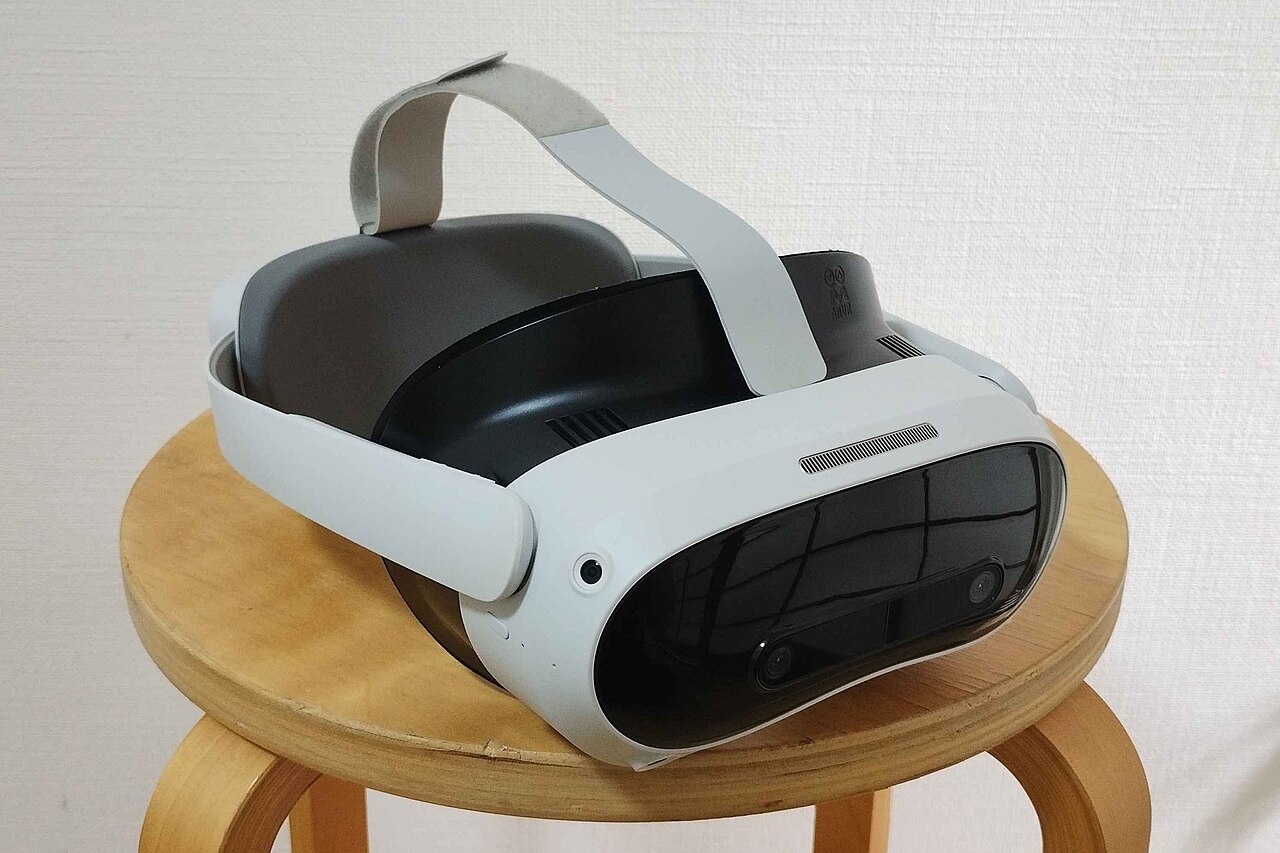
The paperwork matters because Space Pro’s public calendar already slipped. Pico named the headset and booked a September 2, 2026 Beijing reveal, then — days later — moved the release to Q4 2026 and canceled the show, citing a late-stage software upgrade it wants in the day-one build. VR.org and Road to VR covered that pullback in late August. FCC clearance does not restore a ship date. It does confirm the dual-piece hardware is far enough along to seek U.S. wireless authorization.
What the filings show
UploadVR’s read of the public labels: a Mixed Reality Headset and a Mixed Reality Main Unit, both tied to model B3110. The main-unit label lists a 7,000 mAh / 54.32 Wh battery. Documentation points to Wi-Fi 7 on the puck side, with the headset showing an nRF controller link in the 2.4 GHz band rather than its own Wi-Fi authorization. That lines up with the tethered compute-and-battery puck design that leaked earlier from Pico SDK videos — the same architecture XREAL’s Aura and Meta’s rumored Phoenix-class MR devices have been circling.
Some exhibits remain under short- and long-term confidentiality. UploadVR notes short-term confidentiality on the Space Pro filings runs through February 28, 2027. In July, Pico also certified a separate Wireless Keyboard under FCC ID 2A5NV-C6110, which may or may not ship as a Space Pro accessory.
The product still in the silhouette
What ByteDance and Pico have already said, independent of the FCC dump: 4,000 PPI micro-OLED panels, a dual-chip stack with a custom perception coprocessor, and a main SoC Pico claims delivers roughly 2× the CPU/GPU performance of Snapdragon XR2 Gen 2 (the chip in Pico 4 Ultra and Quest 3). The software story is Pico OS 6 and the Spatial Engine — shared-space app multitasking closer to visionOS than to today’s one-experience-at-a-time Quest stack. Hand and eye tracking are on the claimed sheet; price, global SKUs, and U.S. retail availability are not.
That last point still dominates. Pico 4 Ultra never sold as a consumer SKU in the United States. FCC approval is a necessary condition for a radio product, not a promise ByteDance will put Space Pro on American shelves.
Calendar context
Valve’s Steam Frame is still the near-term hardware story for September. Meta Connect lands September 23–24 with glasses as the loudest public tease. Pico stepping out of a September 2 Beijing keynote removed the one headset event that would have jumped both. FCC paperwork in early September is quieter evidence the hardware track continues while software and go-to-market stay on Q4.
For now the honest summary is narrow: Space Pro exists as certified radio hardware with a battery puck, Wi-Fi 7 on the main unit, and a delayed Q4 target. Specs previously announced still stand. Price and a firm day do not.
Sources: UploadVR, VR.org, Road to VR, UploadVR Project Swan specs, PICO XR Japan announcement thread (Aug 19).