The Metaverse Standards Forum announced that the Open Metaverse Browser Initiative (OMBI) is INTEGRATING Placeframe, the Outernet Foundation’s open-source visual positioning system, as the FIRST VPS into Sneeze, OMBI’s open spatial browser ENGINE. The work is underway now, with a DEMO expected before the END of 2026 and a SHOWCASE planned in Rubidium, RP1’s REFERENCE metaverse browser.
Why Visual Positioning Is Still Closed
Most visual positioning systems send CAMERA images to a single vendor’s CLOUD, keep MAPS on that vendor’s servers, and expose a proprietary API. Enterprises such as HOSPITALS, FACTORIES, and AIRPORTS often cannot STREAM facility camera feeds to third-party servers they do not own. When a vendor shuts a service down — as several already have — applications built on it STOP working. Cross-vendor PORTABILITY is also missing: an app written for one PROVIDER cannot move to another without a REWRITE.
Placeframe: Self-Hosted Maps Under Apache 2.0
Placeframe, from The Outernet Foundation, is free and OPEN SOURCE under an Apache 2.0 LICENSE. Organizations can SCAN their facilities, build their own spatial maps, and HOST maps, scans, and POSITIONING data themselves. Maps can be GEOREFERENCED so content anchors to GPS coordinates. Devices then query an enterprise server for POSITION. On-device positioning — so camera data never leaves the device — is next on the Placeframe ROADMAP. The Foundation is a 501(c)(3) nonprofit; a public site at placeframe.org is still listed as coming soon.
“We built Placeframe because we believe the infrastructure layer of AUGMENTED REALITY should belong to COMMUNITIES, not platforms,” said Tyler Hatch, founder and chairman of The Outernet Foundation, in the Forum release. “Connecting to Sneeze means Placeframe will be able to serve as a POSITIONING layer for the open spatial computing ECOSYSTEM.”
Sneeze Puts VPS Behind Open APIs
Sneeze is designed so key CAPABILITIES — visual positioning, multi-origin scene COMPOSITION, proximity-based content DISCOVERY, real-time CO-PRESENCE, and certificate-based SECURITY — sit behind OPEN, interoperable APIs. Any VPS provider can implement the INTERFACE and plug into Sneeze; organizations can SWITCH later without rebuilding. Browsers could use a city-scale provider outdoors, then switch to a self-hosted Placeframe instance indoors through the same interface. Positions will use GeoPose, the Open Geospatial Consortium STANDARD for position and ORIENTATION.
“By defining a STANDARDIZED interface through which any provider can supply LOCATION data to Sneeze, we are applying the PRINCIPLE that made the web work: OPEN infrastructure that belongs to no single company,” said Neil Trevett, president of the Metaverse Standards Forum and the Khronos Group.
First Open-Source VPS Into Rubidium
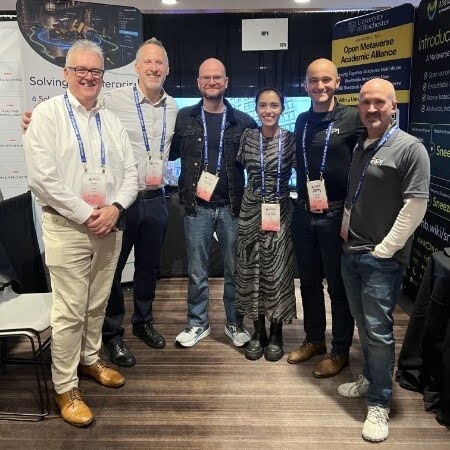
Placeframe will be the FIRST VPS — and the first OPEN-SOURCE VPS — connected to Sneeze through that interface. The Outernet Foundation is WORKING with OMBI to SHAPE the VPS interface while the work is public. Sean Mann, co-founder and CEO of RP1, which architects and maintains Sneeze, said enterprises need the OPTION to OWN their maps, scans, and positioning data. OMBI and Outernet teams were together at the Augmented Enterprise Summit in ATLANTA in OCTOBER 2026.
Sources
Primary coverage is the Metaverse Standards Forum press release. Background on Placeframe is at the Outernet Foundation Placeframe page and the project site at placeframe.org. OMBI’s broader Sneeze initiative is documented on the Forum’s OMBI page.