XREAL has FINALLY put a PRICE on AURA, the FIRST optical see-through glasses built on Google’s Android XR. In an October 7 release, the company said AURA starts at $1,279 for a compute puck with 12GB of RAM and 256GB of storage, and $1,499 for 16GB and 512GB. Pre-orders opened TODAY, but ONLY for customers who had already paid a reservation deposit. Everyone else gets a deposit page and a promise that public orders will open “in the coming weeks.”

What XREAL Committed To
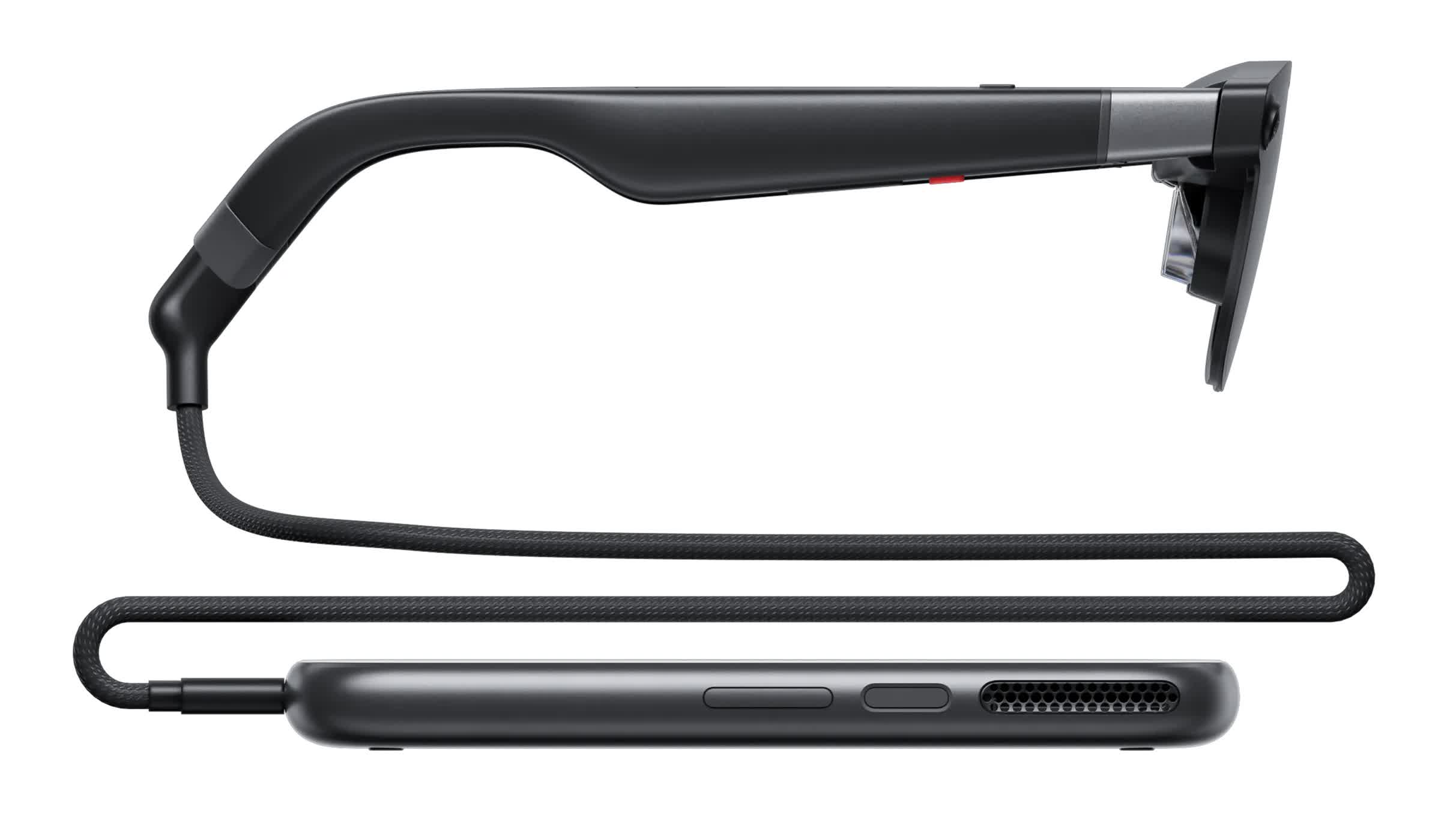
The release, developed with Google and Qualcomm, lays out a split-compute design. The glasses weigh LESS than 95 GRAMS and carry hand tracking, Sound by Bose audio, and a 70-DEGREE field of view. The puck runs Android XR with Google Play, uses a Snapdragon Reality Elite chip, doubles as a TRACKPAD, and clips to a pocket or lanyard. Frames come in two sizes: M for interpupillary distances of 60 to 66mm and L for 66 to 72mm.
The launch markets are the United States, Canada, Japan, and South Korea, with MORE regions in 2027. XREAL’s regional pricing for the two configurations is:
- United States: $1,279 and $1,499.
- Canada: $1,829 and $2,149.
- Japan: ¥229,800 and ¥269,800.
- South Korea: ₩1,990,000 and ₩2,290,000.
The SHIP date is still SOFT. The release says AURA “will begin shipping soon” and that launch is “now just weeks away,” without naming a DAY. XREAL CEO Chi Xu told The Verge that only the first 2,000 “Founder’s Edition” pairs are certain to arrive at launch, and that those will ship THIS year. XREAL attributes the reservation-only window to HIGH demand, but it has not published a reservation COUNT.
A $20 Gap With Meta’s VR Glasses
The obvious COMPARISON is Meta’s VR Glasses, announced at Connect for roughly $1,300 and DUE in spring 2027. The Verge puts AURA at $20 LESS than Meta’s device and notes how close the two designs are: both rely on a CORD, both put a Snapdragon Reality Elite chip and the battery in a PUCK, and both OPEN on a grid of floating app icons.
The DIFFERENCES are in how you see the room and how you point at things. AURA uses TRANSPARENT optics, so the real world is never a camera feed. Meta’s glasses use PASSTHROUGH, which The Verge says gives a wider view and more immersion than AURA’s 70 degrees. Meta adds EYE tracking for look-and-pinch selection, while AURA relies on hand-tracked virtual pointers and the puck’s touchpad. The SOFTWARE split is just as sharp: Android apps from Google Play on one side, Quest games on Horizon OS on the other.
What Is Still Missing
The release gives NO battery life, no display resolution or brightness, and no shipping DATE for general buyers. The Verge reports that XREAL could not say by publish time whether the extra 4GB of RAM in the $1,499 model will MATTER for any apps, which makes the $220 step-up HARD to judge. Coverage has also been inconsistent on the base price: Tom’s Guide headlined $1,299, while XREAL’s own release says $1,279 in the U.S.
There is also little INDEPENDENT data on Android XR itself. Samsung’s $1,799 Galaxy XR headset shipped on the platform last year, but The Verge says it was not sent one to review. That makes AURA, in practice, the first BROAD consumer test of Google’s XR stack in a glasses form factor.
For Metaverse Watcher readers, the takeaway is this: XREAL has turned AURA from a demo into a PRICED product that undercuts Meta by a token amount and could REACH buyers MONTHS before Meta’s spring window. The CATCH is volume. Until general orders open and reviewers get units, the realistic AURA market this year is a few thousand reservation holders, not the mainstream. The next markers are a firm SHIP date, published battery numbers, and the first FULL reviews.
Sources: XREAL via PR Newswire, “XREAL AURA Starts at $1,279” (October 7, 2026); The Verge, Sean Hollister (October 7, 2026); Tom’s Guide, Scott Younker (October 7, 2026); UploadVR, “Meta VR Glasses Officially Announced, Shipping Spring 2027 For $1300” (September 23, 2026).