Jon Fingas at How-To Geek published a STRAIGHT comparison today of Meta’s $1,299.99 VR Glasses and Apple’s Vision Pro. The piece is not another field-of-view walkthrough. It is a PRICE, WEIGHT, and PURPOSE argument that lands AFTER Connect: Meta is selling a lighter Quest-class cinema and game console, while Apple is still selling a heavier mixed-reality COMPUTER.

Two Wearables, Two Jobs
Fingas’s core claim is BLUNT. The VR Glasses are “really an extension of the VR-focused Quest experience with more powerful technology.” Vision Pro “concentrates on mixed reality.” You would NOT, he writes, use Meta’s glasses for heavy-duty work any more than you would use Vision Pro primarily for GAMING. That split is the USEFUL part of the comparison. Spec sheets alone HIDE it.
Meta’s Newsroom brief prices the glasses at $1,299.99 and dates the sale to SPRING 2027. How-To Geek lists Apple’s headset at $3,699 — nearly THREE times Meta’s sticker. Jay Peters at The Verge had already parked the glasses BETWEEN Quest 3 at $599.99 and Vision Pro, then a $3,499 figure in his hands-on. The exact Apple number MOVES with configurations. The GAP does not.
Weight Leaves the Face. Compute Does Not.
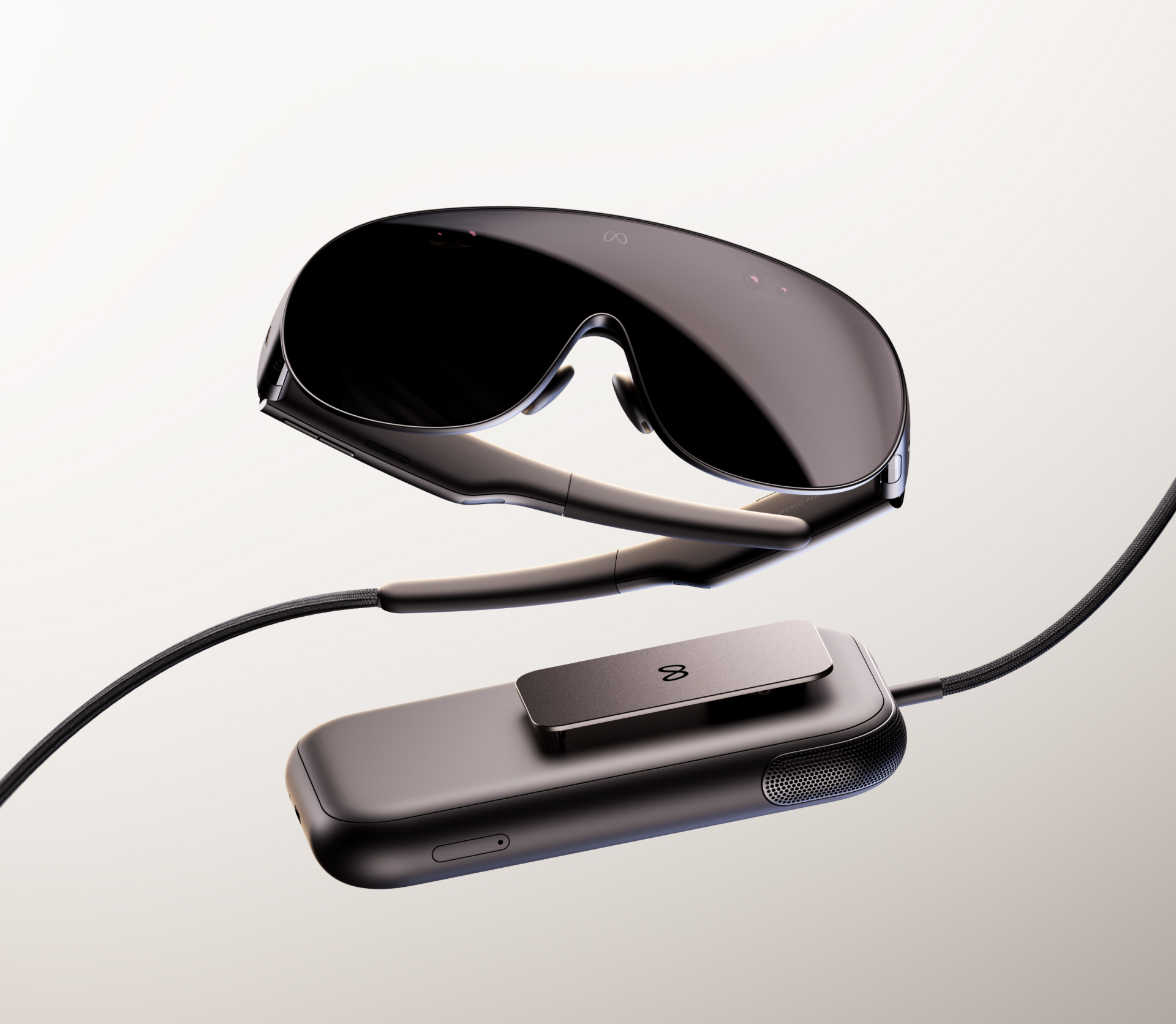
Meta’s two-part design is the MECHANICAL argument. Displays and sensors sit on the face. Compute, battery, and storage live in a puck on an optical tether. Meta says the glasses weigh about 100 grams — FIVE times lighter than Quest 3’s 515 grams — and claims up to THREE hours of high-resolution media playback with 45W USB-C fast charging. How-To Geek notes that moving the battery into the puck RULES OUT a third-party pack on the glasses themselves.
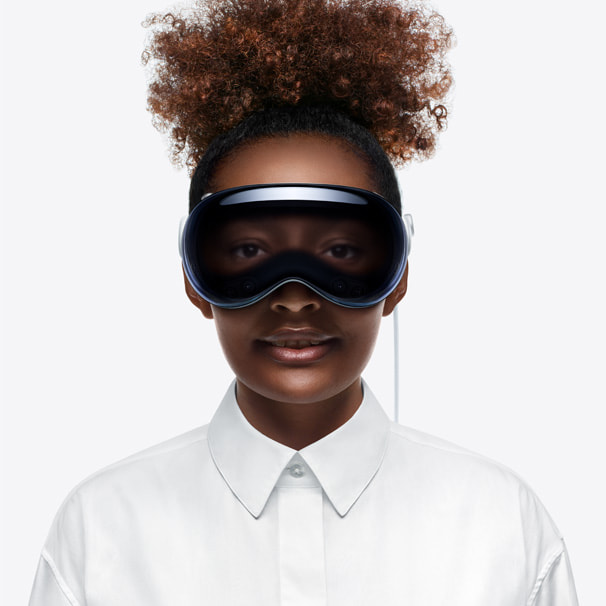
Vision Pro still carries almost EVERYTHING except its battery on the head. Fingas cites up to 800 grams. Apple redesigned the default strap to cut face pressure, which is a comfort PATCH, not a form-factor change. If the test is hours of seating and movies, Meta’s off-face compute is the CLEARER bet. If the test is RAW capability, Apple still WINS on paper: laptop-class M5 silicon versus a mobile Snapdragon Reality Elite, 4K-per-eye panels versus Meta’s 5K Infinite Display at 2.5K per eye, and a wider roughly 100-degree field of view versus Meta’s 70-degree WINDOW.
Passthrough, Hands, and a Narrower Window
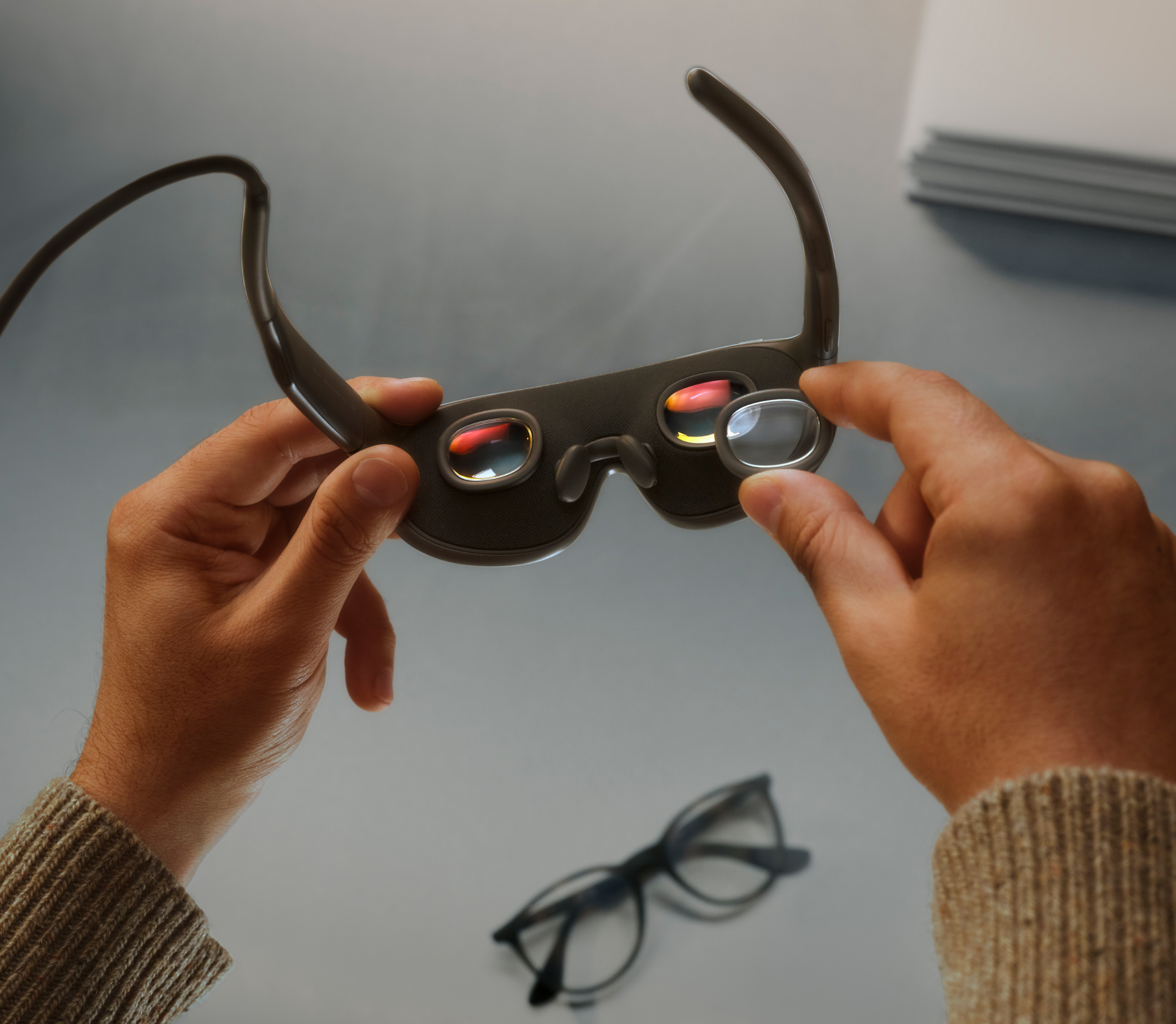
How-To Geek flags the 70-degree field of view as RELATIVELY narrow, then credits a passthrough camera and OPEN SIDES for keeping the room in view. Meta bills the glasses as the FIRST IMAX Enhanced certified VR device and points to Disney+ 3D, VR-Enhanced cuts of Avengers: Infinity War and Star Wars: A New Hope, and 3D catalogs from HBO Max, Paramount+, and Peacock. Hands and EYE TRACKING drive the interface. Touch Plus controllers and gamepads still attach for the Quest catalog and Xbox Cloud Gaming. A virtual KEYBOARD and trackpad can appear on a desk; a wireless or USB-C link can turn a Mac or Windows PC into a floating MONITOR.
The Verge’s campus demo lined up with that SOFTWARE pitch: 2412 × 2288 pixels per eye, 37 pixels per degree, up to 120 Hz, 12 GB of RAM and 128 GB of storage in the puck, and SIX outward cameras for hands instead of a neural band. Peters called the typing surface surprisingly USABLE for a SHORT message. That is a Quest feature Meta already shipped this year. The DIFFERENCE is that it now lives in a 100-gram frame instead of a strapped headset.
Price Is the Decider. Roadmaps Are the Hedge.
Fingas’s close is the SHARP one. At nearly three times the cost, Vision Pro is easier to SKIP unless you actually NEED what Apple ships: the wider view, the M-series headroom, the camera stack. Meta is CHEAPER to justify for cinema, sports, and the Quest library. He also flags a ROADMAP gap. Apple is widely rumored to be shifting attention toward conventional SMART GLASSES. Meta is still pouring into virtual and mixed reality, and Angela Chang told The Verge the company will KEEP building full VR headsets even as this glasses product ships. Buyers who want a FOLLOW-UP device may simply pick the vendor still writing the SEQUEL.
That is not a VERDICT on either device as a finished computer. Meta VR Glasses do not go on sale until SPRING 2027. Vision Pro is ALREADY in homes, now on visionOS 27. How-To Geek’s comparison is a FRAME, not a review of retail units. The frame is still the STORY: a $1,300 glasses-and-puck cinema against a $3,700 spatial workstation, with COMFORT on one side of the table and CAPABILITY on the other. The interesting fight is whether buyers treat those as SUBSTITUTES. Today’s write-up says they should NOT.

Sources: How-To Geek (Jon Fingas); Meta Newsroom; The Verge (Jay Peters); CNBC.