Karissa Bell’s Engadget hands-on of Meta’s $1,299 VR Glasses is the FIRST-WEAR report that centers GESTURE UX, not another FOV DUEL. Bell spent about THIRTY minutes on a Connect demo unit and came away arguing that hand-and-eye control is “so much better than a CONTROLLER” — while the compute PUCK’s heat and weight remain the practical HARDWARE TRADEOFF.
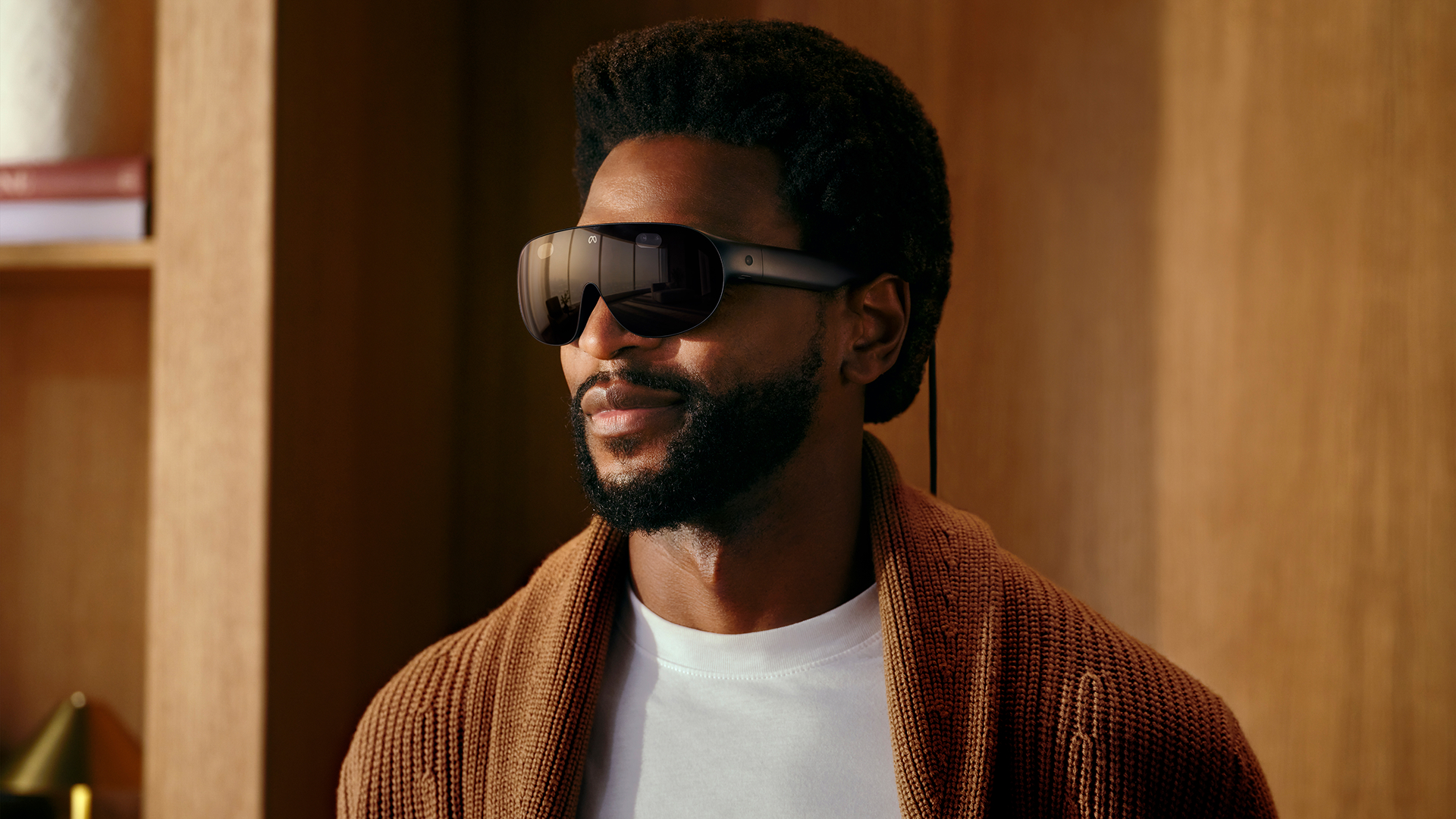
Glasses Up Front. Heat in the Puck.
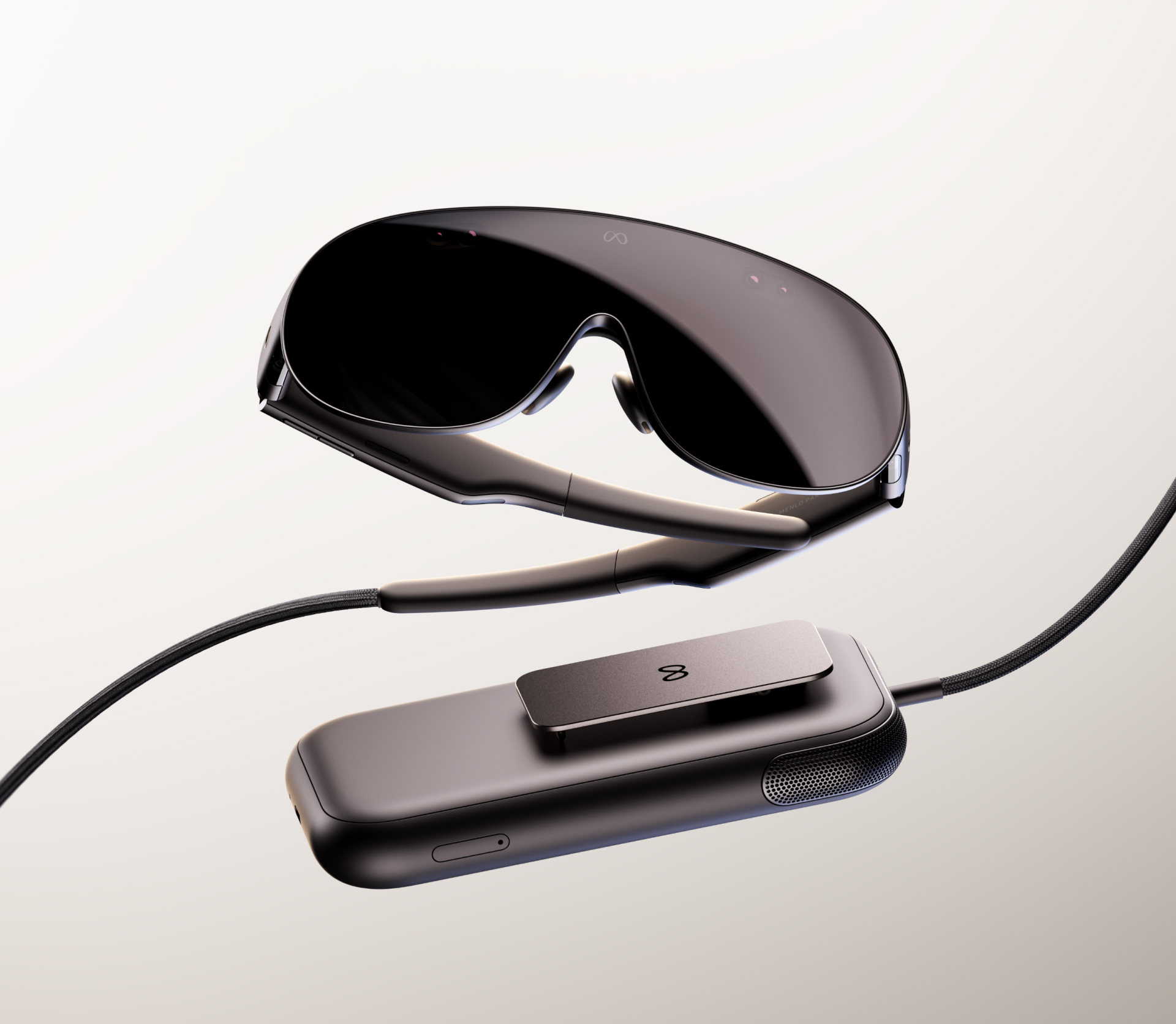
Bell says the frames do not feel exactly like everyday glasses. Thickness and opaque lenses make them closer to GOGGLES until you put them on. Meta’s Newsroom brief lists face weight at about 100 grams — FIVE times lighter than Quest 3’s 515 grams — because sensors and displays stay on the head while compute, battery, and storage live in a tethered puck. Bell clocked that puck near 300 grams with a pocket CLIP. During her demo it stayed on the table, and she still felt NOTICEABLE warmth without touching it: not scalding, but enough that a pocket carry might feel UNCOMFORTABLE.
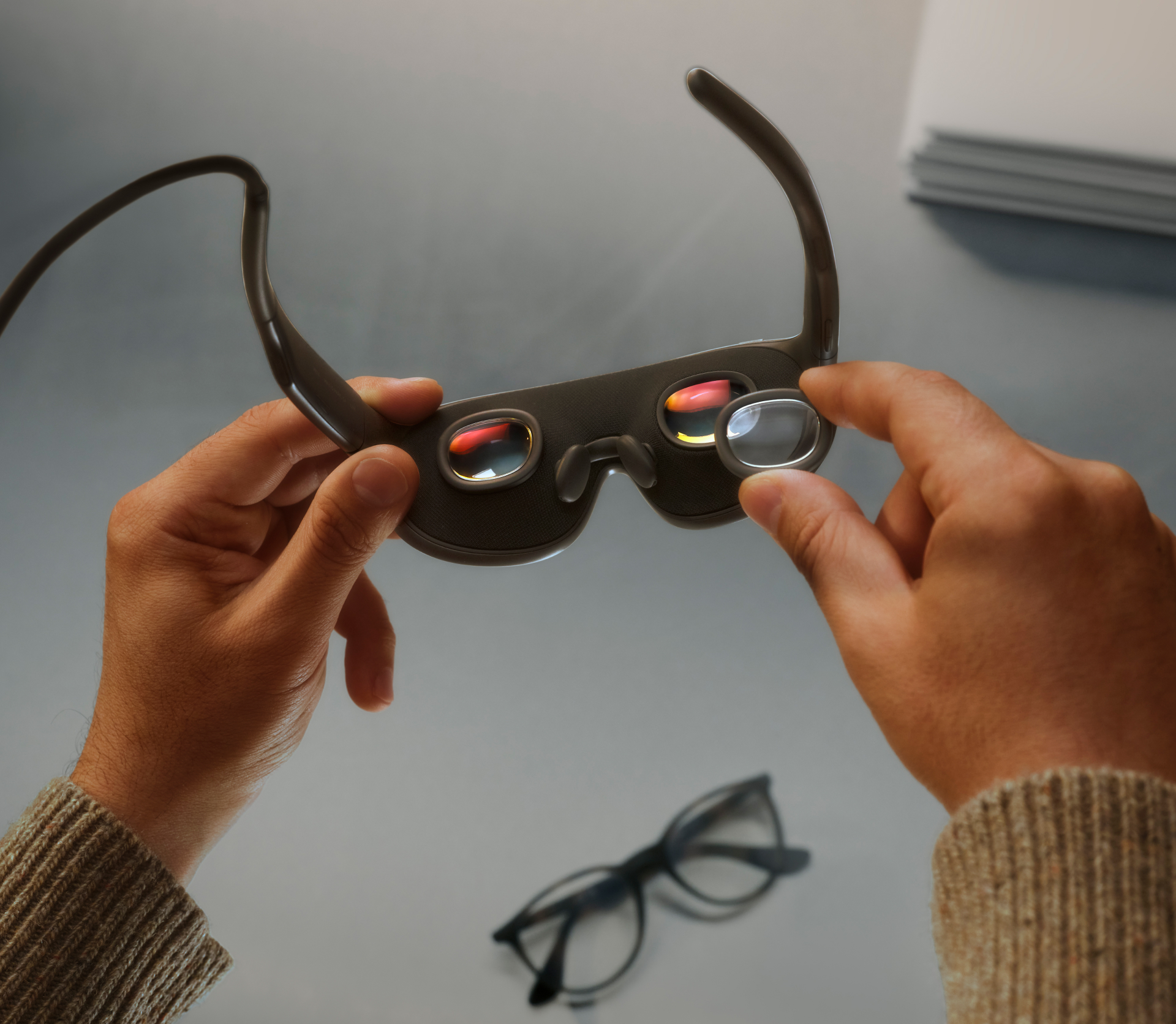
She found the glasses themselves secure and light across the half-hour session. Prescription INSERTS exist; she verified them even though she did not need them. Four outward cameras handle hand tracking and passthrough. Pancake lenses carry integrated EYE tracking.
Thumb Tap. Hands Stay in Your Lap.
Optional Touch Plus controllers still PAIR. Bell did NOT miss them. Control mirrors Ray-Ban Display logic: TAP thumb and index to select; swipe the thumb along the finger to SCROLL. The surprise was tracking RANGE that felt NATURAL. She kept her hands in her lap and taps still REGISTERED. One SCROLL gesture failed briefly — she chalked that up to PROTOTYPE hardware. The stack feels REMINISCENT of Vision Pro’s gaze-and-pinch grammar without copying the full headset package. Jay Peters at The Verge reported the same look-to-highlight, pinch-to-select path from a separate Connect demo.
Sharp Panels. Narrower Window.
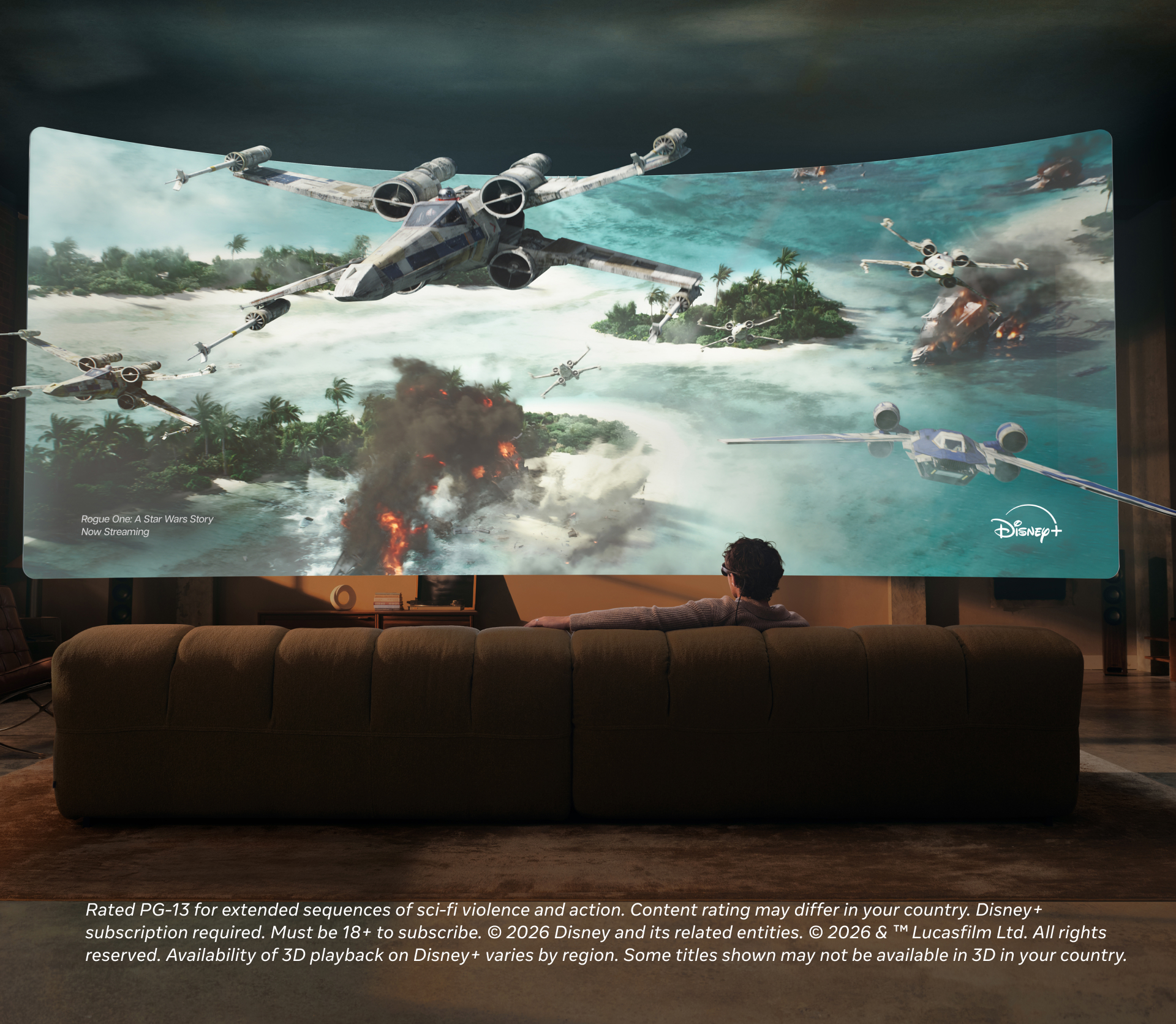
Display numbers in Bell’s piece match Meta’s own 5K Infinite Display pitch: 2,412 × 2,288 resolution, 70-degree field of VIEW per eye, and 37 pixels per DEGREE. She could not pick out a SINGLE pixel even toward the edges. Compared with sealed Quest immersion, the glasses feel LESS enveloping — a WINDOW, not a cave. Bell, who gets VR sickness, treated that as a FEATURE. Longtime headset fans may feel the narrower FOV as the REAL COMPROMISE once older Quest titles migrate.
Surface Keyboard and Remote Desktop
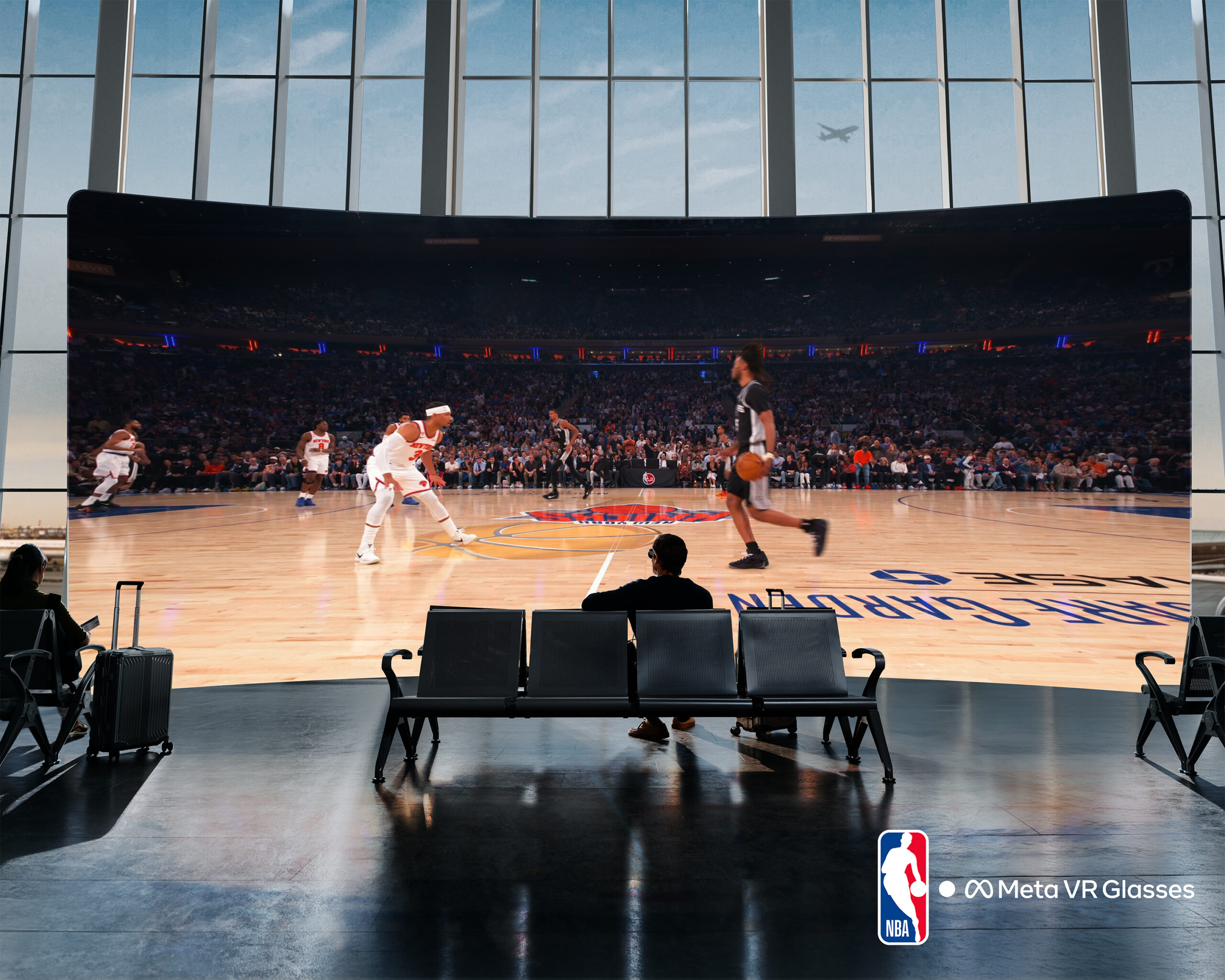
Bell sees Meta pitching the glasses away from hardcore gaming, even with new titles like Beat Saber Flux nearby. Her demo leaned ENTERTAINMENT and WORK. She watched Billie Eilish concert footage and an NBA game filmed for the device and called both MORE immersive than typical VR viewing. On productivity, she mirrored a Surface laptop into a three-window remote-desktop layout, with an ULTRAWIDE option. Meta’s “Surface Keyboard” projects a full-size virtual keyboard and trackpad onto any flat TABLE. Typing a few sentences worked with LITTLE effort, but missing haptics felt ODD, and the limited FOV forced head turns to see all three windows at once. Meta’s Newsroom frames the same idea: multi-screen private workspace without EXTRA hardware.
Spring 2027. Still a First Impression.
Meta prices Meta VR Glasses at $1,299.99 for a SPRING 2027 sale. Bell’s Engadget report is one EARLY seat-time note: gesture UX that works with hands DOWN, a sharp but narrower display, and a hot 300-gram puck that may decide whether pocket compute feels PRACTICAL. For the FOV-and-passthrough walkthrough see our Road to VR coverage; for the Vision Pro PRICE fight see How-To Geek. This piece stays on Engadget’s first-wear GESTURE and PRODUCTIVITY read.
Sources: Engadget (Karissa Bell); Meta Newsroom; The Verge (Jay Peters).