The U.S. Air Force says a VR TRAINER built around a VARJO XR-3 HEADSET now has B-52 student pilots making CONTACT with a TANKER on their FIRST live REFUELING flight. A PEER-REVIEWED study puts a number on it: 1.7 FEWER SORTIES and 39 FEWER MINUTES of air REFUELING to reach PROFICIENCY. The catch is in the same paper. The gain showed up when INSTRUCTORS STRUCTURED the HEADSET time, and the comparison group is HISTORICAL, not RANDOMIZED.
What the Air Force published
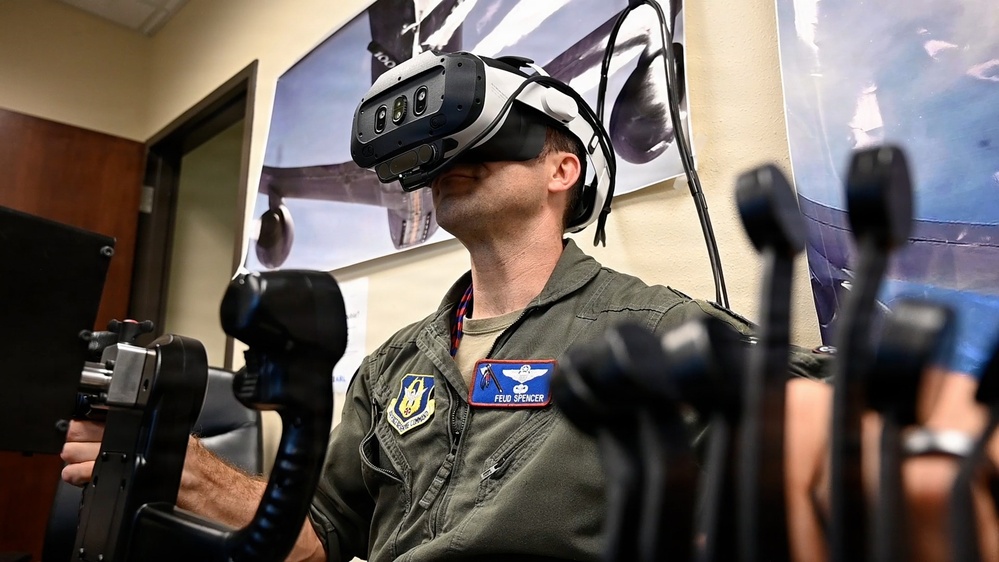
The DVIDS feature, posted Oct. 6 by Kayla White, describes a setup at Barksdale Air Force Base, Louisiana: a VR HEADSET, CUSTOM throttles, and a yoke bolted to a chair. The Air Force calls it EARL, the Experiential Air Refueling Lightweight Simulator. It was built by Specular Theory, a small business, with Lt. Col. Brandon Wolf, a 93rd Bomb Squadron instructor pilot.
The problem it targets is EXPENSIVE. Wolf says a B-52 burns roughly 3,000 GALLONS of fuel an hour. Students used to hold about 50 feet behind a TANKER’s boom for 20 to 30 MINUTES with no CONTACT and no fuel transferred. “I’m trying to park a half-million-pound aircraft into a twelve-foot box in the sky,” he told DVIDS. Col. Aaron Bohl, who commands the 307th Operations Group, said EARL was needed because the unit had no HIGH-FIDELITY SIMULATOR for the task.
What the study actually measured
The figures come from “Instructional Fidelity in Virtual Flight,” published online Aug. 20 in the Journal of Aviation/Aerospace Education & Research (DOI 10.58940/2329-258X.2215). The authors are Lindsay Gouedy, Bryce Jarrell and Mary Fendley of Louisiana Tech, plus Wolf. The paper names the HARDWARE: a VARJO XR3 HEADSET, custom B-52 yoke and throttles, an adjustable seat, a monitor and a foldable frame.
It tracked 233 pilots at the B-52 Formal Training Unit, split three ways:
- No VR, 152 pilots: an average of 9.16 SORTIES and 250.25 MINUTES of REFUELING to PROFICIENCY. These came from LEGACY gradebooks covering 13 classes.
- VR without structure, 34 pilots: 7.97 SORTIES and 232.70 MINUTES.
- VR with the I-BUFF CURRICULUM, 47 pilots: 7.44 SORTIES and 211.13 MINUTES.
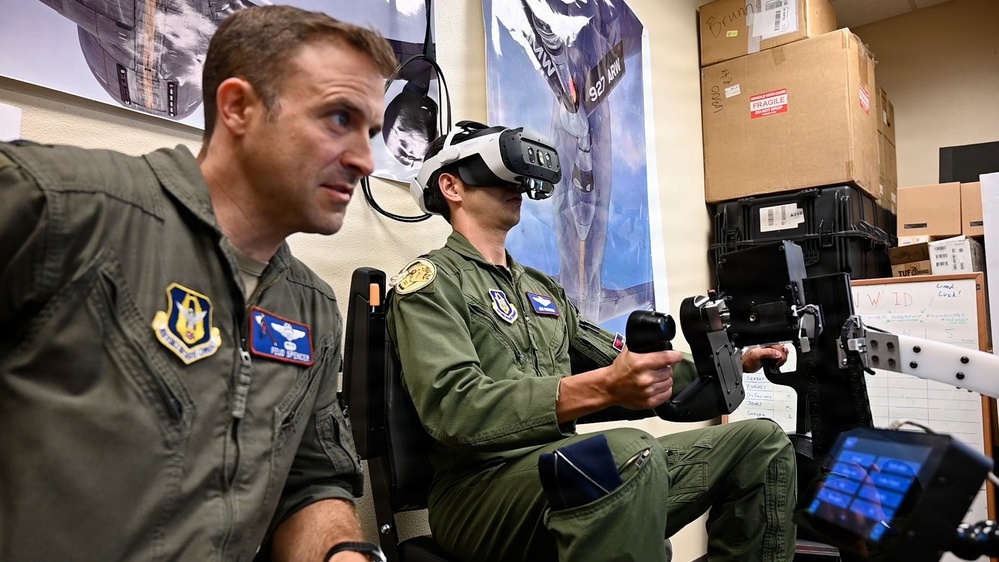
The DVIDS headline numbers are the GAP between the first and last rows. The study reports that the structured group differed SIGNIFICANTLY from both of the other groups. That is the more useful finding for anyone buying headsets: simply giving students ACCESS to VR produced a smaller effect. I-BUFF stands for Integrated B-52 Unit Flight Familiarization, a CURRICULUM built on established instructional-design models with INSTRUCTORS directed to take part in sessions.
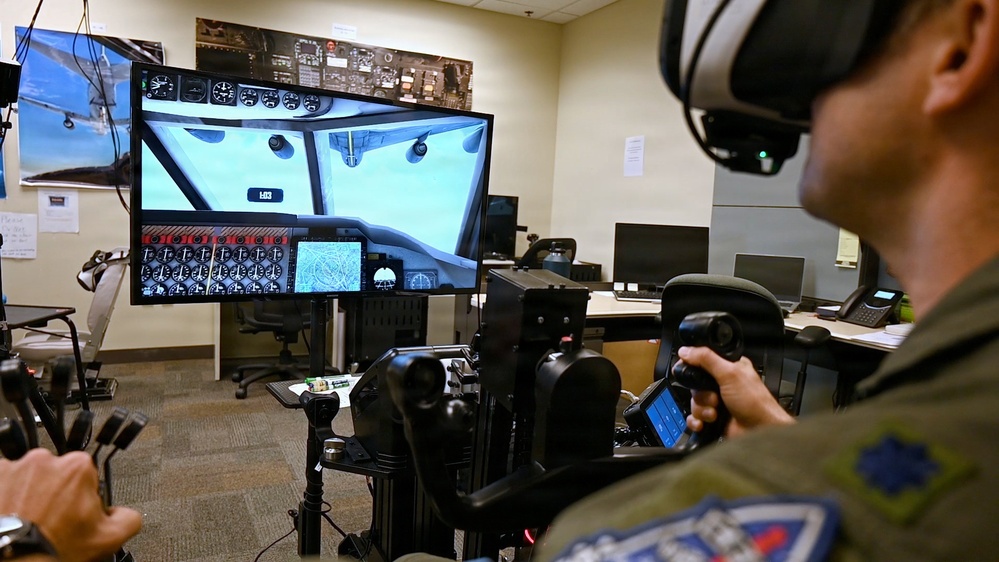
Wolf described the early, UNSTRUCTURED phase plainly: “It’s like going to the gym: even when you know it’s good for you, it’s easy to put off if nobody’s holding you accountable.”
The caveats, in the paper’s own words
The authors are CANDID. The control group is historical OBSERVATIONAL data compared against later classes, and they name SELECTION bias and TEMPORAL confounds as RISKS. They also note a lack of controls in how the historical data was generated. Their own recommendation is a HEAD-TO-HEAD study where half of one class trains with VR and half does not. The paper also says instructor involvement “varied slightly depending on instructor style and the season of training.”
There is a small NAMING wrinkle, too. DVIDS spells out EARL as the “Experiential” SIMULATOR. The paper uses “Experimental Air Refueling Lightweight simulator” in one place and “Enhanced Air Refueling Learning tool” in another. It is the same rig, but the record is not CONSISTENT.
Why it matters for enterprise XR
This is a RARE case where a MILITARY XR deployment comes with a PUBLISHED DATASET, effect sizes and stated LIMITATIONS, not just a DEMO video. It also lands on a point training vendors often skip: the CURRICULUM did more of the WORK than the HEADSET alone. According to DVIDS, the program now has the PEER-REVIEWED backing to move from an ad-hoc squadron tool into the FORMAL B-52 SYLLABUS, and possibly into other Air Force Global Strike Command airframes. Neither source gives a date, a budget or a fleet-wide count of trainers for that step.
Bohl expects the idea to spread beyond the MILITARY: “I think you’ll start to see these types of technologies within the airlines.” For now, the evidence covers ONE task, at ONE base, with 47 pilots in the group that showed the BIGGEST gain.
Sources: DVIDS, “Every Minute Counts” (Oct. 6, 2026); Gouedy, Jarrell, Fendley & Wolf, JAAER Vol. 35 No. 2 (2026).