A small German NONPROFIT has opened a FREE, browser-based museum that rebuilds LEONARDO da Vinci’s last house in CODE, and its most interesting feature is not the 3D. It is the LABELS. Museum of Ages tags EVERY one of its 17 stops with ONE of FOUR grades: DOCUMENTED, RECONSTRUCTED, CONJECTURAL or not known. In a sector where virtual heritage often blurs EVIDENCE and INVENTION, that is a DELIBERATE design choice.
The project surfaced on Hacker News as a Show HN post on October 14 (6:00 a.m. ET), where the founder said the first wing had opened “last week.” The PUBLIC GitHub repository was created on October 8 and was still receiving commits on October 17. By Saturday afternoon the HN thread showed 90 points and 41 comments.
What is actually inside
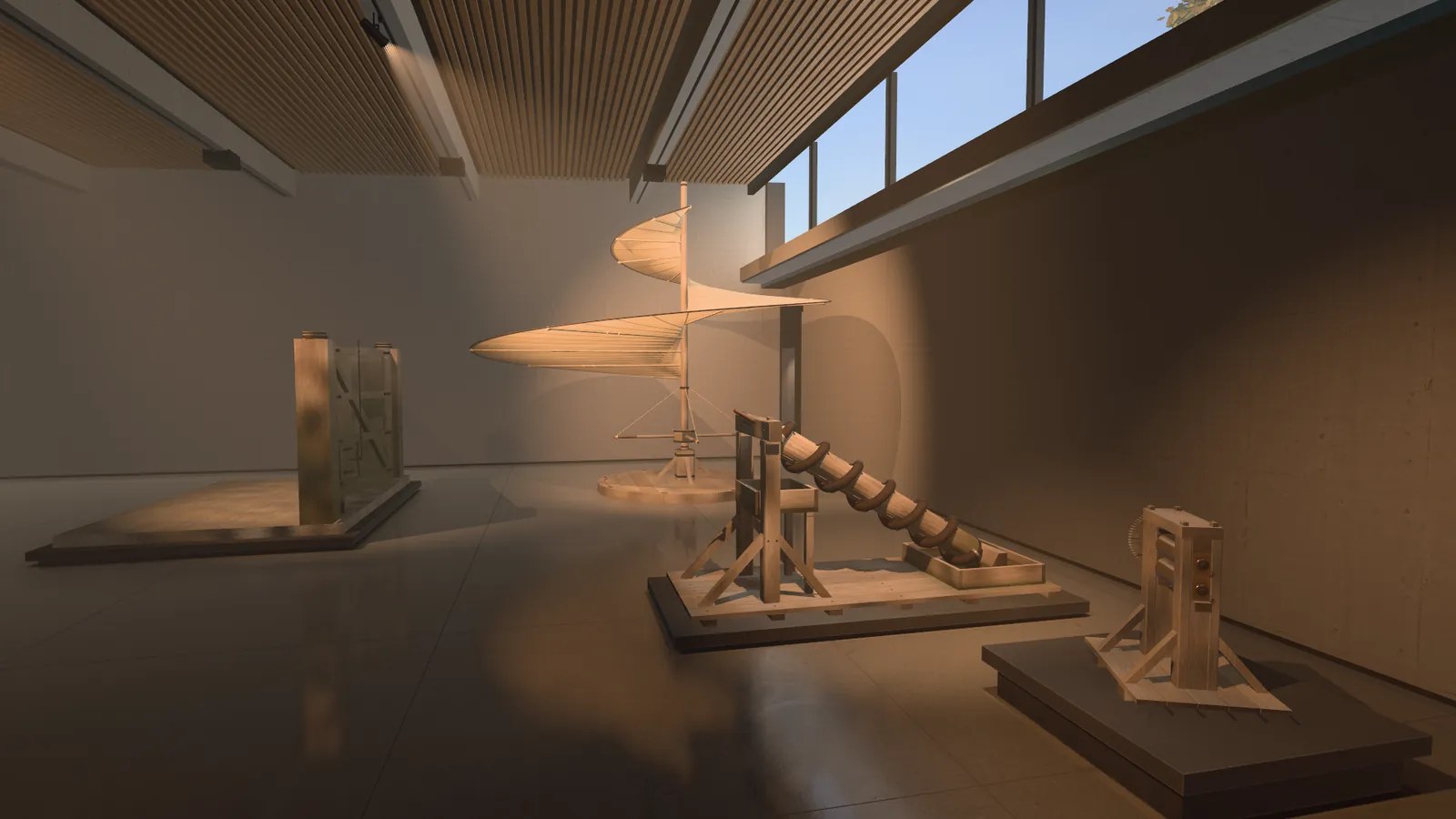
The single wing recreates Clos Lucé in Amboise on October 10, 1517, a day that is itself DOCUMENTED: a cardinal visited, and his secretary recorded three paintings, a paralysis in LEONARDO’s right hand, and that he still drew and taught. According to the project README, the walk passes about 75 works you can step up to, including:
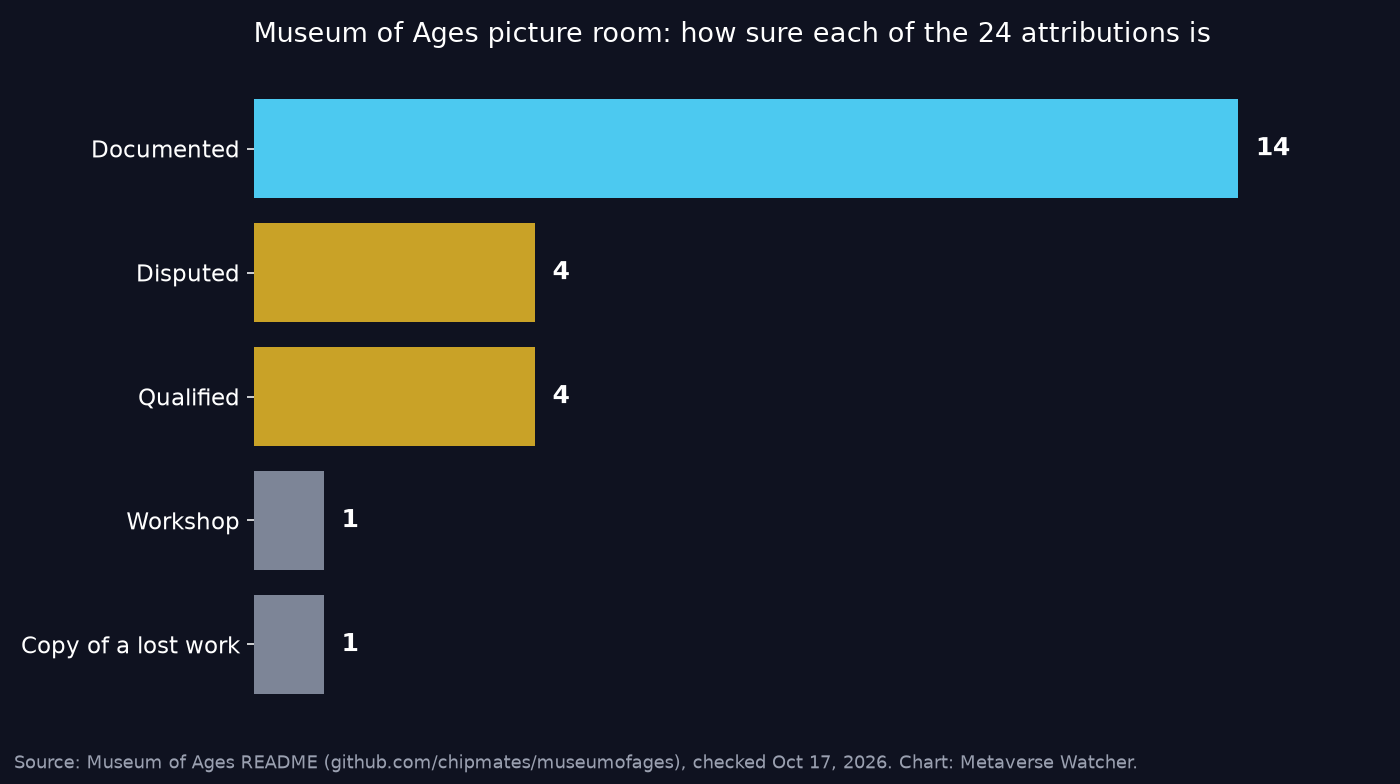
- A picture room with 24 works hung close to their REAL size (22 paintings, 2 drawings), the Mona Lisa among them.
- 15 rebuilt machines, 14 of which MOVE. Fourteen follow ONE of his sheets; the mechanical lion follows old accounts, because NO drawing of it survives.
- 29 anatomy sheets and a reading table that gathers 207 notebook pages across 17 topics, readable in his hand, in a mirror, and as text.
- The Last Supper on a court wall at the original’s 8.8 m by 4.6 m size, and a final court under the stars computed for 9 p.m. that evening.
The works come from 22 collections, each named on its LABEL. The founder wrote on HN that 131 of the 207 manuscript pages are TRANSLATED, and that the site runs in SEVEN languages. The README is more careful: English and German texts are human-approved, while French, Italian, Spanish, Brazilian Portuguese and Bulgarian are AI translations that say so until a person has read them.
The grading system is the product
Each stop has three layers of text: a first line, a drawer with more, and a RECORD that NAMES the SOURCES. The aerial screw’s RECORD, for example, reads: “Reconstructed from Ms B f. 83v. No lifetime flight is DOCUMENTED.” The museum also flags its OWN CHOICES. The furniture in the great hall was never LEONARDO’s, the court holding the Last Supper is the museum’s design, the hour of the visit (15:19 by the sun) is INVENTED, and so is the shooting star.
The picture room applies a separate attribution scale, and it is notably frank about how much of the “LEONARDO” CANON is CONTESTED:
The museum is equally direct about AI. Its statement page says drafts are “written with AI from a research file that names a source for EVERY FACT,” and that a person APPROVES EVERY English and German text. The CODE was written with AI help too. What it says it did NOT use is an IMAGE MODEL: rooms and machines are built in CODE, textures are CC0 photo scans, and the paintings are REPRODUCTIONS of PUBLIC domain works. The underlying research files, however, are NOT PUBLIC yet.
Spatial, but deliberately not immersive
For an XR audience, the technical CHOICES are the telling part. The museum is TypeScript on three.js, draws with WebGPU, and falls back to WEBGL2. But the default experience is a GUIDED, pre-rendered FILM, not a free-roam scene. On EVERY PHONE for now, machines in close-up play as filmed cycles rather than LIVE renders. The founder told HN commenters the guided FILM is “on purpose,” so everyone gets the same detail on an OLDER PHONE and “people who are not so technical can’t get lost,” and noted that HALF of visitors came on a PHONE. There is no HEADSET mode.
The cost of going LIVE is REAL. Per the README, the FILM alone pulls about 110 MB, and running the LIVE engine reads roughly 220 MB of textures and models before the first stop. That is the same tradeoff EVERY WebXR and web-3D heritage project faces: FIDELITY versus reach. Museum of Ages has chosen REACH.
Two gaps remain. There are no SPOKEN words yet, and the wing has NOT been tested with a SCREEN READER, which is a notable omission for a museum pitching access to people who cannot travel. And while the README advertises “no tracking cookies, no profiling,” its privacy page carves out ONE EXCEPTION: visitors who arrive from the project’s ads and CONSENT are reported ONCE to GOOGLE when a wing opens.
Licensing that others can build on
The CODE is AGPL-3.0, and the museum’s OWN texts and stills of what it built are CC BY-SA 4.0, which is why the still above can run here. Films and any still showing a painting, drawing or notebook page are EXCLUDED, since they contain others’ work. Museum of Ages is run by ChipMates gemeinnützige GmbH in Freiburg, carries no ADVERTISING, sells nothing, and says it has no partnership with any museum. It is inviting CORRECTIONS, screen-reader testing, and proposals for the NEXT wing through GitHub issues.
Early reaction on X has been small but specific:
Just looked at Museum of Ages, a 17-stop virtual da Vinci museum built with Three.js and WebGPU. It renders 15 coded machine reconstructions, 29 anatomy sheets, and 207 manuscript pages on a virtual reading table with mirror views for his handwriting.
— TechHub (@nexbit_art) October 15, 2026
The Metaverse Watcher take
Museum of Ages is not a HEADSET product, and it does not pretend to be ONE. Its contribution to spatial computing is a STANDARD: say what is known, say what is GUESSED, and show the SOURCES. Virtual heritage experiences on Quest, Vision Pro and the open web routinely present reconstructions as FACT. A four-grade LABEL costs almost nothing to implement and would make many of them MORE TRUSTWORTHY. The open questions are whether a small NONPROFIT can SUSTAIN wing number two, and whether the ACCESSIBILITY work catches up with the ambition.
Sources: Museum of Ages; statement page; inventions page; GitHub repository and README; Show HN thread. All checked October 17, 2026.