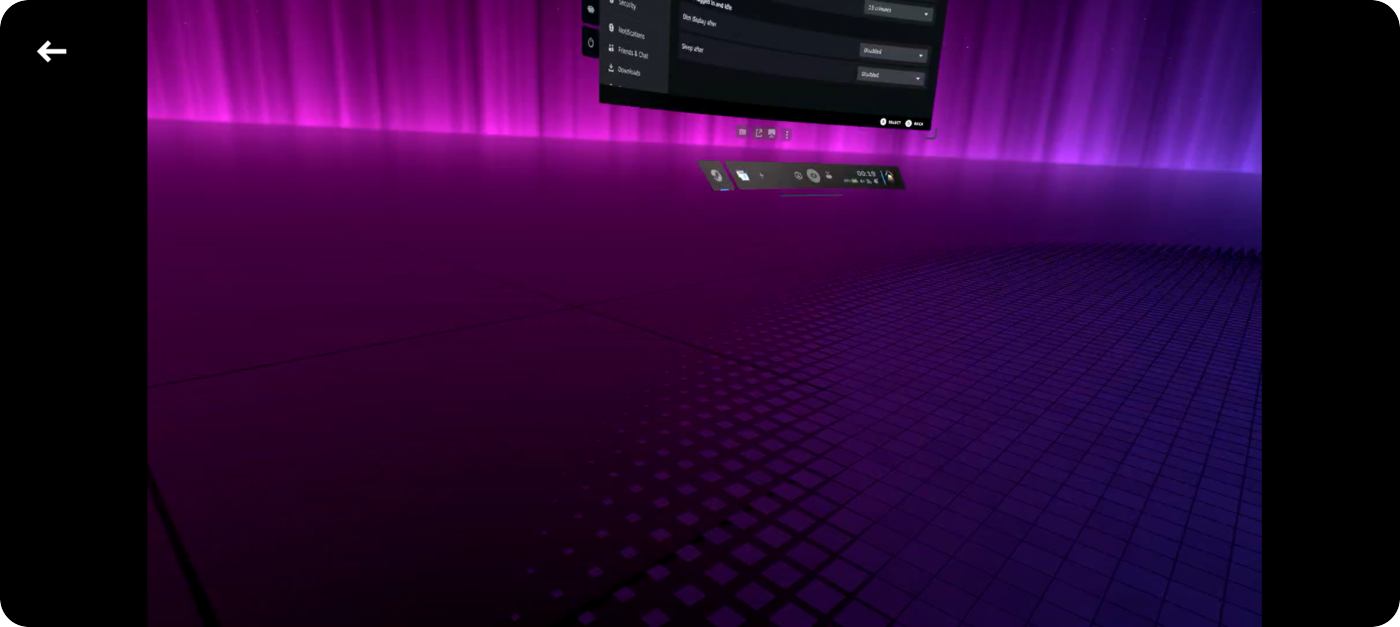
FrameMate, the UNOFFICIAL Android companion app that MIRRORS a Steam Frame to a phone, shipped THREE more releases inside roughly 20 HOURS of its debut. The newest, v0.1.5, published at 3:26 p.m. ET on October 4, TIGHTENS how the headset-side agent handles its ACCESS TOKEN and who may connect to it. What it does NOT add is encryption: the link between headset and phone is STILL plain HTTP and WebSocket.
The project, published by GitHub user nailuj05, FIRST appeared on October 3 and was reported by MIXED on Sunday morning. Since then the code has moved QUICKLY, and the repository showed 97 STARS when Metaverse Watcher checked it Sunday evening.
What changed in v0.1.3 through v0.1.5
According to the release notes, v0.1.5 adds a NEW rotate-token command so an owner can REPLACE the pairing token, STOPS writing the token to the agent’s log, and makes the agent REJECT connections from addresses OUTSIDE the local network. The developer says that last check matters MOSTLY for IPv6, where the Frame can be GLOBALLY addressable. Owners with unusual setups can switch it OFF with an FRAMEMATE_ALLOW_REMOTE=1 setting, which the troubleshooting guide documents alongside a request to open an issue.
Version 0.1.4, released 25 MINUTES earlier, FIXES installation from SteamOS Desktop Mode (the agent now starts after the next REBOOT, or IMMEDIATELY with a printed command), adds Steam Frame controller icons from Kenney’s CC0 Input Prompts set, and moves the Android build to Java 17. Version 0.1.3, from late Saturday, declared Android 17’s ACCESS_LOCAL_NETWORK permission in a patch from a FIRST-TIME contributor and fixed IPv6 connection and install problems.
What the app actually does
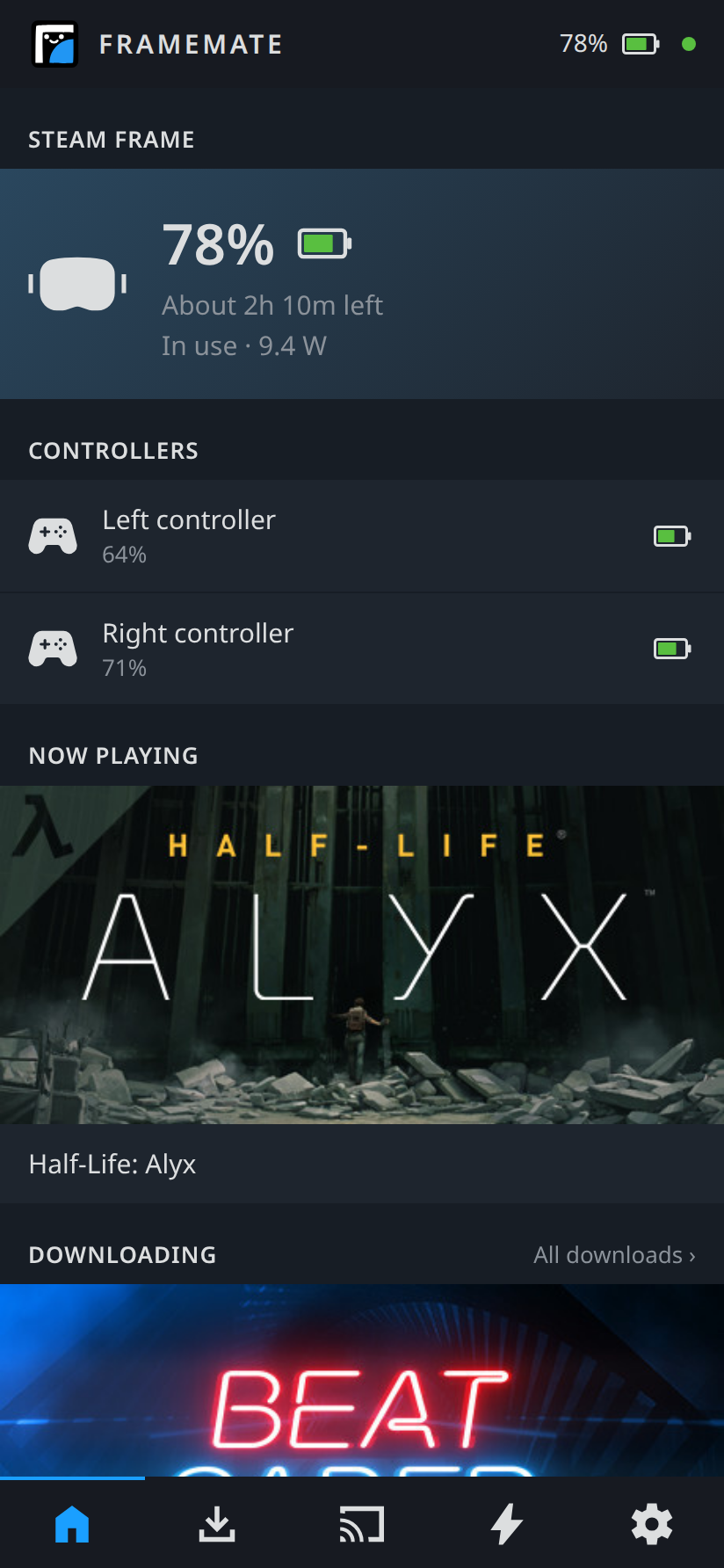
FrameMate has TWO parts. A Flatpak agent on the headset, which the README describes as a SINGLE static binary of about 5 MB that “idles at practically zero CPU,” and an APK on the phone. The app shows HEADSET battery with charging state and power draw, BOTH controller batteries, the running GAME, the Frame’s DOWNLOAD queue, and a system view with SteamOS and Steam client versions plus battery TEMPERATURE and HEALTH. MIRRORING is hardware-encoded on the headset and, per the README, is “the actual view in the headset, passthrough included.”
The caveats have not moved
The README is BLUNT. The agent “listens on port 7380 and talks plain HTTP/WebSocket, protected by the token,” and “the connection isn’t encrypted, so others on the same network could READ the token and what’s sent, including Mirroring.” The developer’s advice is to use it ONLY on TRUSTED networks such as home Wi-Fi. TLS with certificate PINNING and QR pairing sits on the project’s FUTURE list, next to iOS SUPPORT, a web-app client and download controls. There is still NO iPhone build; the developer says they lack the devices to build and test one.
FrameMate also relies on UNDOCUMENTED Steam internals, so a Steam or SteamOS update can BREAK parts of it, and it has been tested on the SteamOS 0.4.3 BETA branch. The README DISCLOSES that AI was used to reverse the Steam API, build the mobile front end and write the release tooling, and states that the project is NOT affiliated with or endorsed by VALVE.
Why it matters
Valve has NOT shipped a PHONE companion for Steam Frame, and community tools are filling that GAP FAST. The v0.1.5 changes are SENSIBLE hardening: rotating a leaked token and refusing off-network traffic narrow the obvious RISKS. But they do not change the core TRADE-OFF. Until ENCRYPTION lands, anyone sharing a network with a Frame owner running FrameMate could, in principle, read the TOKEN and the MIRRORED view. Treat it as a HOME-network tool for NOW.
Sources: FrameMate on GitHub, FrameMate releases, MIXED.