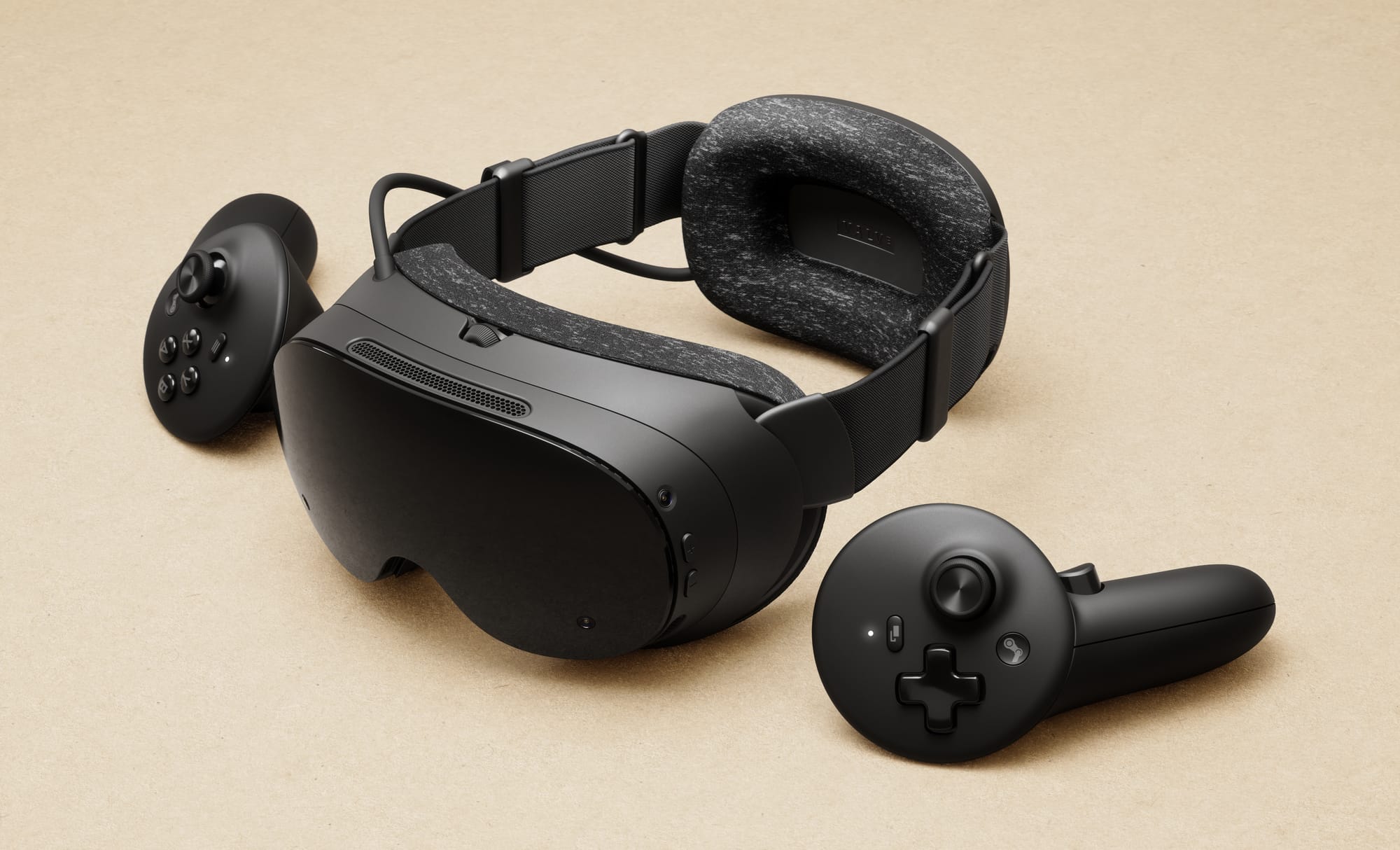
An unofficial SteamVR driver called QuestLHSync has SHIPPED TEN releases in roughly 29 hours, and its pitch is simple: line up LIGHTHOUSE trackers, controllers and base stations with a headset’s OWN inside-out tracking, using NOTHING but the headset’s CAMERAS. The project’s README puts it bluntly: “No SpaceCalibrator, no tracker strapped to your head.” Version 1.1 LANDED on October 3 at 10:32 a.m. ET for a ROOTED Quest Pro. Version 1.10 followed on October 4 at 3:13 p.m. ET. MIXED covered the project on October 4; the release NOTES show how much has CHANGED since.
How It Works
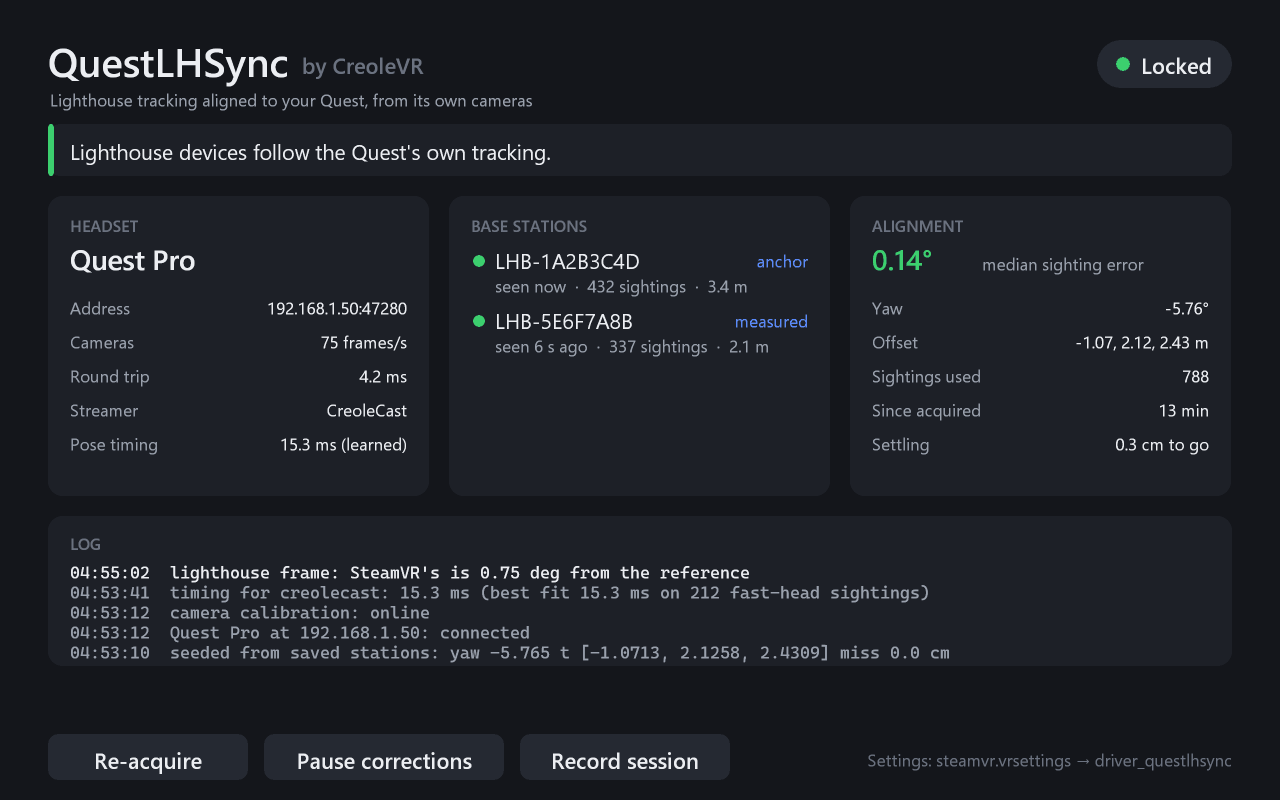
The TOOL has TWO halves. A headset component “serves what the cameras see on your local network,” and a PC-side SteamVR driver “solves the alignment, applies it to every lighthouse device and adds a page to the SteamVR dashboard.” The KEY trick is that a headset’s tracking cameras can SEE the LASER flashes from SteamVR 2.0 base stations. QuestLHSync uses those flashes to keep the Lighthouse coordinate space LOCKED to the headset’s own space while you PLAY. That is the job FULL-BODY tracking users normally hand to SpaceCalibrator, often with a tracker MOUNTED on the headset.
The requirements are SPECIFIC. SUPPORTED headsets are the Quest Pro, Quest 3 and Quest 3S, which MUST be rooted with Magisk, or the Steam Frame. Base stations must be SteamVR 2.0 (“1.0 isn’t supported”), the PC must run WINDOWS with SteamVR, and both machines must share ONE local network. STREAMING can run over Steam Link, Link, Air Link, Virtual Desktop, ALVR or CreoleCast. The README says it “locks within about half a minute.” It also TELLS users to switch OFF SpaceCalibrator or OpenVR-SpaceSync first, because “two tools correcting the same devices fight each other.”
Steam Frame Gets the Easier Path
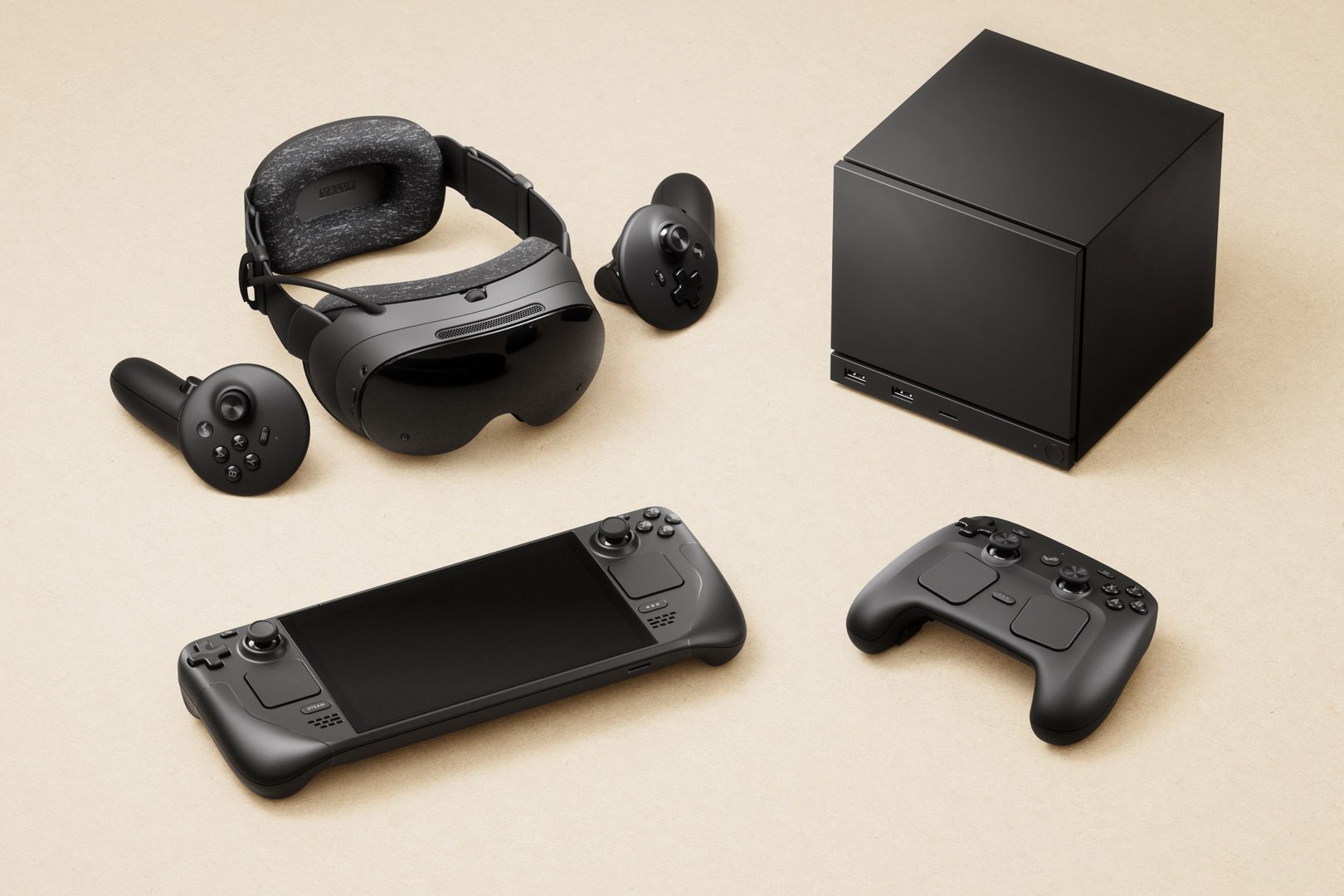
Steam Frame SUPPORT arrived in version 1.5 on October 3, credited to contributor NotZoeyDev. On Quest, the headset half is a Magisk module and needs ROOT, which the project says is “at your own risk.” On the Frame, the README says there is “No root, no developer password: everything installs as your user.” Frame owners can INSTALL a Flatpak through Discover in Desktop Mode or run a SHELL script. That GAP matters: the Steam Frame is the ONLY supported headset where this works without MODIFYING the system.
What Changed on Day Two
FIVE more releases shipped on October 4 ALONE. Version 1.7 levels the Lighthouse space using the GRAVITY readings of MOVING controllers and trackers, and it drops the Re-acquire button because a wrong alignment is now found again AUTOMATICALLY. Version 1.8 FIXES LIT rooms: the headset now picks out the camera frames that show base stations “by their place in the cameras’ cycle, not by how dark they are.” Version 1.9 adds a Windows INSTALLER by NotZoeyDev that registers the driver and offers UPDATES. It also STOPS drift in rooms with three or more base stations and stops four-station square setups from locking 90 or 180 DEGREES off.
Version 1.10 FIXES a REGIONAL bug. Quests set to a 60 Hz power line frequency, as in the US, “run their cameras at 45 fps, and QuestLHSync took them for 37.5.” On those headsets, base stations could stay MIRRORED or the wrong way round. The fix touches ONLY the SteamVR driver and installer, so the Magisk module and Steam Frame package from 1.8 STILL apply.
The Caveats
TESTING is THIN. The README says the tool was “Tested on the Quest Pro,” and that the Quest 3 “hasn’t been tried yet, nor has the 3S.” It gives NO test note for the Steam Frame path. ACCURACY also depends on the ROOM. With only TWO base stations in view, the README’s own example says “a tilt of 1.5° puts trackers on the floor 15 cm to the side.” With THREE, the driver can LEVEL the space against the headset’s gravity.
SECURITY deserves a CLOSE read. The README says the headset part “answers anyone on the local network without authentication.” It SENDS “bright-spot positions (never images), the camera calibration, and the headset’s serial number, model and firmware.” The project ADVISES using it only on a network you TRUST. It also states: “QuestLHSync is not affiliated with Meta or Valve.”
Why It Matters
Lighthouse tracking has OUTLIVED most of the headsets built around it, and full-body VR users STILL pair Vive trackers with standalone headsets. CALIBRATING two tracking systems against each other has long been the FRICTION point. A CAMERA-BASED approach that needs NO extra hardware on the head is a meaningful SIMPLIFICATION, ESPECIALLY on Steam Frame. Attention is building QUICKLY: the repository showed 68 STARS and six forks on the afternoon of October 4, up from the 28 stars and two forks MIXED counted the evening before. That is EARLY interest in a project barely two days old, not PROOF that it works RELIABLY. Treat QuestLHSync as a promising community EXPERIMENT and check the latest release notes before INSTALLING.