A small STROKE rehabilitation study in Ethiopia has put a Quest-based VR system through its FIRST clinical test, and the headline numbers look STRONG. In a paper published in PLOS One on October 9, researchers from Jimma University in Ethiopia and Hasselt University in Belgium report that 18 stroke survivors FINISHED NINE sessions of AdaptRehab VR over THREE weeks, with 93% ADHERENCE, good USABILITY scores and arm-function GAINS that cleared the usual THRESHOLDS for a MEANINGFUL change.
Read the paper next to its own trial record, though, and the story gets MESSIER. The authors say RECRUITMENT ran from September 1 to October 10, 2025. The ClinicalTrials.gov entry the paper cites, NCT07412899, was FIRST submitted on January 22, 2026, lists an “actual” start date of December 8, 2025, and on October 18, 2026 STILL showed the study as ENROLLING by invitation. The study has NO control group, and the TEAM that ran it is the SAME TEAM that BUILT the SOFTWARE.

What AdaptRehab VR Is
AdaptRehab VR is a set of SIX games for upper-limb therapy: Basket Bloom, Strike Zone, TapQuest, FruitFall Frenzy, Precision Pitch and Bean Picker Pro. The same four authors, Chala Diriba Kenea, Teklu Gemechu Abessa, Dheeraj Lamba and Bruno Bonnechère, described how they designed it in a May 2025 paper in Bioengineering. That paper says the system was co-created with Ethiopian and Belgian PHYSIOTHERAPISTS and patients, BUILT with the Unity engine for Oculus Quest headsets, and SUPPORTS both CONTROLLERS and HAND TRACKING. The PITCH is CULTURAL fit: tasks that look like LOCAL daily work, such as picking beans, rather than generic arcade games.
That matters because most VR rehab EVIDENCE comes from WEALTHY health systems. The authors note that two-thirds of stroke deaths happen in low- and middle-income countries, where PHYSIOTHERAPISTS are SCARCE and patients often drop out of outpatient care.
What the Study Found
The trial ran at Jimma University Teaching Hospital. Physiotherapists screened 31 stroke survivors. NINE were turned away because they lived in RURAL areas and had no way to stay near the hospital for three weeks, and two were medically unstable. TWENTY started. One man WITHDREW after three sessions because he lacked financial and family support to keep coming. Another was DROPPED after he could not follow the game instructions; the paper says he sat and LAUGHED after putting the headset on and NEVER took part in the exercises.
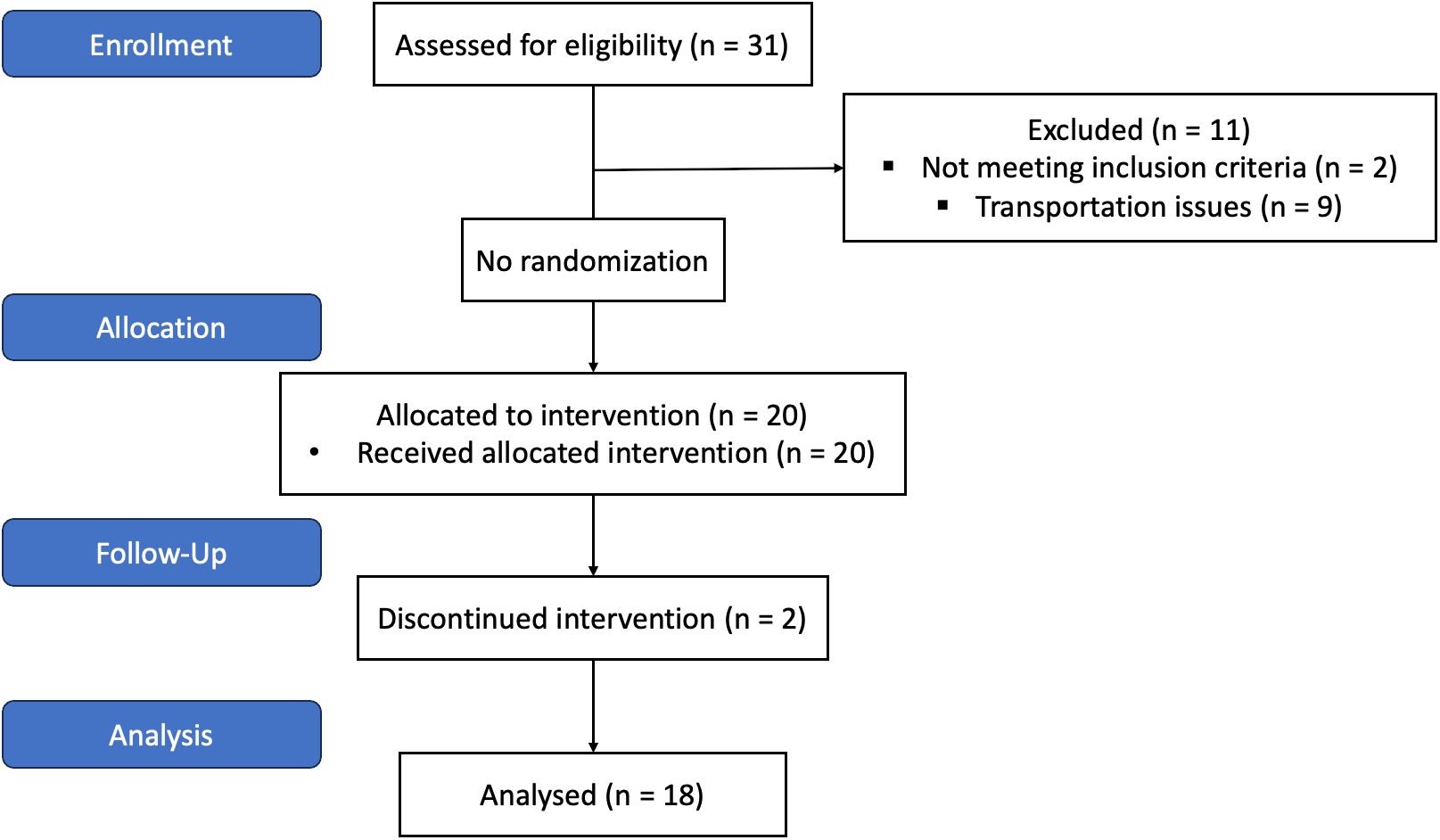
For the 18 who FINISHED, each session lasted about 30 minutes, ON TOP of their normal therapy. The reported results:
- Adherence: 93% of scheduled sessions were attended.
- Usability: a mean System Usability Scale score of 76.2, ABOVE the study’s preset bar of 70.
- Arm function: the Action Research Arm Test rose from 33.0 to 48.6 points, a gain of 15.6. The paper says the minimal clinically important difference is 5 to 6 points.
- Dexterity: the Box and Block Test median rose from 21.5 to 29 blocks.
- Side effects: MILD and short-lived. Six people reported sweating, and three reported fatigue and headache.
Physiotherapists in a focus group were POSITIVE but practical. They said setup took about 10 minutes at first, the clinic had to carve out a PARTITIONED area, and “occasional technical glitches – game freezing, controller disconnection” happened but were RARE. One patient told the researchers, “With regular therapy, I sometimes wanted to skip.”
Why the Gains Are Not Proof
The authors are CANDID about this. It is a SINGLE-ARM, before-and-after study at ONE site. Every participant also kept getting CONVENTIONAL therapy, and seven of the 20 people enrolled were still in the subacute stage, when SPONTANEOUS RECOVERY is more likely. The paper itself says the design “precludes causal inferences,” that natural RECOVERY or repeated practice may explain the change, and that the clinically important THRESHOLDS were NOT set in advance. The assessors were independent of the sessions, but staffing LIMITS meant they were NOT BLINDED.
The selection matters too. Nine of the 31 people screened were EXCLUDED for TRANSPORT reasons, and 80% of those enrolled lived in URBAN areas. The patients who would gain most from cheaper rehab outside a city hospital are the ones this study could NOT REACH. The authors say the next step should be a fully powered RANDOMIZED trial with longer follow-up and a cost-effectiveness analysis. No such trial has been announced.
The Registration Dates Do Not Line Up
The paper says the protocol won IRB approval at Jimma University on April 12, 2025, that the study was REGISTERED as NCT07412899, and that it was carried out as described in the PREDEFINED protocol. The public record tells a DIFFERENT timeline. On ClinicalTrials.gov, the entry, titled “AdaptRehab imVR: Exploring the Feasibility of imVR for Upper Limb Stroke Rehabilitation in Ethiopia,” was first submitted on January 22, 2026 and first posted on February 17, 2026. BOTH DATES are more than THREE months after the RECRUITMENT window the paper describes had closed.
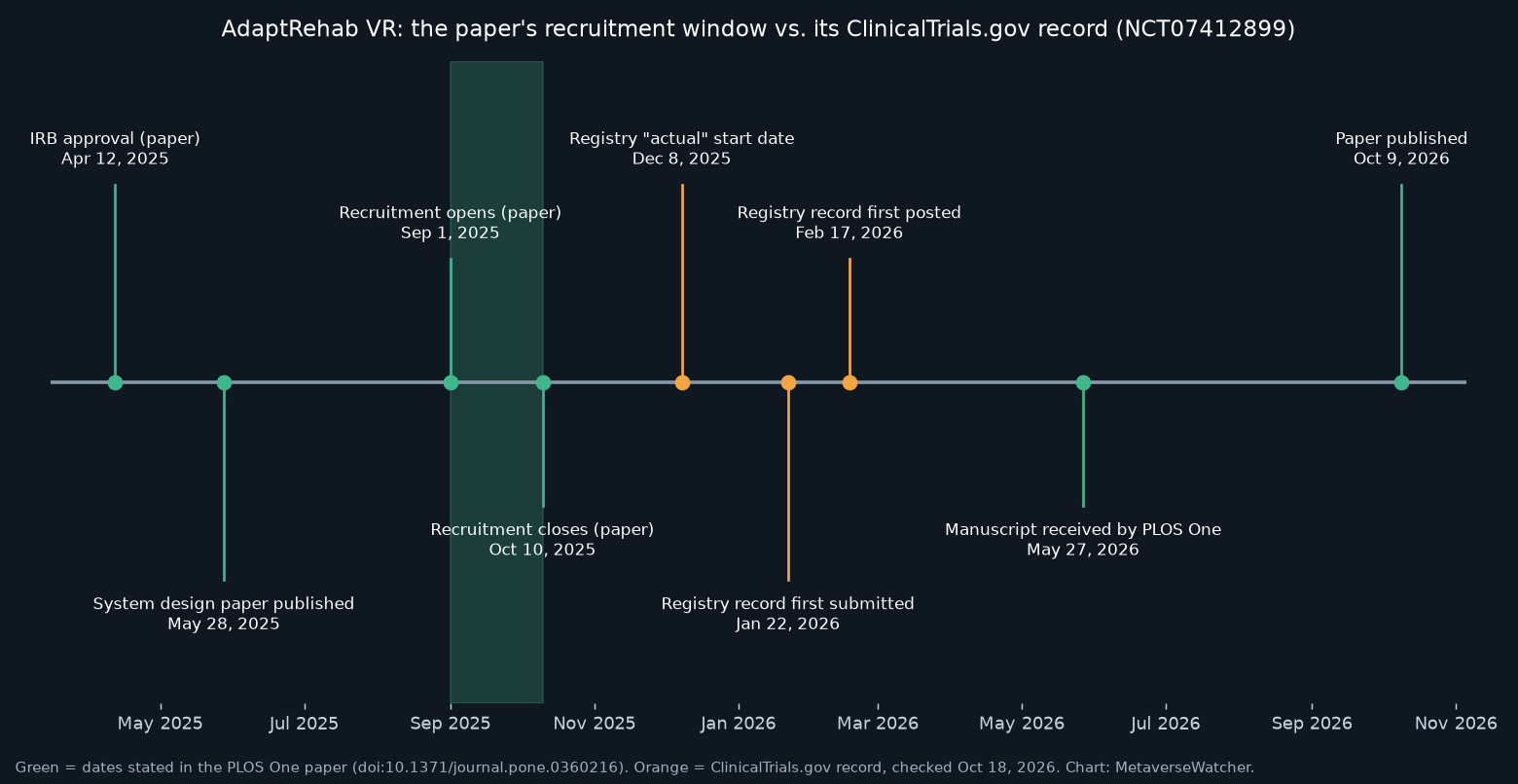
The REGISTRY entry also lists an actual START date of December 8, 2025, an estimated primary completion date of March 26, 2026, an estimated enrollment of 18, and a status of “Enrolling by invitation.” It was last UPDATED in February 2026. In other words, the record describes a study that began AFTER the paper says RECRUITMENT ended, and it has not been UPDATED to show that the study is FINISHED and published. We could find NO public EXPLANATION for the GAP. That does not mean the results are wrong. It does mean readers CANNOT use the REGISTRY to check that the outcomes reported were the ones PLANNED BEFORE the first patient was enrolled, which is what registration is for.
A second point is DISCLOSURE. The paper says the system “was previously developed by the authors,” and the senior author’s listed roles include SOFTWARE. BOTH papers declare no competing interests, and the PLOS One paper says the work received no specific FUNDING. That can be accurate for academic SOFTWARE with no commercial owner. Still, the people who BUILT AdaptRehab VR also recruited the patients, ran the analysis and wrote up the results. An INDEPENDENT test has not happened yet.
What It Means for Clinical XR
Medical XR is a recurring theme on this site, and the pattern holds here: a SMALL study with CLEAR LIMITS and an upbeat conclusion. What makes AdaptRehab VR worth watching is not the 15.6-point ARAT gain. It is the EVIDENCE that a STANDALONE CONSUMER headset, CHEAP games tuned to LOCAL tasks and a PARTITIONED corner of a busy clinic were enough to keep patients in Jimma coming back NINE times in three weeks. Patient ENGAGEMENT is a REAL problem in rehab, and this study gives REAL data on it.
The functional claim needs a CONTROLLED trial that is REGISTERED before it starts, includes RURAL patients, and is run or at least assessed by someone OUTSIDE the development TEAM. Until then, the fair reading is the one the paper’s own limitations section gives: FEASIBLE, ACCEPTABLE and PRELIMINARY.
Sources
- Kenea CD, Abessa TG, Lamba D, Bonnechère B. Feasibility, acceptability, and preliminary efficacy of AdaptRehab VR. PLOS One, October 9, 2026.
- ClinicalTrials.gov record NCT07412899, checked October 18, 2026.
- Kenea CD et al. AdaptRehab VR: Development of an immersive virtual reality system for upper limb stroke rehabilitation. Bioengineering, May 2025.