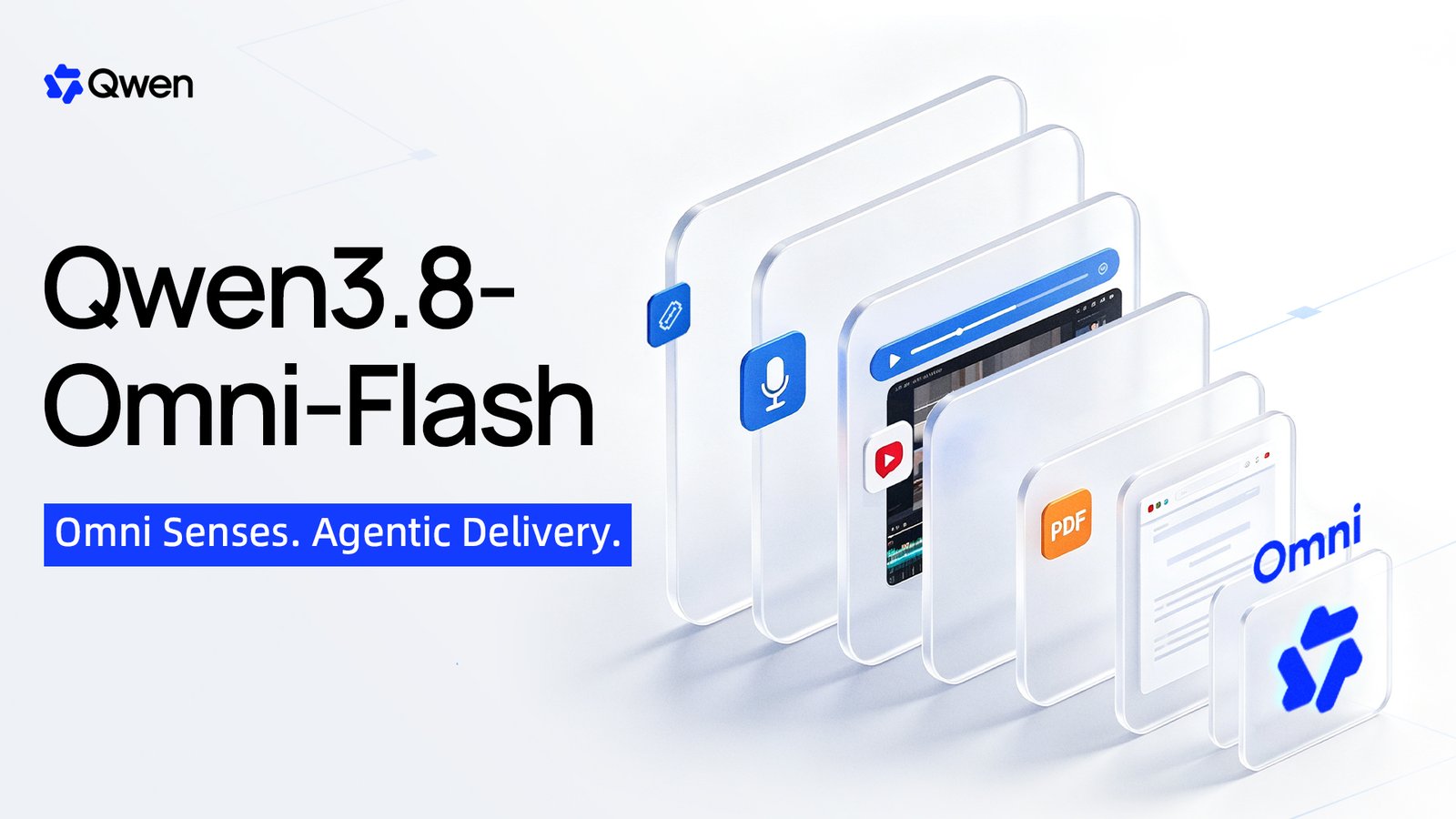
Alibaba’s Qwen team just put a NUMBER on what a wearable assistant has to do when someone says “go see what is making that SOUND.” On September 18 it shipped Qwen3.8-Omni-Flash, and the realtime variant — named in the company’s own Alibaba Cloud blog dated September 20 — claims it can LOCATE targets by AUDIO: direction, distance, obstacles, and navigable SPACE, fused with live VISION.
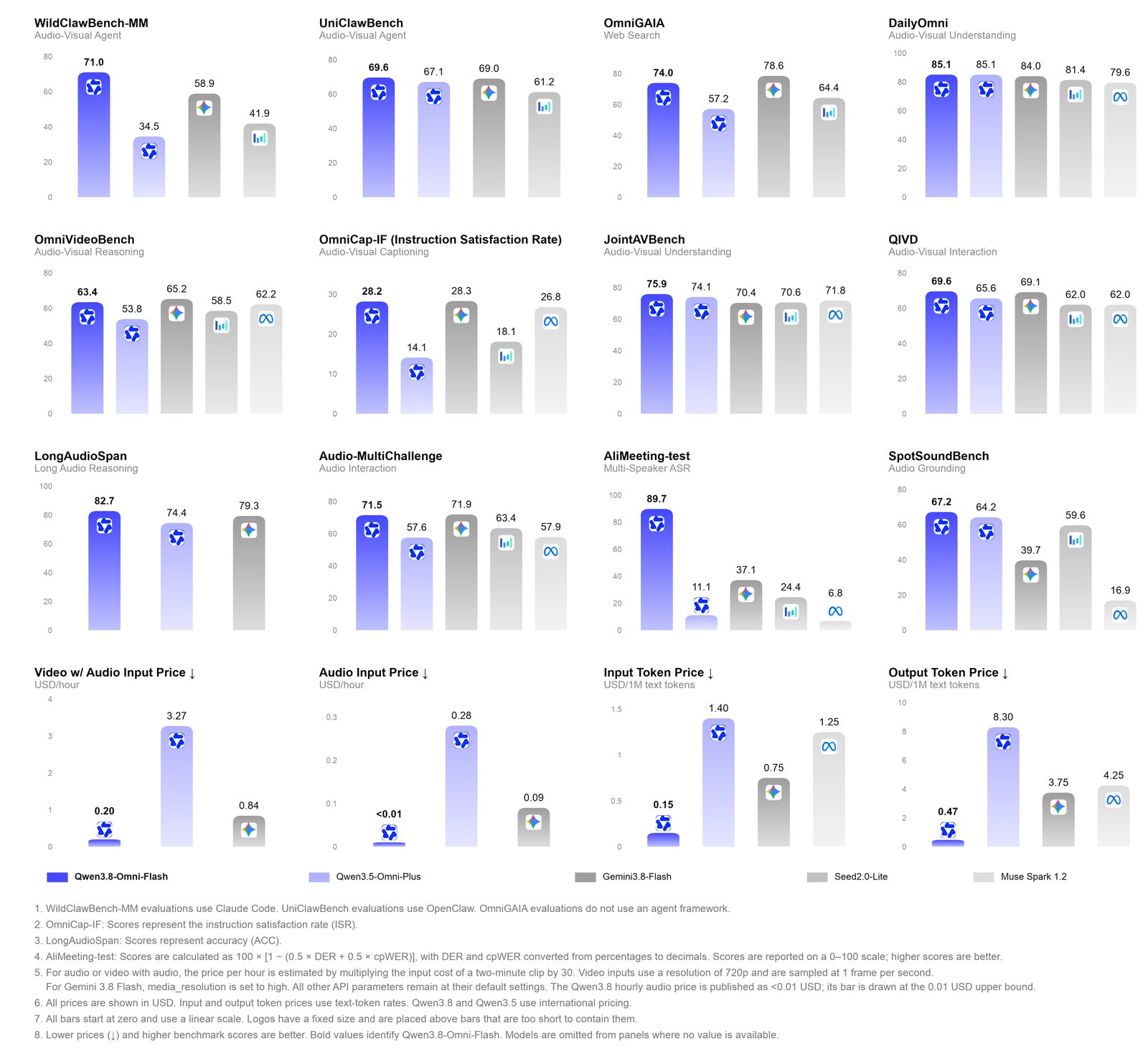
MIXED flagged the release the same day, noting the claim sits beside a HARD price cut: more than 98 PERCENT cheaper audio INPUT per hour versus Qwen3.5-Omni-Plus on Qwen’s own chart — under $0.01 versus $0.28 — with Gemini 3.8 Flash listed at $0.09. Treat every score as a VENDOR number until someone else benches it.
Spatial Sound Is the Glasses Pitch
Qwen’s blog calls Omnimodal Spatial Audio Perception the piece that matters for ROOM-scale agents. The REALTIME model “combines spatial SOUND with visual information to continuously determine the DIRECTION and DISTANCE of sound sources,” then calls tools for localization, search, path planning, and NAVIGATION. The example instructions are exactly the ones a SMART GLASSES wearer would bark: “come over HERE” or “go see what is making that SOUND.”
On SpotSoundBench, an audio grounding test in Qwen’s own table, the model scores 67.2 against 39.7 for Gemini 3.8 Flash. That is Qwen’s RESULT, not an independent LAB. The company names NO glasses or headset PARTNER and lists no SHIPPING product built on the stack — only an OpenAI-compatible API on the Qianwen platform with Beijing and Singapore ENDPOINTS.
What Else Ships in the Bundle
The base model takes text, image, audio, and video with a 1M-token CONTEXT window. Across 29 evaluations, Qwen says the average score rises more than 25 PERCENT over Qwen3.5-Omni-Plus. AliMeeting diarization error rates fall from 88.11 / 89.61 to 3.35 / 17.18. Latency on a six-second audio input: 591ms to first TOKEN, 978ms to the first audio packet — figures that decide whether a voice agent feels LIVE or LATE.
Speech recognition covers 74 languages plus 39 Chinese dialects; speech generation covers 29 languages plus seven dialects. The WEIGHTS stay CLOSED. What Alibaba did open are Qwen-MM-Plugins for agent harnesses and Qwen-Live Harness for continuous audio-visual interaction over WebSocket and WebRTC.

Why XR Should Care Before Connect
Meta Connect opens September 23. Camera-FREE AI glasses and Muse-class agents are already in the preview cycle. A model that claims it can HEAR where to walk — cheaply enough to stream all day — is the missing INPUT for every display-less frame that still has microphones. Qwen does not ship a PAIR. It ships the SENSING layer those pairs will RENT.
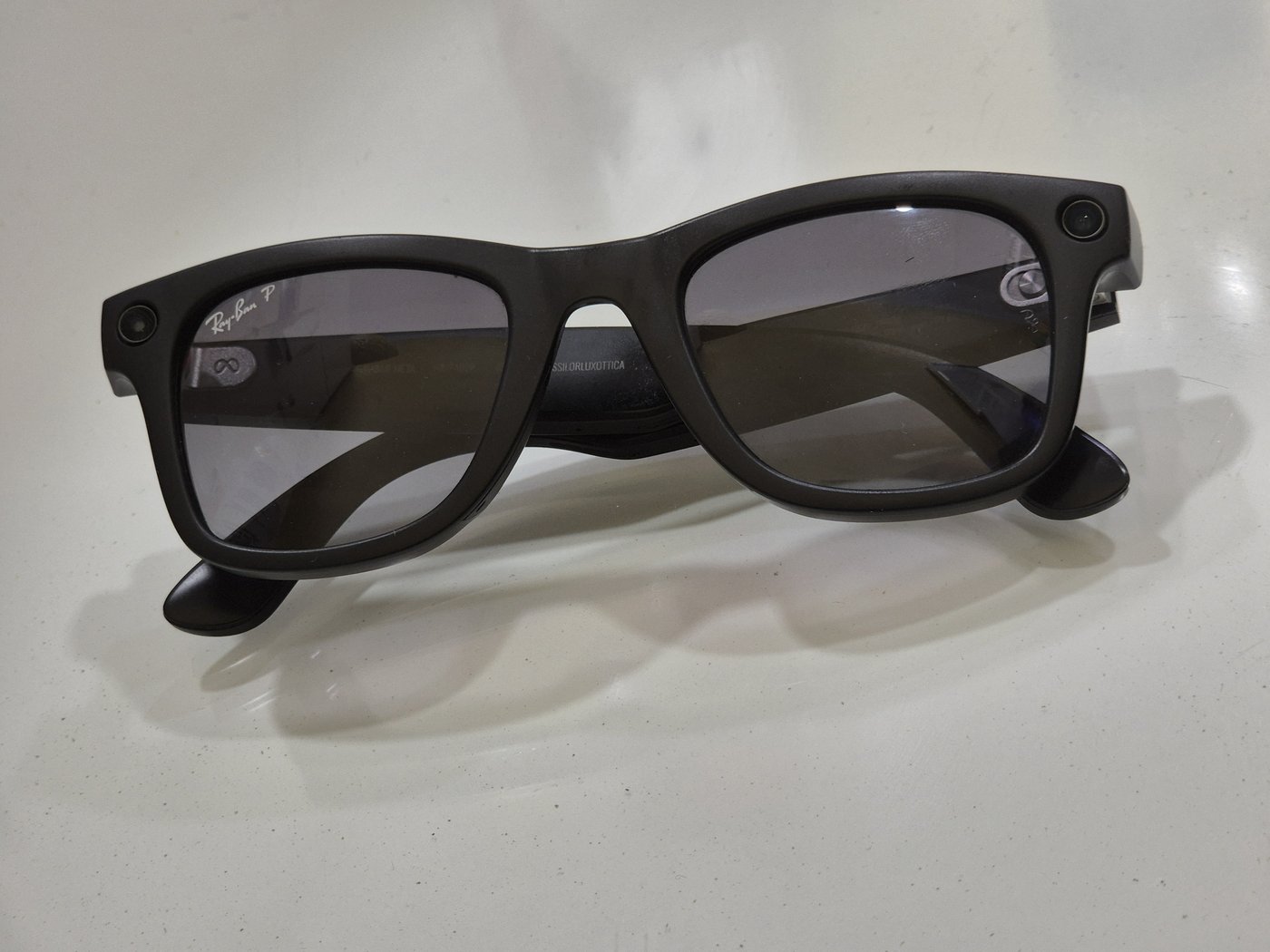
Read the CLAIM carefully. Spatial audio localization is Qwen’s DEMO, not a third-party AUDIT. The PRICE cut is real on Qwen’s tariff sheet. For glasses BUILDERS, that combination — sound that POINTS, vision that confirms, and API cost that does not blow the battery budget — is the STORY that landed three days before Meta takes the STAGE.
Sources: Alibaba Cloud — Qwen3.8-Omni-Flash; MIXED — Alibaba Qwen spatial audio.