Milan’s Pinacoteca di Brera has started LENDING Meta’s AI glasses to blind and visually impaired visitors, turning a TEN-YEAR-OLD audio-description tour into a HANDS-FREE one. The trial, called “Sensing Art – Discovering Masterpieces Beyond What Meets the Eye,” went LIVE on October 13 and was PRESENTED the same day in Milan by Meta, the museum and EssilorLuxottica (Pinacoteca di Brera; EssilorLuxottica).
It is a SMALL deployment with a CLEAR scope: EIGHT paintings, THREE audio tracks per painting, and glasses handed out on FREE loan at the museum’s info point. That makes it one of the more CONCRETE ACCESSIBILITY uses of CAMERA glasses so far, and also one of the more CAREFULLY limited.
How the tour works
The route builds on DescriVedendo, a description method from the Associazione Nazionale Subvedenti (ANS) that the museum has used for NEARLY a decade. Visitors DOWNLOAD the Grande Brera app, STAND in front of a work, and trigger artwork RECOGNITION from the glasses. The camera IDENTIFIES the painting and the SPEAKERS in the temples PLAY the matching audio, so the phone can stay in a pocket (Pinacoteca di Brera).
Each work CARRIES THREE tracks: a morphological description that puts shapes, composition and visual detail into words; an art-historical overview; and a biography of the artist. Short ORIENTATION tracks guide visitors from one painting to the next, and playback can be customised. Because the glasses use OPEN-EAR audio, the partners stress that visitors keep FULL awareness of the room and of the people they came with (EssilorLuxottica).
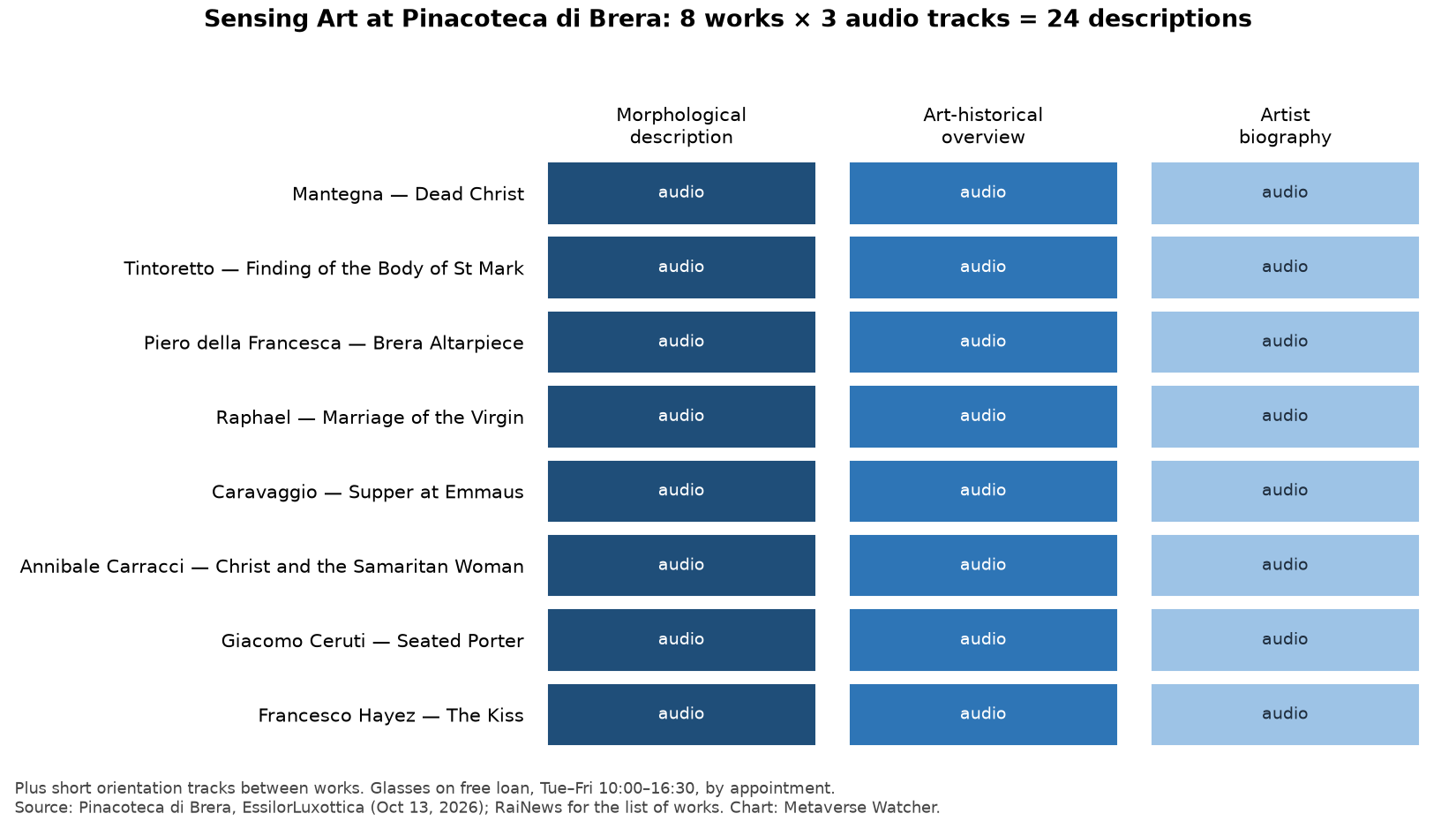
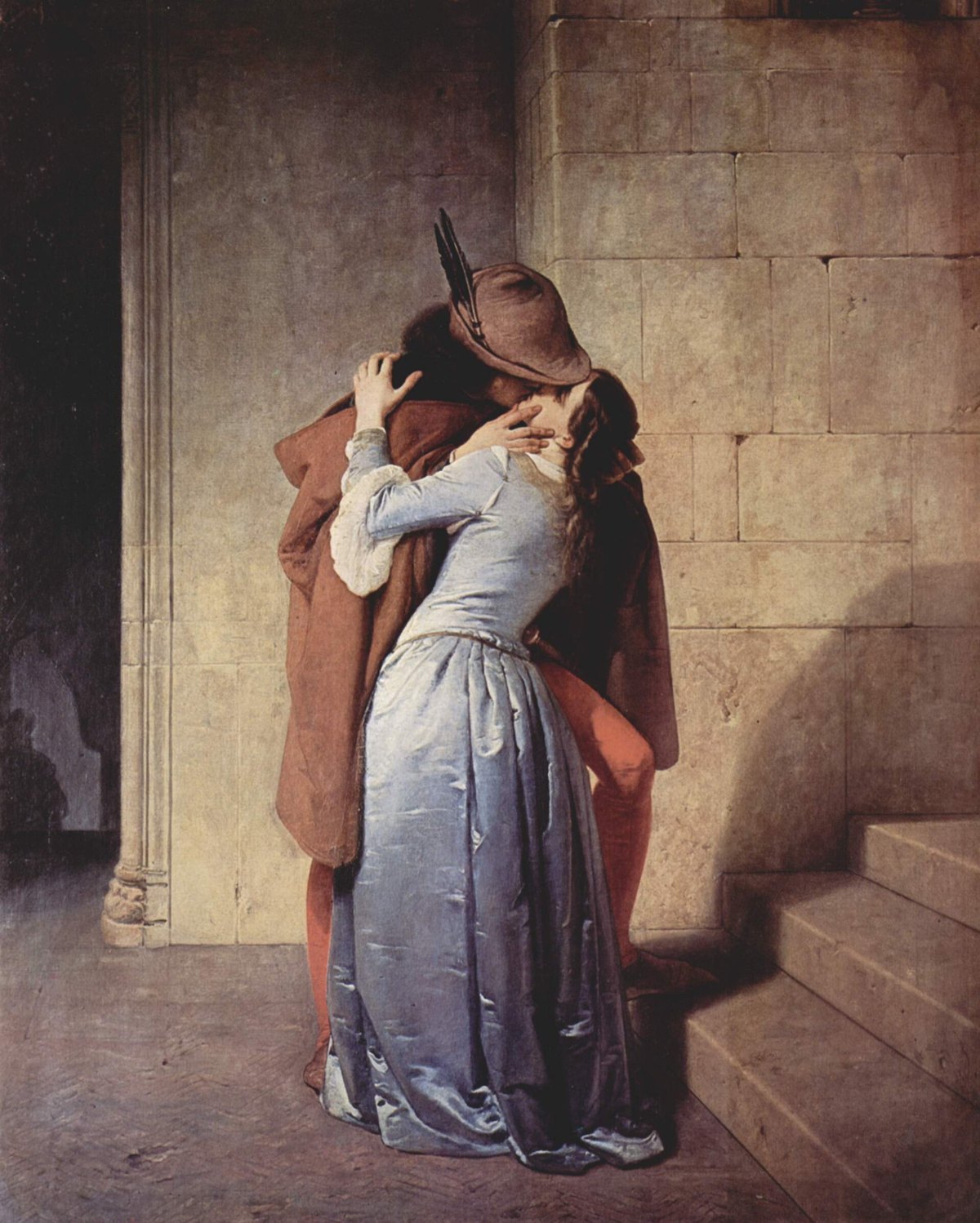
The EIGHT works span FIVE centuries of the collection. According to RaiNews, they are Mantegna’s Dead Christ, Tintoretto’s Finding of the Body of Saint Mark, Piero della Francesca’s altarpiece with Federico da Montefeltro, Raphael’s Marriage of the Virgin, Caravaggio’s Supper at Emmaus, Annibale Carracci’s Christ and the Samaritan Woman at the Well, Giacomo Ceruti’s seated porter, and Francesco Hayez’s The Kiss. WWD confirms Hayez, Mantegna and Raphael among them.
Beyond the tour: Meta AI and Be My Eyes
The glasses are NOT locked to the museum content. Visitors can ASK Meta AI about their surroundings, and through the Be My Eyes integration they can CALL SIGHTED volunteers and trained operators for LIVE help with orientation and practical tasks, both INSIDE the galleries and on the way to the museum, the partners say (EssilorLuxottica).
That is the MORE significant detail for the glasses category. A painting-recognition feature is a MUSEUM feature. A GENERAL assistant plus a HUMAN help line is a MOBILITY tool, and Italy’s Minister for Disabilities, Alessandra Locatelli, framed the project in EXACTLY those terms, praising its mix of “autonomy and independence in mobility with access to culture” in a video message. Rosa Garofalo of ANS puts Italy’s visually impaired population at “over 1 million,” while the release says moderate or severe visual limitations affect 18.6% of the population.

What the partners did not say
The announcements leave SEVERAL practical gaps. Neither the museum nor EssilorLuxottica names the SPECIFIC glasses model being loaned; both say only “AI glasses” developed by Meta and EssilorLuxottica. There is NO figure for how MANY pairs are available, NO END date for the trial, and NO stated way of measuring whether it works beyond user feedback. The release calls it a “FIRST step” and one of the first museum trials of its kind in the world, but does not say whether other Italian venues are LINED UP.
Access is also NARROW. Glasses are available Tuesday to Friday, 10:00 to 16:30, by APPOINTMENT only. One SMALL but REAL snag: the museum’s own page asks visitors to book at educazione@pinacotecabrera.org, while the EssilorLuxottica release prints educazione@pinacotecadibrera.org. Anyone BOOKING should follow the museum’s page.
Why it matters
Accessibility has become Meta’s STRONGEST argument for camera glasses at a moment when VENUES are PUSHING back. We have covered Norway’s proposed limits on AI glasses in public places, UK sight-loss charities petitioning against blanket bans, and Meta’s donation of 1,000 pairs in Singapore. Brera is a DIFFERENT case: a MAJOR cultural institution INVITING camera glasses into its galleries, with disability groups (ANS, UICI and the Fondazione Istituto dei Ciechi di Milano) INVOLVED in testing and design.
The model is REPEATABLE only if museums can PRODUCE the CONTENT. Brera ALREADY had a DECADE of DescriVedendo descriptions; the glasses added a NEW delivery channel, NOT new scholarship. For other institutions, the HARD part will be writing the descriptions, NOT buying the HARDWARE.
Featured image: Francesco Hayez, The Kiss (1859), Pinacoteca di Brera, one of the eight works on the tour. Public domain, via Wikimedia Commons.

Sources
- Pinacoteca di Brera – Sensing Art announcement (Oct 13, 2026)
- EssilorLuxottica press release (Oct 13, 2026)
- WWD – Meta, EssilorLuxottica and Pinacoteca di Brera Join Forces (Oct 13, 2026)
- RaiNews – Da Hayez a Caravaggio (Oct 13, 2026)
- INVISION – press release copy (Oct 14, 2026)