Global XR headwear shipments fell 38.7% year-on-year to 1.9 million units in the first half of 2026, according to Omdia’s Sep. 3 Business Wire release. Growth in XR glasses — still a small base — did not cover a steep drop in headset volume. By 2025 the category had already logged its fourth consecutive year of decline after the 2021 pandemic peak.
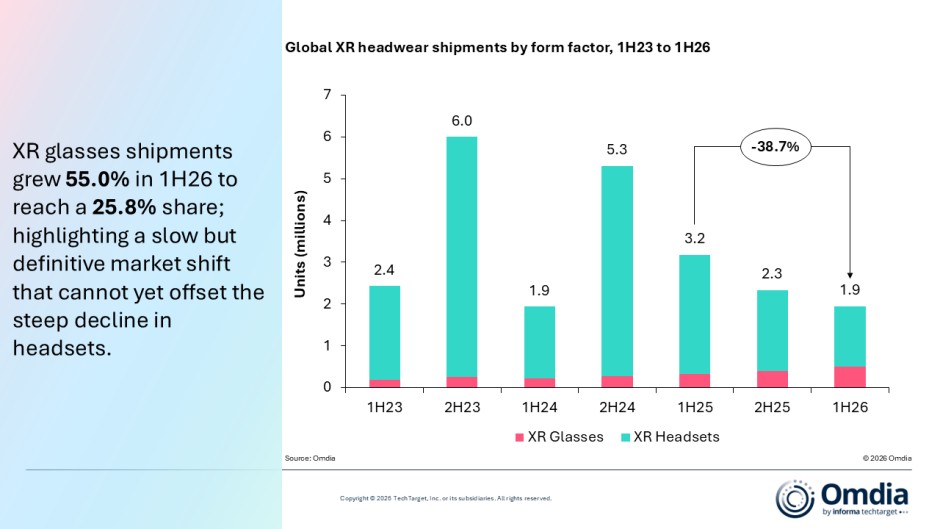
TelecomLead’s write-up of the same tracker and Bastille Post’s syndication match the headline cut: the market is not disappearing so much as reweighting toward lighter form factors while immersive headsets keep contracting.
Glasses take a quarter of shipments — still not enough
XR glasses rose to 25.8% of global XR headwear shipments in 1H26, up from 10.2% in 1H25. Almost all of that gain came from tethered display glasses. RayNeo, VITURE, and XREAL together held 93.1% of that tethered display-glasses segment.
Demand for lines such as the RayNeo Air 4 and VITURE Beast series pushed RayNeo and VITURE to No. 2 and No. 3 overall, at 9.9% and 8.6% share. That is a vendor reshuffle inside a shrinking pie, not a full market rebound.
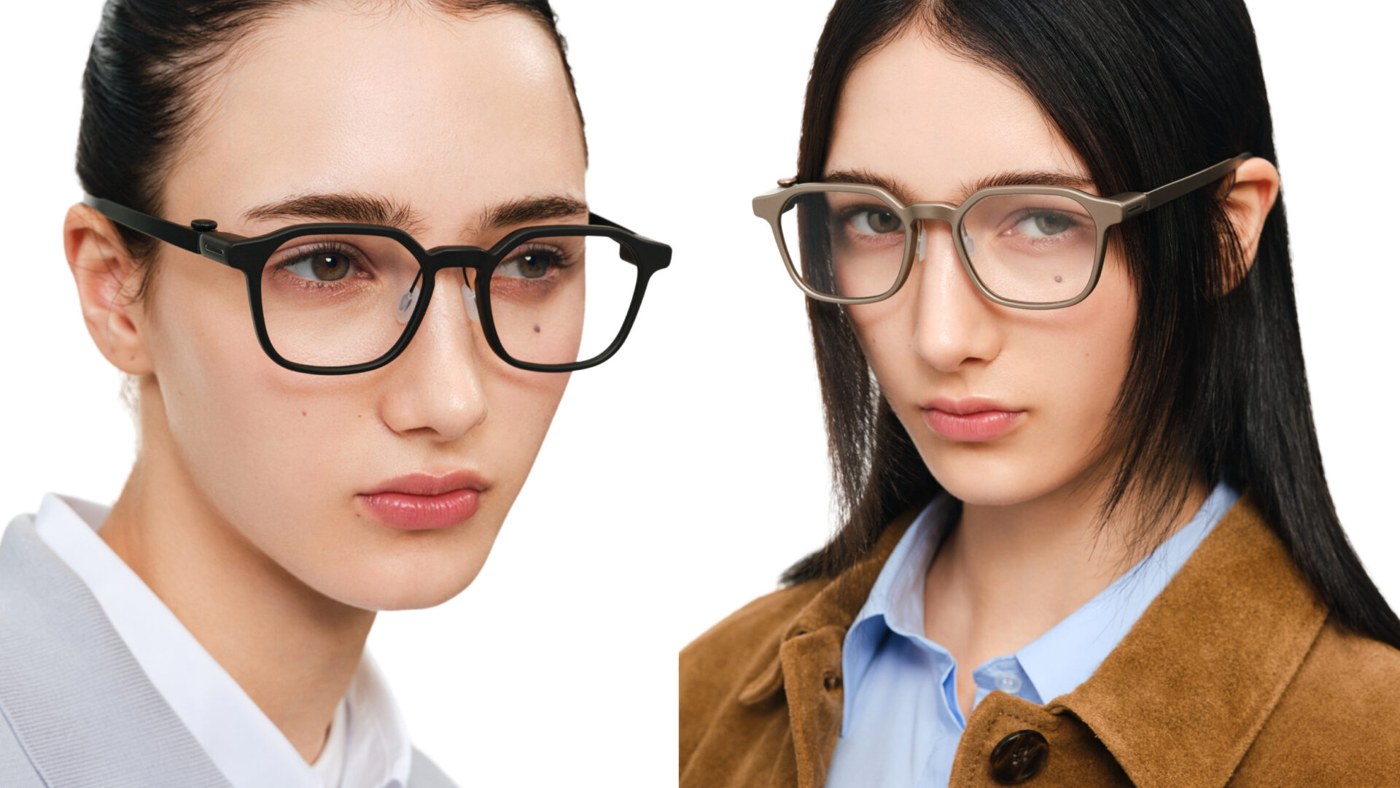
“XR glasses are gaining momentum because consumers are increasingly willing to trade some immersion for less friction,” said Qiran Ju, Senior Analyst at Omdia. “Lighter designs and familiar use cases such as video viewing and gaming are lowering the barriers to adoption.”
Meta still No. 1 — share under 50%
Meta remained the largest XR headwear supplier, but its share fell from 71.3% in 1H25 to 48.2% in 1H26 as Quest 3 / Quest 3S demand weakened. Omdia frames that as a failed upgrade cycle, not a temporary stockout.
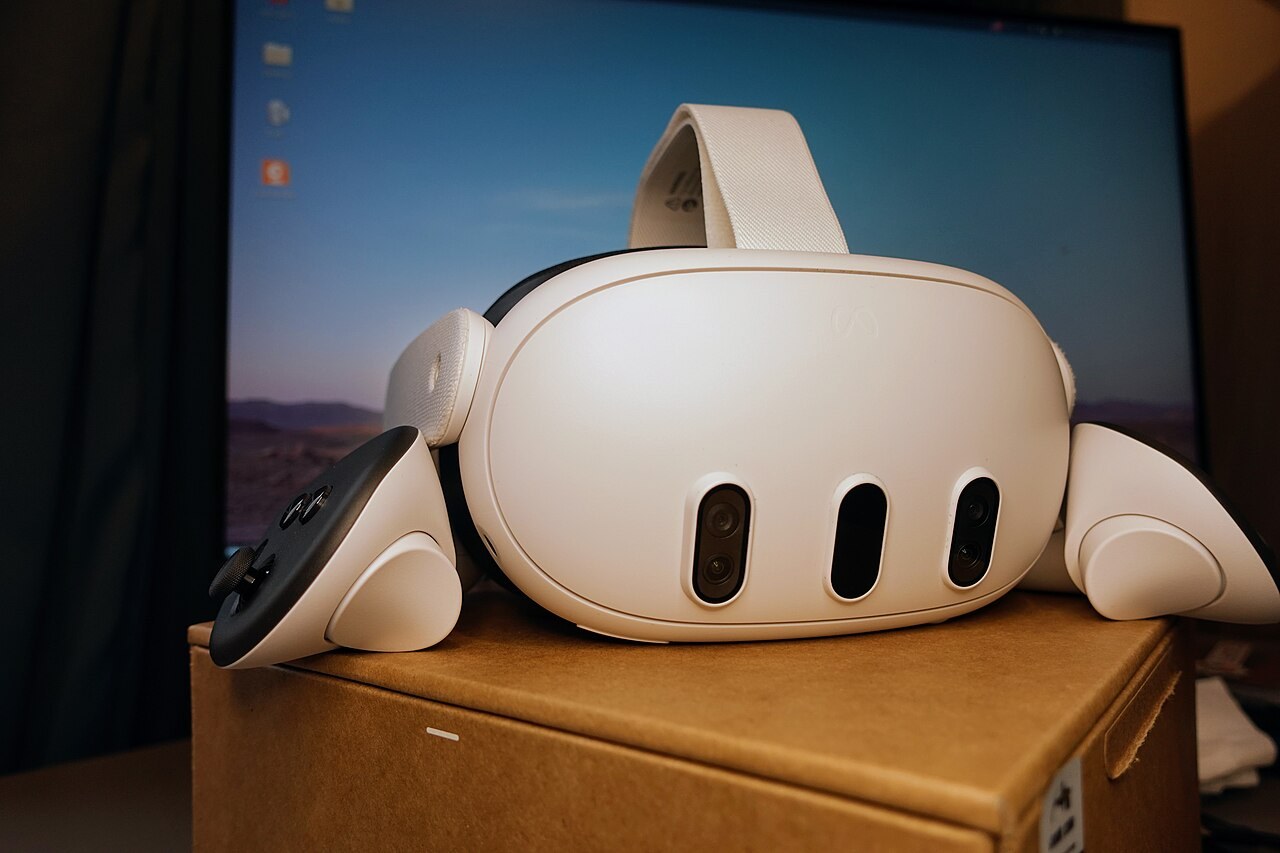
“Meta poured massive resources into headsets, but has struggled to replicate the breakout success of the Quest 2,” said George Jijiashvili, Senior Principal Analyst at Omdia. “Despite the Quest 3 and 3S offering better specs at accessible prices, they have failed to drive a major upgrade cycle or meaningfully expand the audience. The ongoing slump across the headset market reinforces that bulky headwear remains a tough sell beyond a core enthusiast base.”
Regions and the fall 2026 glasses calendar
North America held 43.9% of 1H26 shipments; Western Europe 23.8%. Greater China’s share rose from 11.9% in 2025 to 16.3% in 1H26, overtaking Rest of Asia-Pacific — helped by domestic tethered-glasses demand.
Jijiashvili’s forward line is blunt: the next phase is “embedding AI and spatial capabilities naturally into everyday wear,” with “frequent, light-touch interactions” as the path out of the enthusiast niche. That sits against a public fall 2026 glasses calendar already in coverage — Snap SPECS on Sep. 16, Meta Connect Sep. 23–24, and XREAL AURA later in the fall — hardware beats that will be judged against this shipment baseline, not against Quest 2 nostalgia.
The hard read from Omdia is still the open: −38.7% to 1.9 million units, glasses up in share, headsets down hard enough that the glasses gain could not close the gap.
Sources: Business Wire / Omdia (Sep. 3, 2026), TelecomLead, Bastille Post.
2 thoughts on “Omdia: XR Headwear Shipments Fell 38.7% in 1H26. Glasses Could Not Cover the Gap.”