Chinese XR manufacturer Skyworth XR is bringing a dedicated line of EGO-CENTRIC data-capture wearables to IROS 2026 in Pittsburgh, which runs September 27 through October 1, arguing that the same multi-camera and SLAM stack built for VR headsets now produces the first-person TRAINING data embodied AI teams need.
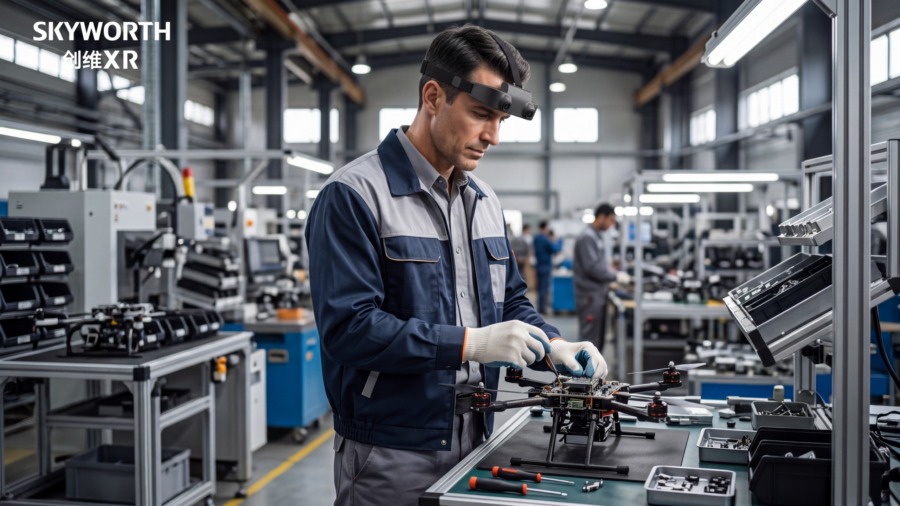
The pitch is not another consumer HEADSET. Skyworth XR says first-person human data has become a STRATEGIC input for robot foundation MODELS, citing public work such as Dyna Robotics’ disclosure that its Dyna-2 world-action model was pretrained on one MILLION hours of human video. At IROS, the company is treating that PIPELINE as a PRODUCT category of its own rather than a one-off custom BUILD.
According to coverage of the showcase on Auganix, Skyworth’s portfolio includes binocular, six-camera, and nine-camera head-mounted SYSTEMS — labeled E2, E6, and E8 — with deliveries that began in April 2026 and more than 10,000 units SHIPPED by August. The company says customer deployments have already supported hundreds of thousands of hours of COLLECTION.
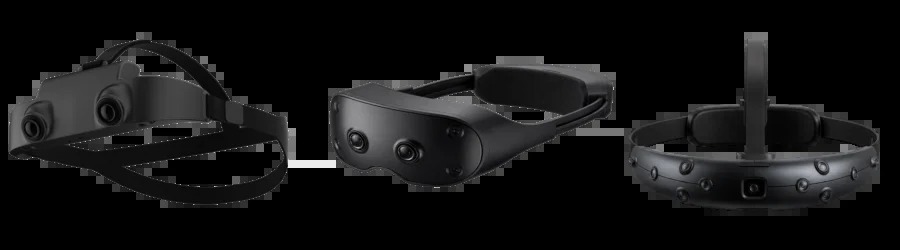
A Chinese-language technical brief on RoboRadar (September 2, 2026) fills in the engineering CLAIM: on-device SLAM that emits video plus a spatial TRAJECTORY, multi-camera and IMU fusion with sub-millisecond image-to-IMU skew, and gray global-shutter cameras paired with RGB for localization and semantics. The E2 is described as production hardware under 140 grams; the E6 as a six-camera unit with millimeter-scale trajectory error in internal tests; the E8 as a nine-stream, roughly 270-degree field-of-view wearable around 300 grams.
Wrist-mounted cameras and positioning modules sit beside the headsets. Skyworth says head and wrist units can talk wirelessly while keeping sync within 50 MICROSECONDS, enough for imitation-learning pipelines that need hands, tools, and head pose in one TIMELINE. Open interfaces are positioned for third-party grippers and tactile sensors — a clear nod to lab and factory capture, not living-room VR.
That is the metaverse-adjacent STORY. Spatial computing vendors spent a decade solving multi-camera sync, six-degree-of-freedom tracking, thermal budgets, and all-day wear. Embodied AI now wants those same PRIMITIVES packaged as capture rigs that spit out consistent, spatially structured LOGS. Skyworth is explicit about the parallel to Meta’s Ego4D and Project Aria research: wearables that record not only what a person sees, but motion, pose, and calibrated sensor STREAMS.
IROS remains a robotics research venue, not a consumer XR show. Showing there signals who Skyworth is selling to — robotics labs, data vendors, and teams building world-action models — rather than Quest or Steam Frame shoppers. The company also frames a longer roadmap: a modular hardware ECOSYSTEM for large-scale collection, with QUALITY of each hour mattering more than raw hour counts.
What Skyworth has not published in the English Auganix write-up is a public price list, regional availability outside China, or independent third-party benchmarks of the E6 trajectory claims. Treat the millimeter-error figures and unit-shipment totals as company-reported until verified at the booth. For Metaverse Watcher readers, the SIGNAL is still clear: XR manufacturing muscle is being retargeted at the data layer beneath physical AI, and Pittsburgh is where that pitch meets the robotics audience this WEEK.
Sources: Auganix (September 23, 2026); RoboRadar (September 2, 2026); IROS 2026 conference site.