Neurosurgeons who put mixed reality overlays on a patient’s brain usually get one registration check at the start of the case, then trust the virtual anatomy until the case ends. A University of Salerno team just published a lab answer to that gap: a Registration Quality Index (RQI) that scores how well a cyan virtual skull still matches the physical surface on every headset camera frame. The paper landed in the International Journal of Computer Assisted Radiology and Surgery (DOI 10.1007/s11548-026-03792-z), with a September 12, 2026 write-up from Bioengineer.org.
The problem the authors target is not “can AR show anatomy?” It is “how do you know the overlay is still true halfway through resection?” Static yardsticks such as Fiducial Registration Error and Target Registration Error are point checks. They do not track thermal drift, line-of-sight loss, micro-motion under fixation, or brain shift that can exceed 10 mm. Prior AR/MR neurosurgery reports the team cites already show translational errors spanning roughly 0.62–6.93 mm and angular errors 1.32–6.80°, depending on hardware and method — uncomfortable margins when eloquent cortex and deep targets want millimetres or less.
What they actually built
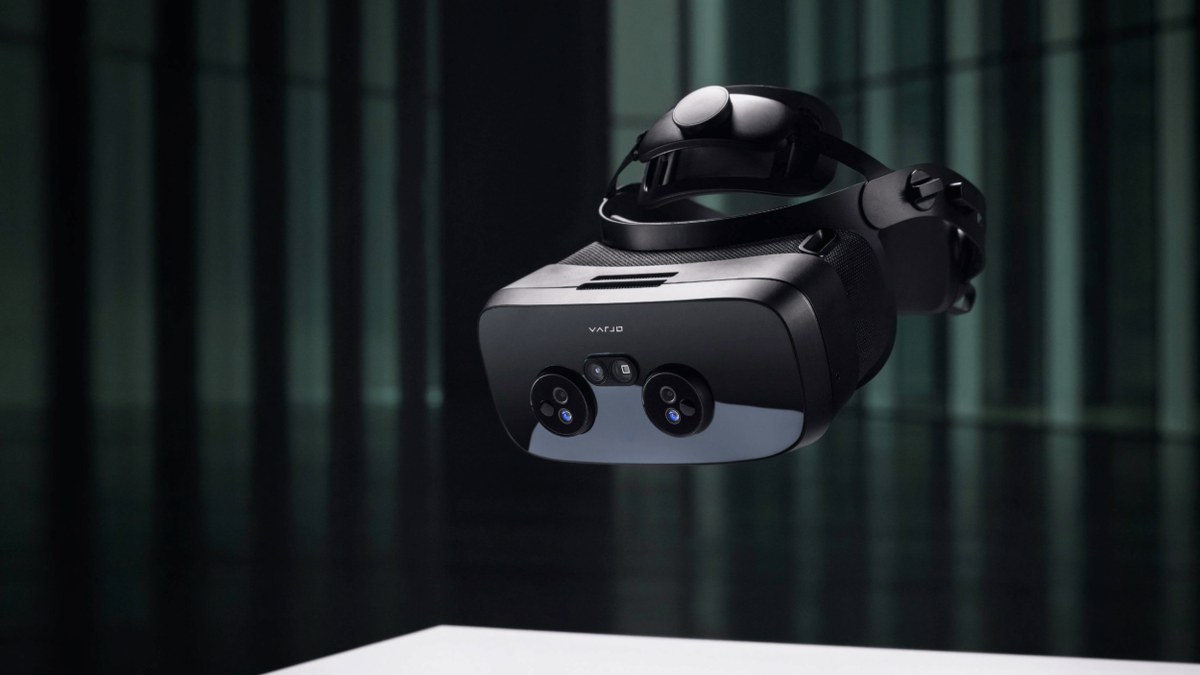
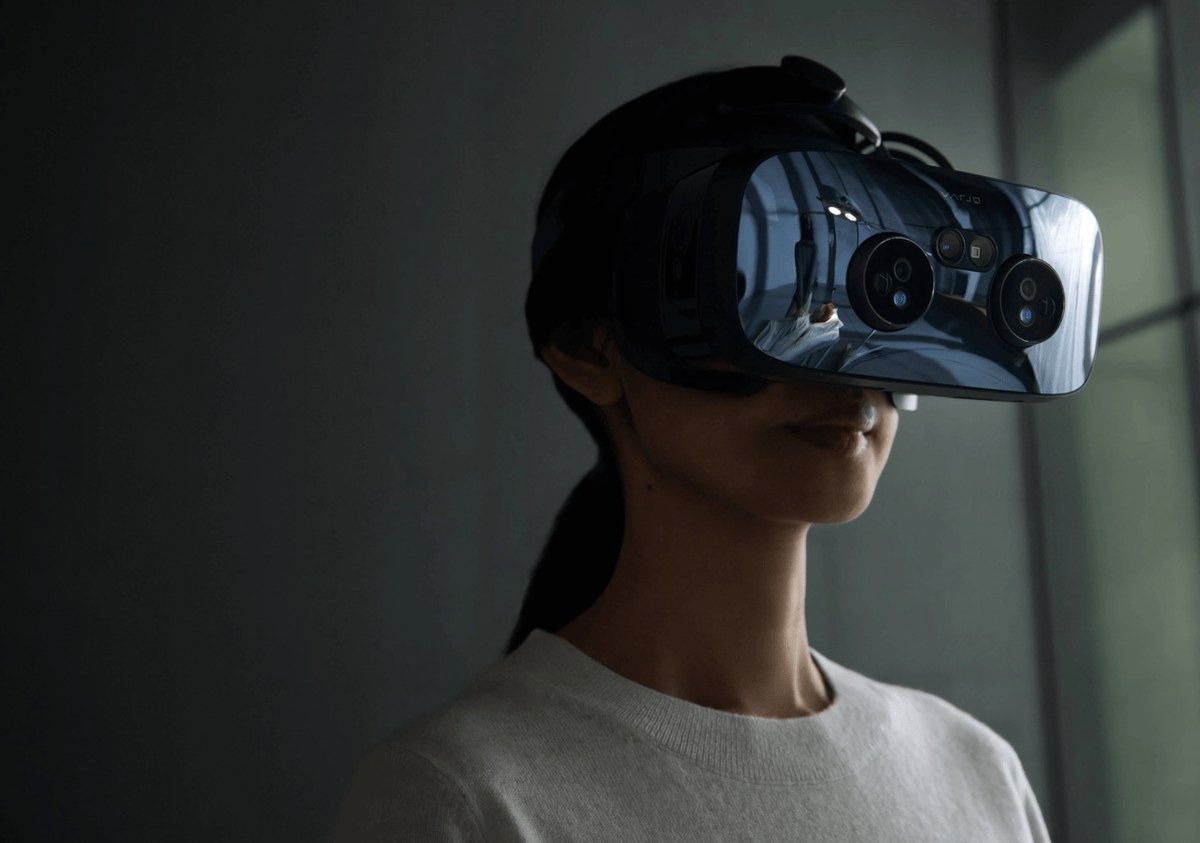
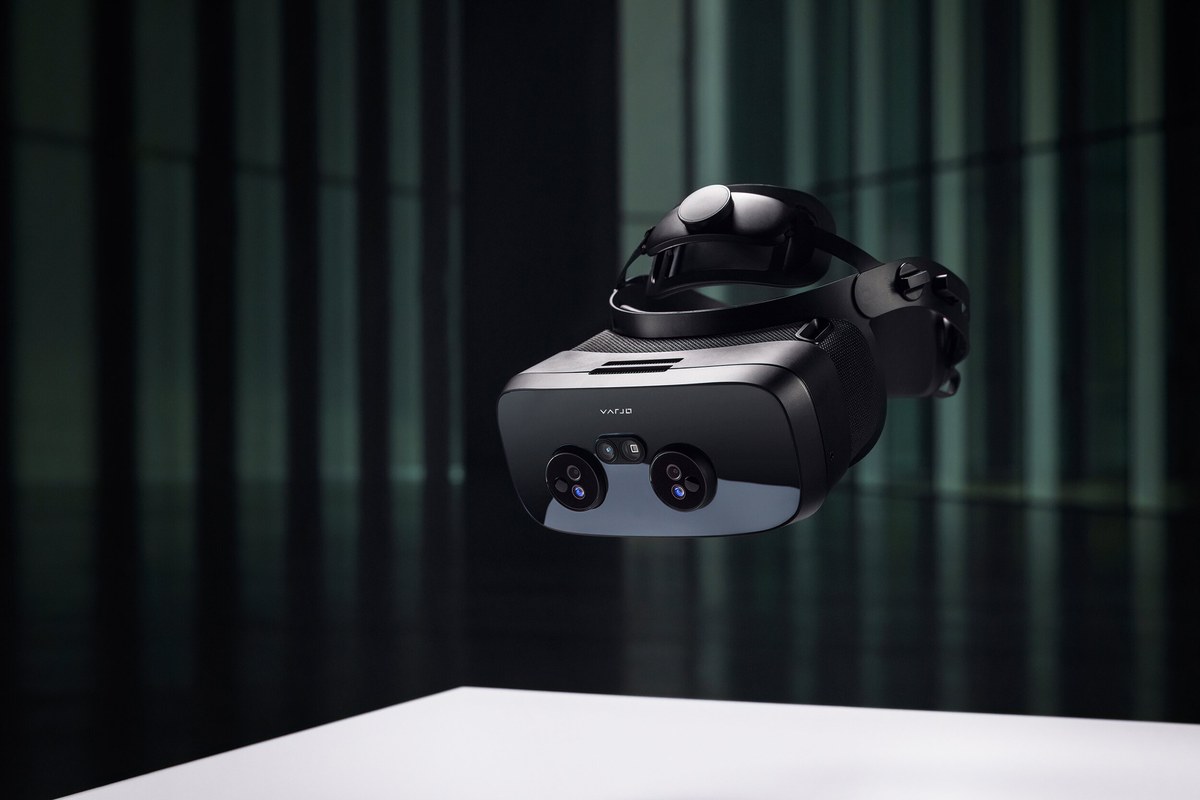
Hardware stack: a Varjo XR-3 (2880×2720 per eye at 90 Hz) plus six HTC Vive Lighthouse base stations for optical tracking. Anatomy: a ceramic adult skull phantom, CT-segmented at 0.5 mm voxels, imported into Unreal Engine 5.0.3 as a semi-transparent cyan overlay. Pose: a printed ArUco marker read by the headset’s stereo cameras at 30 Hz for six-degree-of-freedom registration.
Each passthrough frame (320×160 analysis resolution) is segmented, edged with Canny, and split into physical versus virtual contours by cyan hue. RQI is the percentage of physical boundary pixels whose nearest virtual edge exceeds a proximity threshold. 0% means perfect surface match; higher RQI means worse alignment. Sensitivity work settled on a 6-pixel threshold (~8 mm at a 40 cm working distance), maximizing Pearson correlation with TRE and yielding ROC discrimination with a Youden index of 0.87 (sensitivity 0.93, specificity 0.94). The authors note that threshold was tuned on the same dataset, so those figures carry optimistic bias until independent confirmation.
Numbers that matter — and the caveats that matter more
Across 15 trials and 75 viewing configurations, RQI correlated strongly with FRE (r = 0.89) and TRE (r = 0.93). Each 1% rise in RQI mapped to about 0.195 mm FRE and 0.244 mm TRE. Mean FRE was 2.95 ± 0.48 mm; mean TRE 3.78 ± 0.57 mm; mean RQI 3.28 ± 1.37%. The analysis pipeline averaged ~10 ms per frame on CPU beside GPU rendering, holding 30 Hz with no dropped frames. Three board-certified neurosurgeons scored System Usability at 79.0 ± 4.7 (above the usual 68 acceptability line). Viewing angle mattered: frontal views looked best; oblique and lateral views raised RQI, which the authors suggest may be a useful early-warning vantage.
Limitations are explicit and load-bearing. Validation was a rigid phantom under lab light — not brain shift, pulsatile motion, or OR illumination. Surface-based scoring can look fine while deep targets drift after dural opening (brain sag). The 2 / 4 / 6% RQI bands are exploratory research guidance, not clinical cutoffs. The paper states RQI is not validated for intraoperative clinical decision-making. Next steps they name: controlled transform-perturbation tests for sensitivity and repeatability, then clinical conditions and intraoperative imaging fusion. Spinal navigation is listed as a natural adjacent use case where bony landmarks drift between preoperative imaging and the table.
For Metaverse Watcher’s beat, this is the quieter half of September’s XR news: while consumer calendars argue over Steam Frame and Connect glasses, surgical mixed reality is still missing a continuous “is the map still the territory?” signal. Salerno’s RQI is a CPU-cheap, marker-aware surface meter on a Varjo passthrough feed — a proof of concept with hard numbers, and a long road before any OR dashboard should treat it as clearance.
Sources: Fontana et al., IJCARS (DOI 10.1007/s11548-026-03792-z); Bioengineer.org; Varjo press imagery.