Punchable Face went live on the Meta Quest Store on September 13, 2026 for $1.99. The twist is not the carnival punching gag — it is how it got there. UploadVR’s Craig Storm reports he started the project on September 5 with almost no C# or Unity experience, and eight days later Meta had approved a public Quest listing.
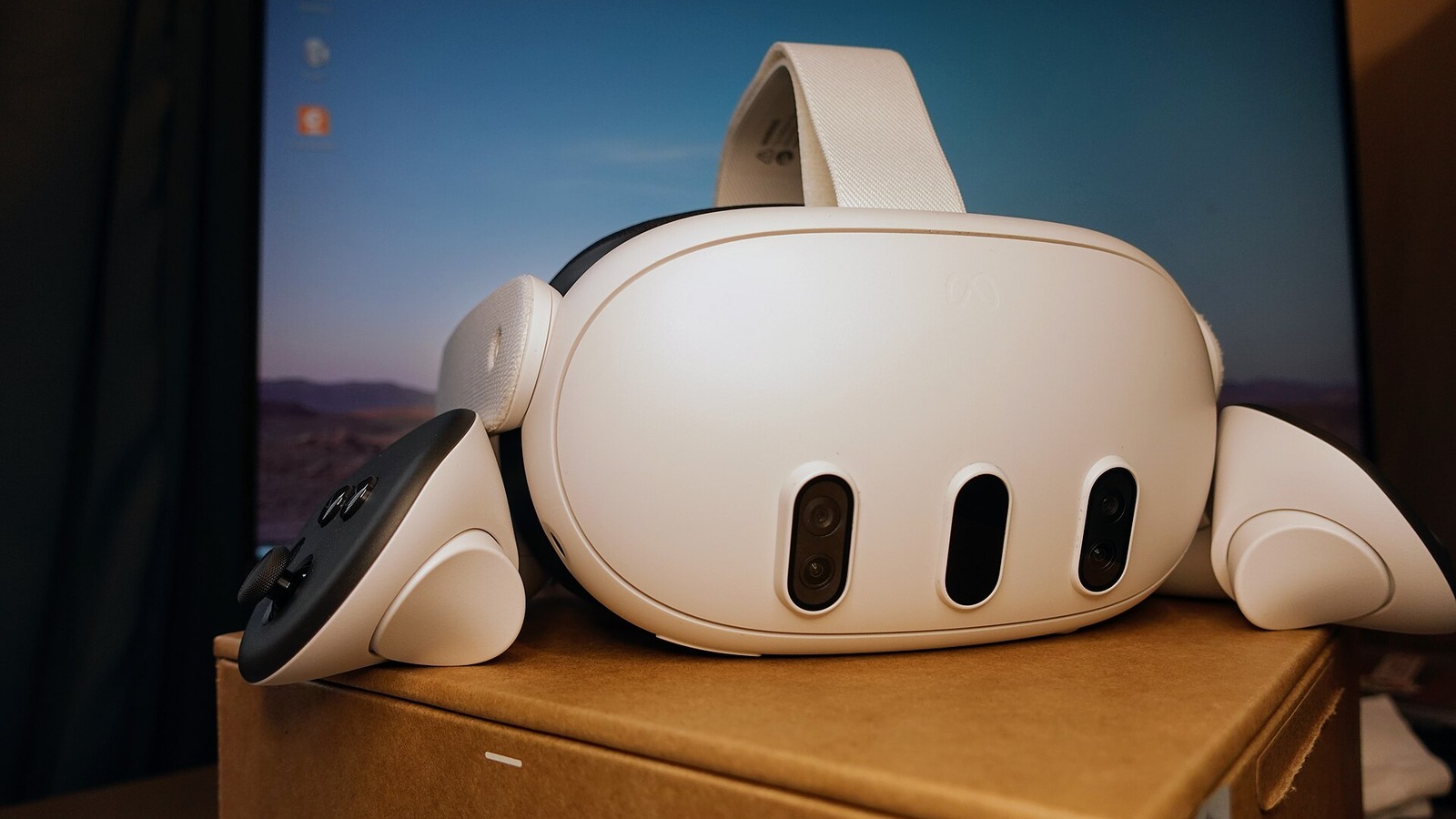
That is a process story more than a game review. Storm is a VR journalist and NextWave XR creator, not a studio engineer. His stated goal was to test whether AI coding tools could close the gap between a simple headset idea and a storefront SKU — development, on-device testing, store assets, Android release build, and Meta’s review queue included.
What Punchable Face actually is
The app is deliberately tiny. Per Storm’s UploadVR write-up, you stand in front of an obnoxious carnival barker and punch him. Hits score on velocity (Impact Score from 100 to 999), the head reacts with spring-like motion, the face reddens under repeated punishment, and the scene sits inside a low-poly carnival boardwalk. A second target, the Flexer, got its own car-meet backdrop.
Meta’s store page tags it Arcade / Fighting / Action / Party game under the experience ID path for Punchable Face. Treat Store copy and Storm’s post as the primary product brief; there is no publisher press kit beyond that self-published account.

Stack and workflow
Hardware was an M2 MacBook Air and a Quest 3, with a Quest 2 compatibility check at the end. Software was Unity 6.3 LTS, Unity’s OpenXR plugin, and Meta XR SDK pieces for Quest-specific features.
Storm describes a prompt–build–headset loop: ChatGPT for planning and design decisions, Codex for most code and project edits, with GPT-5.6 Sol at Medium reasoning for day-to-day work and GPT-6 Astra Medium for harder XR Origin / camera-offset bugs. Meshy generated early 3D mockups for the Barker and Flexer. Boxing gloves stayed generated rather than purchased.
He is explicit about what did not happen. He still cannot write the project from scratch in C#. Codex handled systems he would struggle to reproduce. His job was taste: height that felt wrong in the headset, gloves that pointed wrong, punches that lacked weight, sounds that triggered correctly but felt weak. “You still have to put the headset on” is the line that matters for anyone mistaking this for zero-effort shipping.
Timeline and Meta review
Saturday, September 5: empty project. Tuesday night, September 8: a build Storm considered submission-ready — four calendar days, not four full days of Unity, with Labor Day family time in between. Then store listing art, Android release packaging, and Meta’s review. Approval landed; the app went live September 13, eight days after the first commit-equivalent.
That is the measurable claim. Not “AI replaces game studios.” Not “anyone can ship Asgard’s Wrath over a weekend.” A bounded interaction, a $1.99 price, and a first-time submitter clearing Meta’s gate.
Why it matters for Quest
Quest’s store has always absorbed tiny experiments alongside funded titles. What changed here is the skill floor for getting a first APK through Meta’s process when the author can judge VR feel but cannot author the systems. Storm’s own caveat is the right one: architecture, performance, and maintainability on a larger game would expose gaps this experiment never had to solve.
He also notes he shipped without newer tools that give coding agents deeper live Unity/XR access — and says the next project will try a different workflow. Watch that follow-up if you care about where the tooling edge actually moves.
Sources: UploadVR (Craig Storm’s first-person build log, dates, stack, pricing, approval timeline), Meta Quest Store — Punchable Face.