Pimax on Tuesday, October 6, unveiled Crystal Pro, a WIRELESS PC VR headset PRICED at $1,399, at its “Frontier: Change To Stay The Same” launch event. The feature Pimax LEADS with, uncompressed foveated streaming over 60GHz, is NOT in the base box. It REQUIRES the third-generation 60G AirLink kit, which costs $599 on its own and LIFTS the bundle to $1,899. SHIPPING starts in 2027, according to the official Pimax Frontier FAQ.
What $1,399 Actually Buys
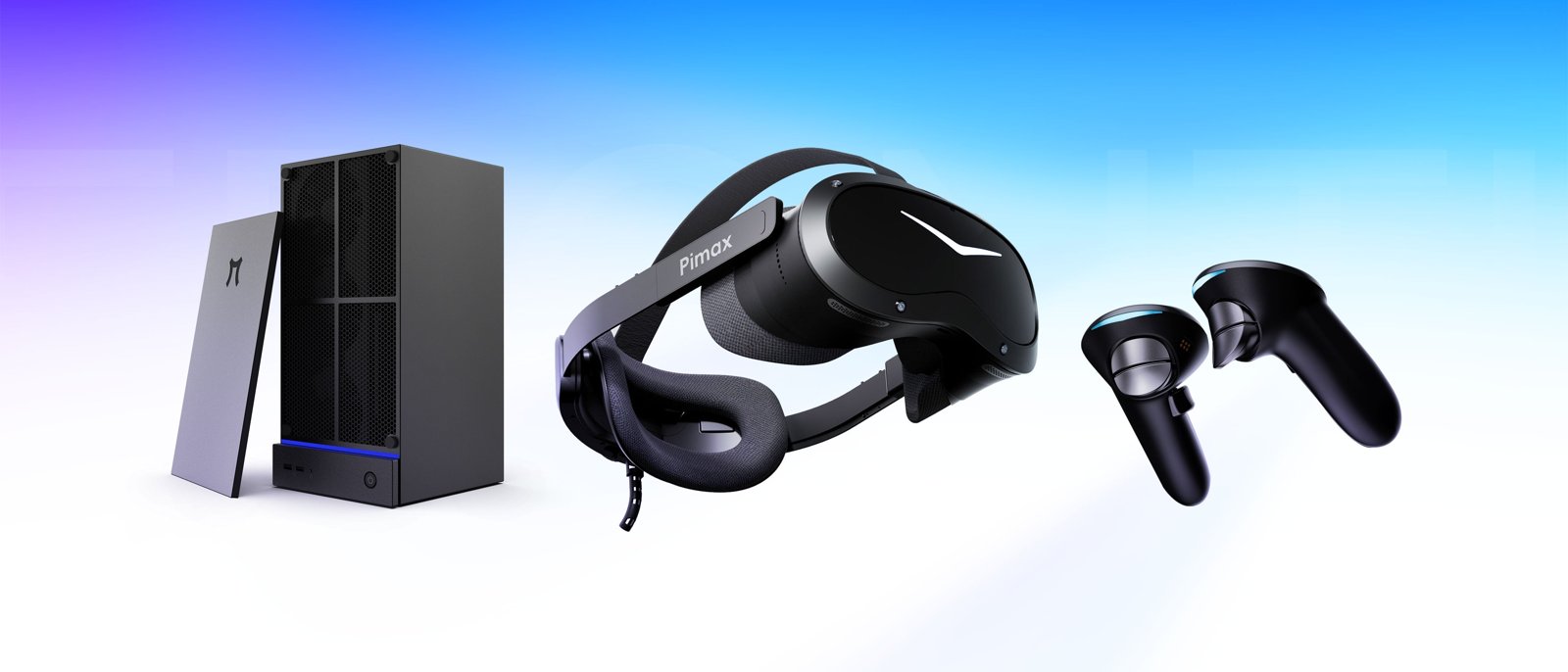
Per Pimax, the box contains the headset, TWO ringed controllers, an EXTERNAL battery and a Wi-Fi dongle. Road to VR’s spec rundown puts that battery at 16,000mAh and notes there is NO battery inside the headset itself. Wi-Fi streaming is standard through a built-in chip plus the included Wi-Fi 6E adapter. A wired DisplayPort connection over a single USB cable is STILL supported, and Pimax’s FAQ says that, wired, the panels run at their FULL 120Hz.
The optics pair aspheric glass lenses with quantum-dot LCD panels at 2,880 x 2,880 pixels per eye, a 110-degree horizontal field of view, 35 pixels per degree, 72/90/120Hz refresh rates, and Mini-LED local dimming with 576 zones per eye at 200 nits, according to Road to VR. Integrated Omnivision EYE TRACKING samples at 120Hz and drives both dynamic foveated RENDERING and, with the AirLink kit, foveated STREAMING. Pimax lists an RTX 2070 as the MINIMUM GPU and an RTX 3080 or RTX 4070 as recommended.
The 60GHz Pitch Is Pimax’s Claim, Not a Measurement
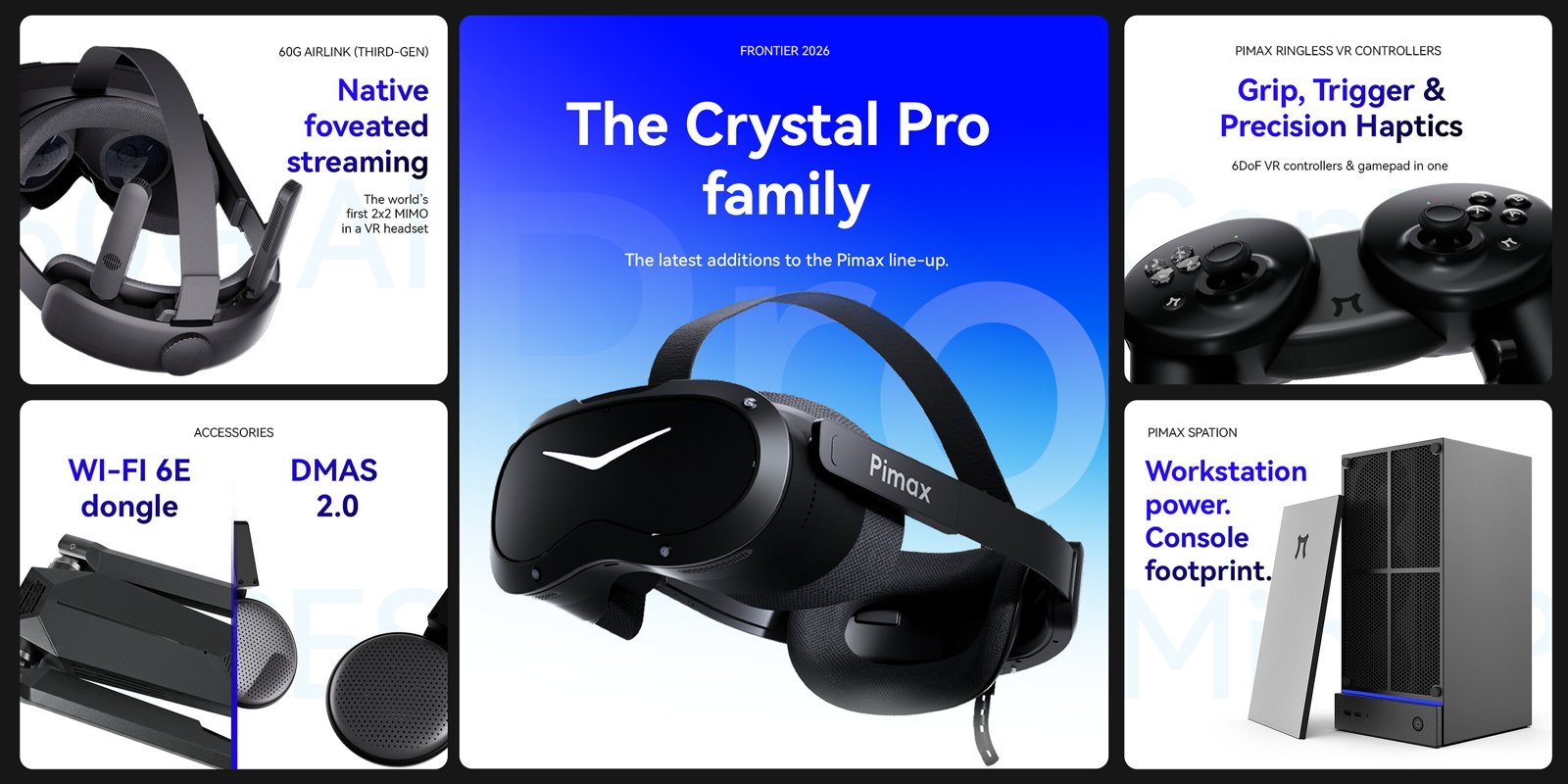
Pimax calls the approach Native Foveated Streaming. In its description, the area the user is LOOKING at is taken pixel for pixel from the GPU output with NO encoding step, while the rest of the view is COMPRESSED. The AirLink kit uses two Room Antennas in a 2×2 MIMO configuration, which the press release calls a FIRST for VR headsets, for up to 6 Gbps of combined throughput and UNDER 2ms of added latency.
The FAQ adds that the headset antennas steer their beam ELECTRONICALLY toward the Room Antennas, that the system can cover a five-by-five-meter playspace “with the right setup,” and that Wi-Fi takes over as a FALLBACK if the 60GHz link drops entirely. None of these figures has been INDEPENDENTLY TESTED yet. Pimax says hands-on demos begin in Q4 2026.
A Quest 2-Era Chip for Standalone Use
Crystal Pro CAN run Android apps and OpenXR mobile titles natively, but on a Snapdragon XR2 Gen 1, the SAME chipset Meta used in the 2019-era Quest 2, as Road to VR points out. Pimax itself answers “Yes and no” when asked whether Crystal Pro is a standalone headset, describing it FIRST as a PC VR device and offering films on a plane or in a hotel room as the example of PC-free use.
How It Stacks Up Against Steam Frame
Road to VR frames the launch as Pimax taking AIM at Valve. Valve priced the 256GB Steam Frame at $1,059 when pre-orders opened on September 14, with a NEWER Snapdragon 8 Gen 3 chipset, which makes the base Crystal Pro $340 MORE and the AirLink bundle $840 MORE. Pimax’s counter-arguments are HARDWARE ones. A swappable faceplate adds Lighthouse base-station tracking that works wirelessly, and the FAQ claims that makes Crystal Pro the ONLY wireless headset on the market with Lighthouse support. A separate MR cover adds LiDAR and full-color passthrough. Both faceplates are OPTIONAL, and Pimax has NOT priced them.
New Controllers, but Not in the Box
Pimax debuted Ringless VR Controllers on the SAME stage. They are tracked by infrared LEDs read by the headset cameras plus a motion sensor over 2.4GHz, with latency under 15ms, Pimax says. They use TMR joysticks built to RESIST drift, a 710mAh battery rated for up to 40 hours, and the two halves CLIP together into a gamepad for Windows and Steam. They are compatible with Crystal Light, Crystal Super, Dream Air and Dream Air SE. Crystal Pro itself, however, ships with RINGED controllers, and the Ringless pair has NO price yet.
The Spation mini-PC ROUNDS out the event: an AMD Ryzen 7 9800X3D, an RX 9070 XT or RTX 5070 Ti, 32GB of DDR5-6000, a 1TB NVMe SSD and a 1000W SFX power supply, with Windows and SteamOS support and a DIY version where buyers supply their own motherboard and GPU. Pimax gave NO price or date, and there is no $1 reservation for it.
What to Watch
Crystal Pro reservations are open now for $1, which Road to VR says is NON-REFUNDABLE, and which Pimax says earns $20 off the headset or $50 off the bundle at launch. The questions that MATTER before anyone pays the remaining $1,398 are whether the 6 Gbps and sub-2ms numbers hold up in INDEPENDENT hands-on testing this quarter, what the optional faceplates COST, and when in 2027 the headset actually SHIPS.
Sources: Pimax press release via PR Newswire (Oct 6, 2026); Pimax Frontier 2026 FAQ (updated Oct 6, 2026); Road to VR (Oct 6, 2026); Road to VR on Steam Frame pricing (Sep 14, 2026).
1 thought on “Pimax Crystal Pro Costs $1,399, 60GHz Link Is $599 Extra”