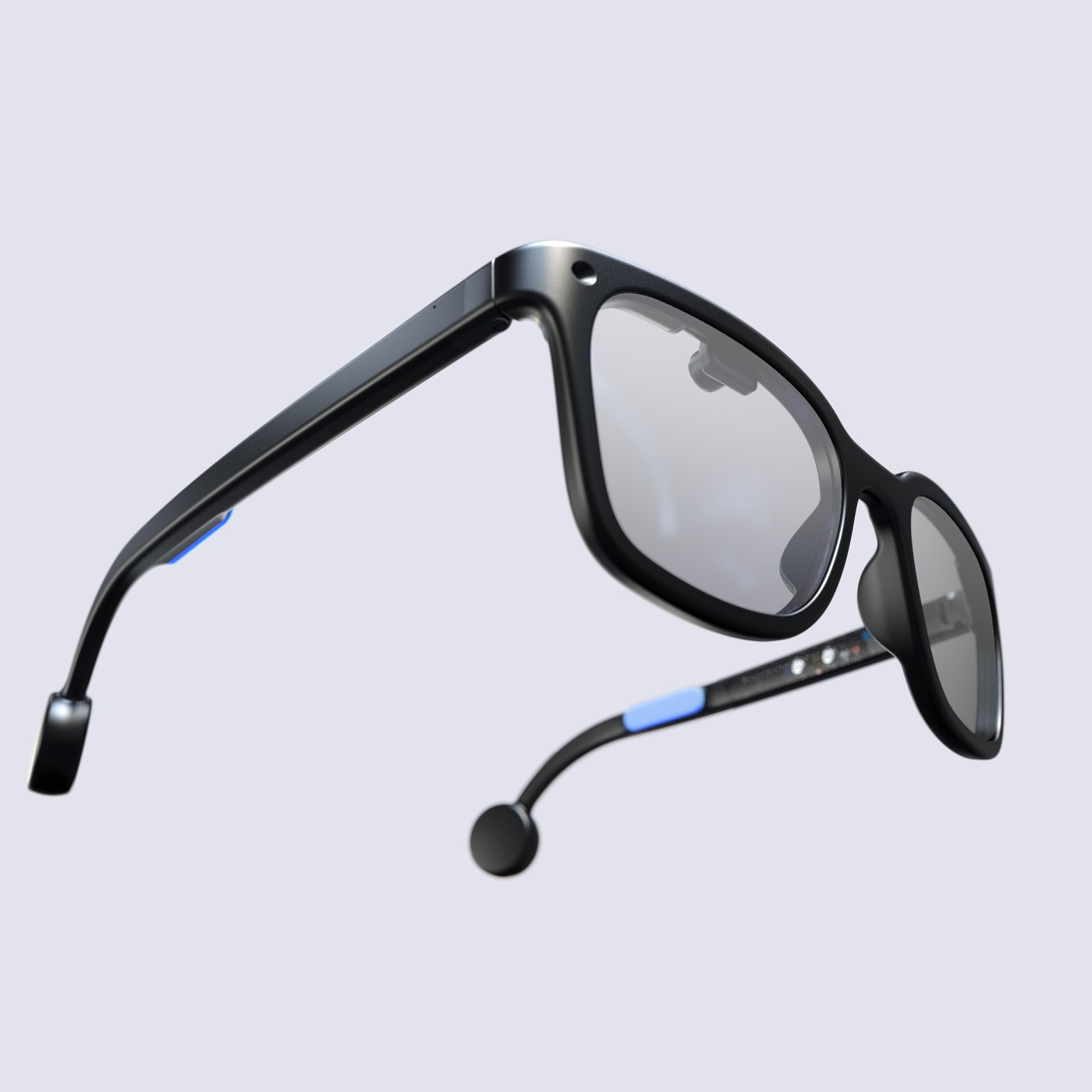
October 27, 2026. Brilliant Labs has officially launched Halo, its open-source AI glasses, at $399, more than a year after first announcing them in July 2025. The Singapore company paired the launch with new backing from Goodwater Capital and a new flagship app called Narrative, which turns the wearer’s daily movements into an open-world game. The pitch is a deliberate contrast to Meta: no traditional camera, on-device processing, and published hardware and software.
What Brilliant Labs Announced
According to the company’s Business Wire release, Halo is built around three experiences that all run through Noa, Brilliant Labs’ AI companion with long-term memory:
- Ask: conversational questions to Noa, with memory that carries across sessions instead of resetting.
- Make: voice-built “mini-apps” and workflows that can be shared on Halo’s own app store, with no code required.
- Play: Narrative, an adaptive game that the company says evolves with the wearer’s actions, choices and discoveries.
The hardware list is unchanged from what Brilliant Labs has been describing: a full-color microOLED display, microphones, bone-conduction speakers, Bluetooth 5.3, an on-device AI processor, up to 14 hours of battery life and a weight of just over 40 grams. The product page adds that the display optic adjusts from +2 to -6 diopters and that the frame is designed for an interpupillary distance of 58 to 72 mm, so buyers outside that range may not get a clean image. It lists the glasses as “shipping now.”
Narrative: A Game Layer for AI Glasses
Narrative is the genuinely new piece. In a hands-on published today, GamesBeat describes it as a pixel-art character placed in an open world layered over a real-world map, populated with non-player characters. Wearers level up by moving around the physical world and interacting with those characters through the Noa app.
The reviewer’s verdict was mixed: the overworld was fun at first, but “after the novelty wore off,” there was little incentive to keep playing. CEO Bobak Tavangar told the outlet that multiplayer and player-versus-player modes are on the roadmap, held back until enough people are on the platform. That is the honest framing for buyers today: Narrative is a first version, not a finished game.
The Privacy Design, and Its Limits
Brilliant Labs is leaning hard on privacy. The release says Halo’s low-resolution image sensor provides visual context “without functioning as a traditional camera for photography or video,” and that images are processed on-device, immediately discarded and never stored. Tavangar told GamesBeat that the models handling images and audio run locally on the user’s phone rather than in the cloud.
Two caveats are worth stating plainly. First, “on-device” here largely means the paired phone, not the glasses alone. Second, openness cuts both ways: GamesBeat reports that Discord community members have already pushed the sensor to capture video at up to 15 frames per second. That is a selling point for developers, but it complicates the claim that Halo is not a camera. Regulators are paying attention to exactly this question, as our coverage of the EDPB’s smart glasses statement and of Meta’s recording-light defense shows.
Price, Delays and Build Quality
There is one inconsistency in today’s coverage. The press release and the product page both list Halo at $399, while GamesBeat’s article says the glasses currently sell for a base price of $299. We are treating $399, the price on Brilliant Labs’ own store, as authoritative; import taxes may apply depending on country.
The road here was long. GamesBeat notes Halo was originally meant to ship before the 2025 holidays and missed several targets through 2026, which Tavangar attributed to supply-chain disruption. The software has also been moving fast: when we covered Halo firmware 0.8.20 on October 16, the public changelog showed 21 firmware versions since April, including a fix for a display and camera wake bug that retail units hit and dev kits did not. GamesBeat’s review unit also arrived with its display lens detached in the box; Brilliant Labs says replacement lenses will be offered for sale.
How Halo Fits the 2026 Smart Glasses Market
Halo sits in an awkward but interesting slot. At $399 it costs more than camera-free audio glasses such as Ray-Ban Meta Audio at $349, yet it adds a color display that Meta’s mainstream Ray-Ban line lacks. What it does not offer is the photo and video capture that drives most mainstream smart glasses purchases. GamesBeat cites an S&P Global Market Intelligence Q3 2026 figure that only 6.4% of U.S. online adults own smart glasses, so the category is still small enough for a niche, developer-first product to find an audience.
For most shoppers, our best smart glasses of 2026 guide remains the place to start. Halo makes sense for a specific buyer: someone who wants an AI wearable they can inspect, modify and build on, and who is comfortable with early software. The open design files on GitHub and an active community already shipping apps such as instrument tuners and alternative companion clients make that case stronger than the game layer does today.
The Bottom Line
Halo’s launch matters less for Narrative than for what it proves: a small company with roughly $6 million raised, according to GamesBeat, has shipped a display-equipped, fully open AI glasses platform at a mainstream price. Whether Narrative becomes a reason to wear them daily depends on the social features Brilliant Labs has promised but not dated. Until then, Halo is best judged as an open developer platform with a privacy-first pitch, and on those terms it is now a real product rather than a pre-order.
Sources: Brilliant Labs via Business Wire, Brilliant Labs Halo product page, GamesBeat, The Deep View.