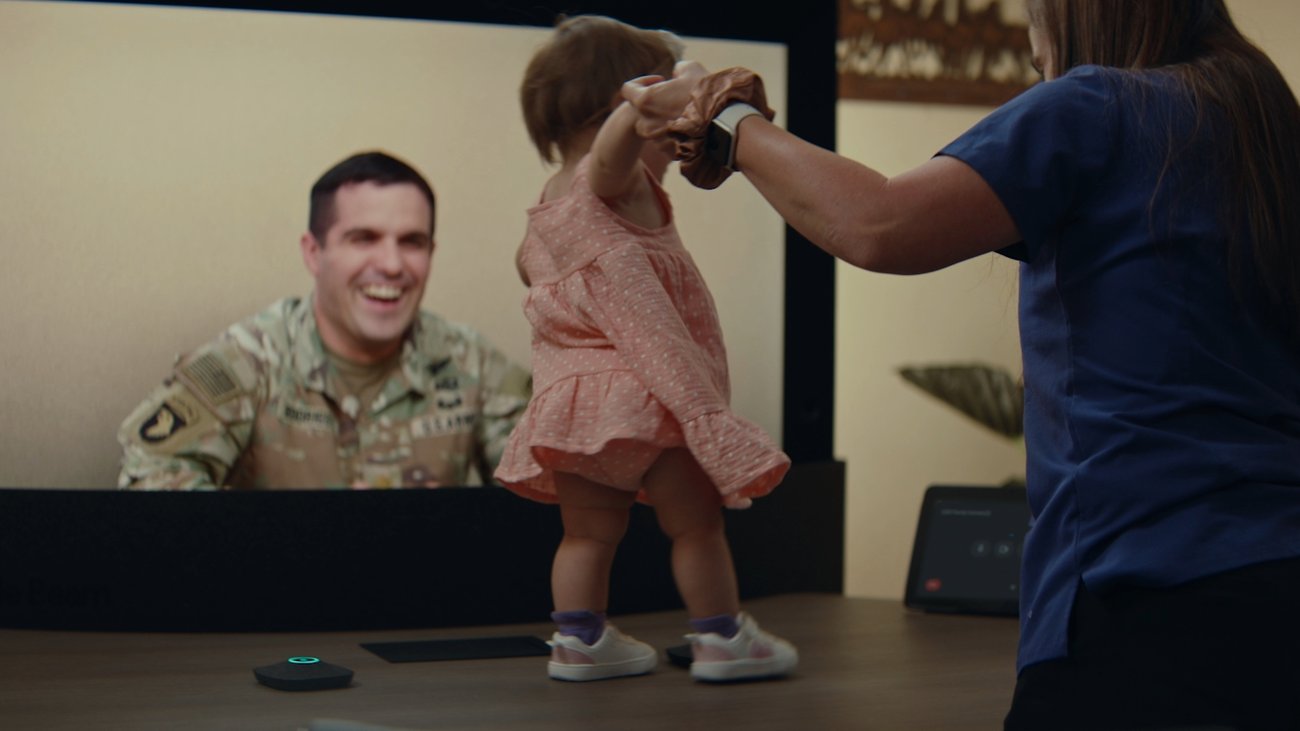
Google Beam is moving out of corporate boardrooms and into the places where military families actually wait for news from home. On October 26, Google said it is bringing HP Dimension with Google Beam, its headset-free 3D video calling system, to 20 USO locations globally. The rollout follows a pilot earlier this year that linked U.S. soldiers in Trzebień, Poland with their families at Fort Bliss, Texas.
What Google Announced
The update came in a Google blog post by Josh Woodward, VP of Google Labs, Gemini and AI Studio. The key points:
- Scale: HP Dimension with Google Beam is heading to 20 USO locations around the world.
- Named expansion sites: Grafenwöhr, Germany and Fort Hood, Texas join the original Poland and Fort Bliss pairing.
- A docuseries: directed by veteran filmmaker Kyle Hausmann-Stokes, it follows four soldiers from the 2nd Battalion, 37th Armored Regiment (the “Iron Dukes”) deployed in Poland, and the families they call home to.
Google first announced the USO partnership on October 27, 2025, when Google Beam general manager Andrew Nartker wrote that Beam would arrive at USO centers “starting next year”. One year later, that promise has turned into a pilot, two named expansion bases and a 20-site commitment.
Four Families, Four Use Cases
The docuseries is clearly a marketing piece, but it is also the most concrete look yet at how Beam performs outside an office. Each family story maps to a real pain point of deployment:
- The Brown-Orane family: Sgt. Amoy Brown calls his wife Tiyanna Orane and son Azeal across an eight-hour time difference, and is there for the news of her promotion.
- The Kassales family: Chaplain Roland Kassales has been deployed for 15 months of his first two years in service, much of his daughter Blythe’s early life.
- The Jennings family: Sgt. 1st Class Matthew Jennings works 12-hour shifts while his wife Mayra runs a household of seven, including son Dimitri and newborn Lilly.
- The Rodriguez family: Maj. Michael Rodriguez, 12 years into his service, watches his daughter Kathryn’s first steps with his wife Jessica, a pediatric physical therapist, and their four children.
Chaplain Kassales put the pitch plainly in remarks quoted by Interesting Engineering: “Being able to incorporate feeling and body language — all those things that make communication meaningful — will go a long way towards overall well-being for soldiers.”
How Google Beam Works Without a Headset
Beam is the commercial version of Project Starline, the research effort Google showed off for years before renaming it. As Engadget and Interesting Engineering describe it, the system combines:
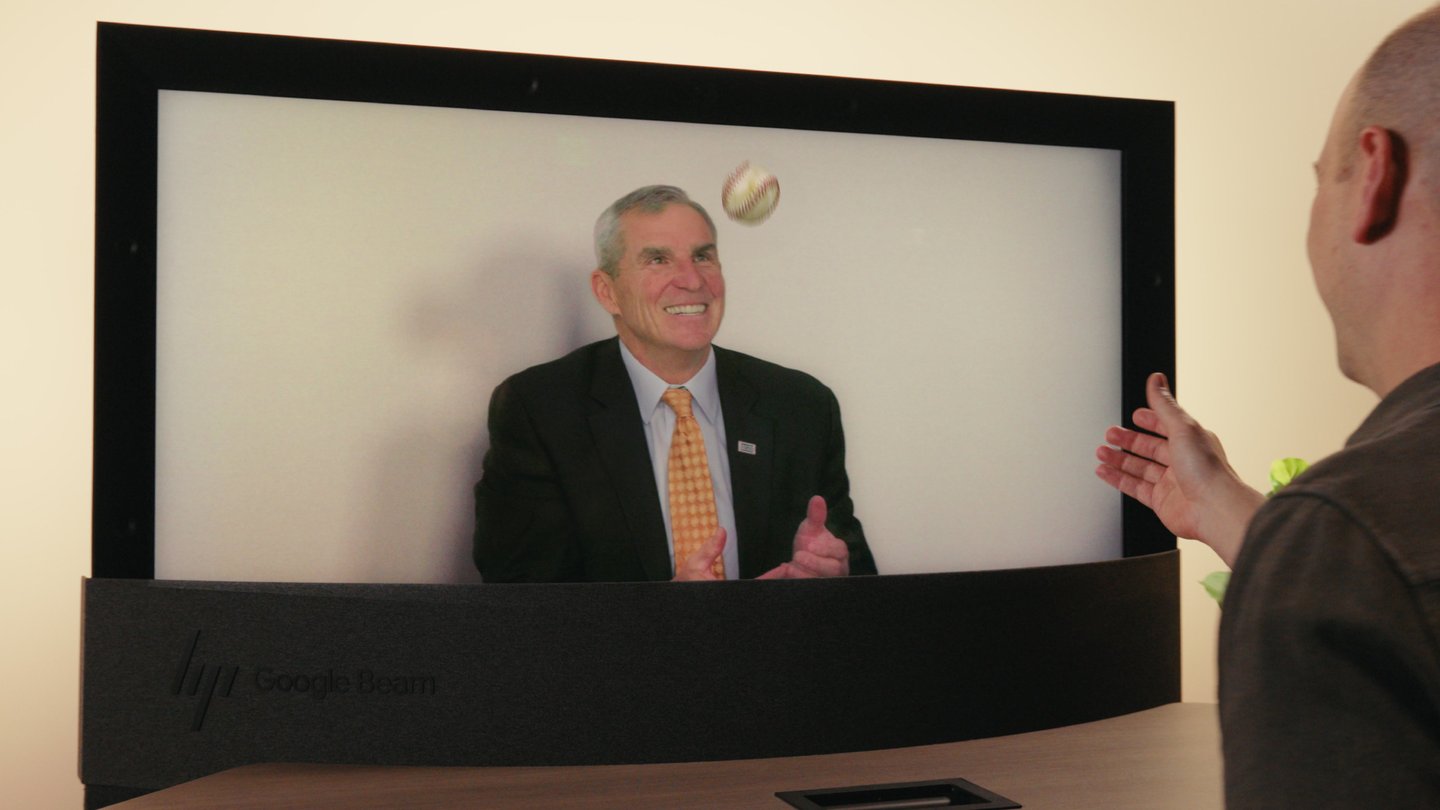
- A 65-inch light-field display that sends a slightly different image to each eye, so the person on the other end appears in depth.
- Six cameras and AI video models that rebuild the caller as a 3D image in real time.
- Head tracking, so the view shifts naturally as you move, plus spatial audio.
There is NO headset, no glasses and no avatar. That is the key difference from the mixed reality approach of devices like the Apple Vision Pro (see our Apple Vision Pro 2026 guide) and Android XR hardware (covered in our Android XR guide). For a family member sitting down at a USO center, the barrier to entry is essentially zero: walk up, sit down, talk.
Why the USO Rollout Matters for Google Beam
Until now, Beam has been positioned as premium enterprise hardware. HP Dimension costs $24,999 per unit, and the Google Beam license (for Google Meet or Zoom) is a separate annual per-device subscription whose price HP has not disclosed, according to The Verge and Android Authority. Our earlier report on Google Beam shipping to six countries and Industrious bookable rooms followed that business track: offices, channel partners and corporate customers.
The USO deployment shows a different side of the product. Three things stand out:
- It is the most emotionally demanding test case Google could pick. If 3D presence makes a difference anywhere, it is between a deployed parent and a toddler who cannot follow a flat video call for long.
- It puts Beam in front of the public, not just executives. USO centers serve service members and their families, which gives far more people their first hands-on look at life-size 3D calling than any office pilot.
- It does not answer the consumer question. Engadget notes it is unclear whether the USO effort signals a broader rollout. At this price, Beam remains a shared-room product, not something families will buy for the living room.
Google has not said which USO centers beyond Grafenwöhr and Fort Hood are on the list, or on what timeline all 20 will go live. It points readers to goo.gle/USO for updates.
Reaction on X
Google’s Kent Walker framed the announcement around connection rather than hardware:
Google Beam can make you feel as though you’re in the same room as someone far away. For military service members, that’s more than just a nice-to-have—it helps them feel more connected with family members thousands of miles away.
— Kent Walker (@Kent_Walker) October 26, 2026
The Bigger Picture for Spatial Communication
Most of the industry’s spatial computing bets still ask users to wear something on their face. Google Beam is a reminder that “presence,” the feeling of being in the same room as someone, can also be delivered by the room itself. For context on how these approaches fit together, our guide What Is the Metaverse? The 2026 Guide covers the full spectrum from headsets to shared 3D spaces.
The USO rollout will not settle whether light-field calling becomes mainstream. It does give Google something the enterprise market has not: a clear, human reason for the technology to exist. We will track which locations come online next.