Updated October 22, 2026. By the Metaverse Watcher staff.
Android XR is Google’s operating system for headsets and glasses. It does for extended reality what Android did for phones: one platform, built with Samsung and Qualcomm, that many hardware makers can ship on, with Google Play apps and the Gemini assistant built in. A year after the first device went on sale, the platform now spans a high-end headset, a pair of tethered “spatial computing” glasses, and a wave of camera-equipped audio glasses due in November. This guide explains what Android XR is, which devices run it, what they cost, and what is still missing.
What is Android XR, in plain terms?
“XR” (extended reality) is the umbrella term for virtual reality, augmented reality and mixed reality. Google’s own Android XR page describes the platform as an operating system for headsets and glasses that “provides the user interface, the ability to access popular apps, and AI assistance from Gemini.” In practice that means three things:
- An interface you control with your eyes, hands and voice, where apps float as windows around you or fill the room.
- Google Play access, so Android XR devices run versions of YouTube, Maps, Photos, Chrome and Meet rebuilt for 3D, plus millions of ordinary phone and tablet apps in flat windows.
- Gemini, which can see what you see through the device cameras and answer questions or take actions about it.
Google also stresses open standards. According to its Galaxy XR launch post, Android XR supports OpenXR, WebXR and Unity, which makes it far easier for studios to bring games over from Meta Quest or PC VR. That is the key strategic difference from Apple’s visionOS, which is closed to other hardware makers, and from Meta’s Horizon OS, which so far runs only on Meta’s own headsets.
Which devices run Android XR?
As of October 22, 2026, Google splits Android XR hardware into three groups. Here is where each stands.
| Device | Type | Price | Status |
|---|---|---|---|
| Samsung Galaxy XR | Standalone mixed-reality headset | $1,799 or $149/month at launch | On sale since October 2025 |
| XREAL AURA | Wired XR glasses with compute puck | $1,279 (12GB/256GB) or $1,499 (16GB/512GB) | Shipping “before the holidays” in the US, Canada, Japan and South Korea |
| Samsung audio glasses (Gentle Monster and Warby Parker frames) | Camera and audio AI glasses, no display | Not announced | Samsung says November 2026 |
| Display glasses | AI glasses with an in-lens display | Not announced | After the audio glasses; no date |
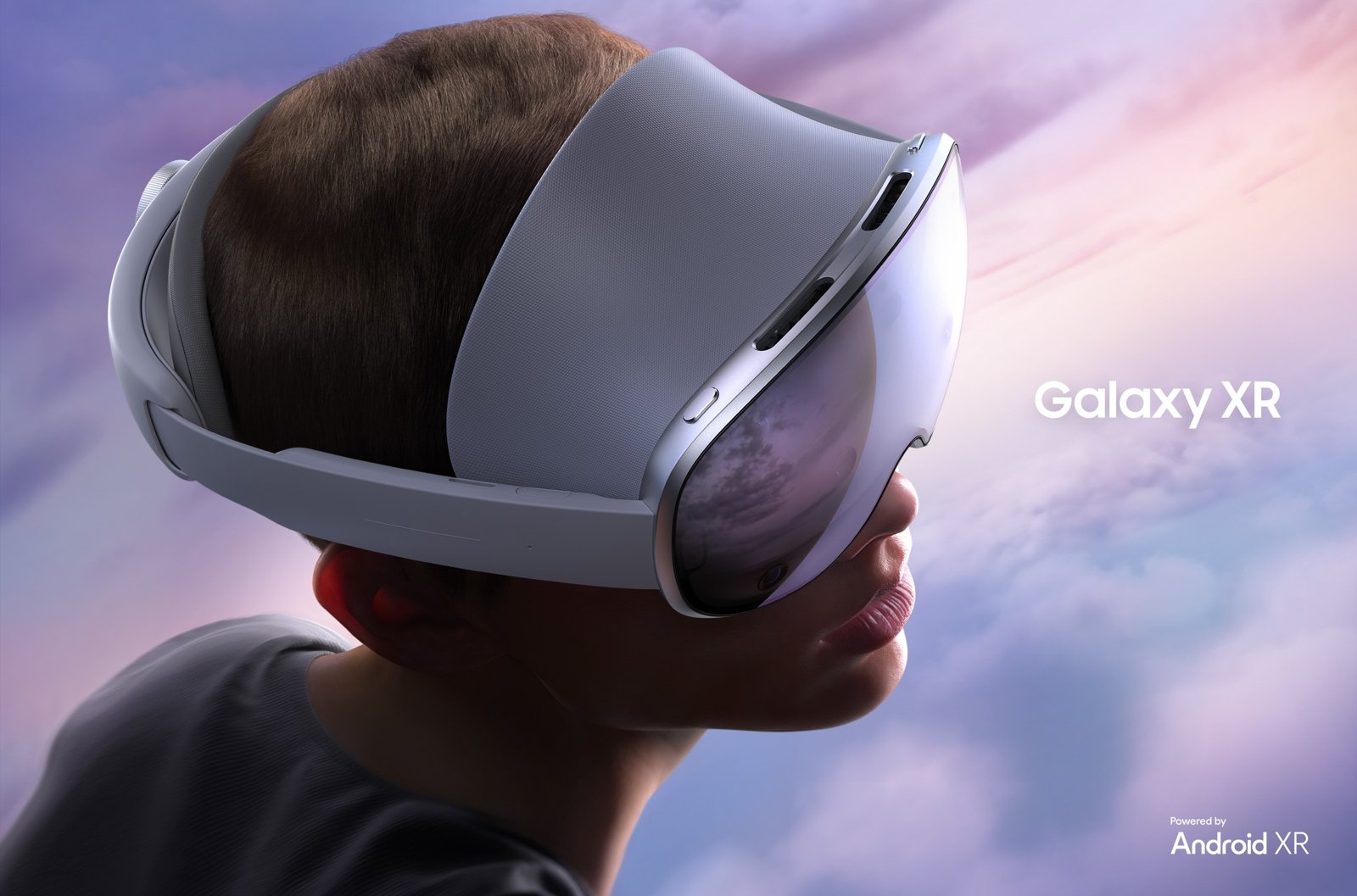
Samsung Galaxy XR: the flagship headset
Galaxy XR is the reference Android XR device and the only headset on the platform today. Samsung’s official spec sheet lists a Snapdragon XR2+ Gen 2 chip, 16GB of memory and 256GB of storage, and two micro-OLED displays at 3,552 x 3,840 pixels each (about 27 million pixels in total). Field of view is 109 degrees horizontal and 100 degrees vertical. Refresh rate defaults to 72Hz, with 60Hz and up to 90Hz available.
The headset weighs 545 grams with its forehead cushion, and the separate battery pack adds 302 grams. Samsung rates battery life at up to 2 hours of general use and 2.5 hours of video, and the headset can run while charging. Tracking comes from six world-facing cameras, four eye-tracking cameras, a depth sensor and five IMUs, and iris recognition can unlock the device. Prescription inserts are sold separately.
For context, the 545-gram figure is well under the 750 to 800 grams Tom’s Guide cites for Apple Vision Pro, while the $1,799 launch price sits at roughly HALF of Apple’s. It is still several times the price of a Meta Quest 3, which is why we treat it as an enthusiast and productivity device in our best VR headsets of 2026 ranking.
XREAL AURA: Android XR in a pair of glasses
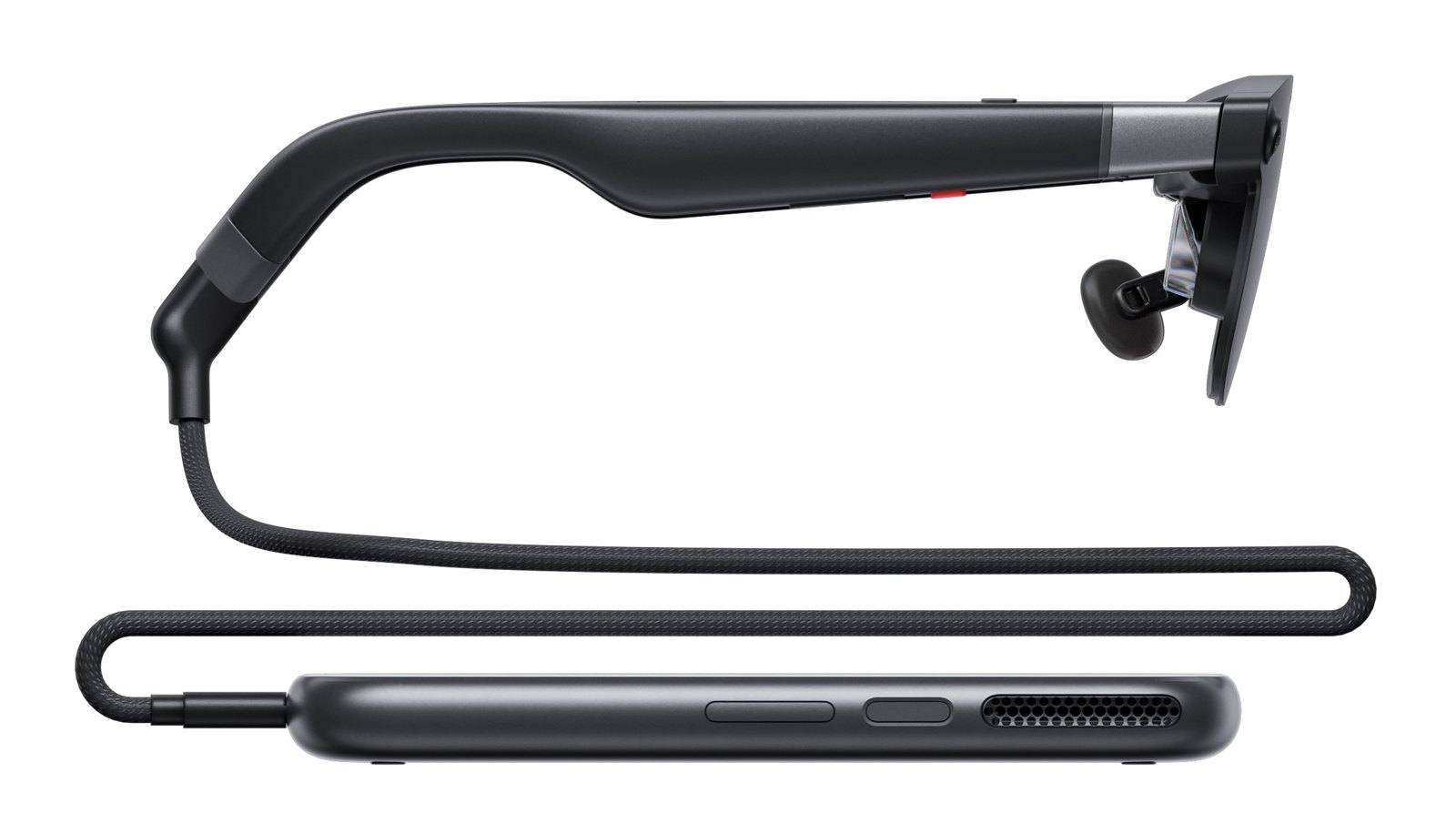
XREAL AURA, first shown as Project Aura, is the second Android XR device and the first in a glasses form factor. It is not a standalone wearable: a cable runs from the 95-gram glasses to a pocket “puck” that holds a Snapdragon Reality Elite chip, the battery and a touchpad. XREAL’s spec page lists Sony micro-OLED panels at 1920 x 1200 per eye, up to 1,050 nits and 120Hz, two tracking cameras for 6DoF anchoring and hand tracking, electrochromic dimming that blocks up to 99.9% of outside light, and a 34.84Wh puck battery. We broke the full sheet down in our XREAL AURA spec sheet analysis; XREAL still has not published a battery runtime.
XREAL confirmed pricing on October 7: $1,279 for 12GB/256GB and $1,499 for 16GB/512GB, with shipping before the holidays in the US, Canada, Japan and South Korea. The UK and EU are not in the first wave; see our report on XREAL dropping the UK and pushing the EU to 2027.
XREAL AURA pricing is officially here. Lightweight wired spatial computing glasses powered by Android XR, starting at $1,279.
— XREAL (@XREAL_Global) October 7, 2026
Android XR audio glasses: Samsung, Gentle Monster and Warby Parker
At Google I/O in May 2026, Google said “intelligent eyewear” on Android XR will come in two kinds: audio glasses that speak to you, and display glasses that show information in the lens. Audio glasses launch first. Google’s I/O announcement lists the planned features: ask Gemini about what you see, turn-by-turn walking directions, calls and texts, photo and video capture, live translation, and multi-step tasks such as preparing a DoorDash order. Google says the glasses pair with BOTH Android and iOS phones.
Samsung builds the hardware, with frames from Gentle Monster and Warby Parker. A Samsung official told The Korea Herald the first pair will launch in November, as 9to5Google and Android Authority reported. These first models have NO display; heavier AI processing runs on a paired phone. Two model numbers, SM-O200P and SM-O200J, have already cleared the FCC, as we covered in Samsung’s Android XR glasses clear the FCC. Price and an exact date are still unannounced. They will compete directly with Ray-Ban Meta, which we compare in our best smart glasses of 2026 guide.
What can you do with Android XR?
- Watch: YouTube and Google TV in XR versions, plus streaming apps Google names at launch such as Crunchyroll, HBO Max and Peacock. Galaxy XR plays video up to 8K at 60fps per Samsung’s spec sheet.
- Work: Chrome, Meet and ordinary Play Store apps in multiple floating windows. XREAL AURA also takes a DisplayPort input, so it can act as a large private monitor for a laptop.
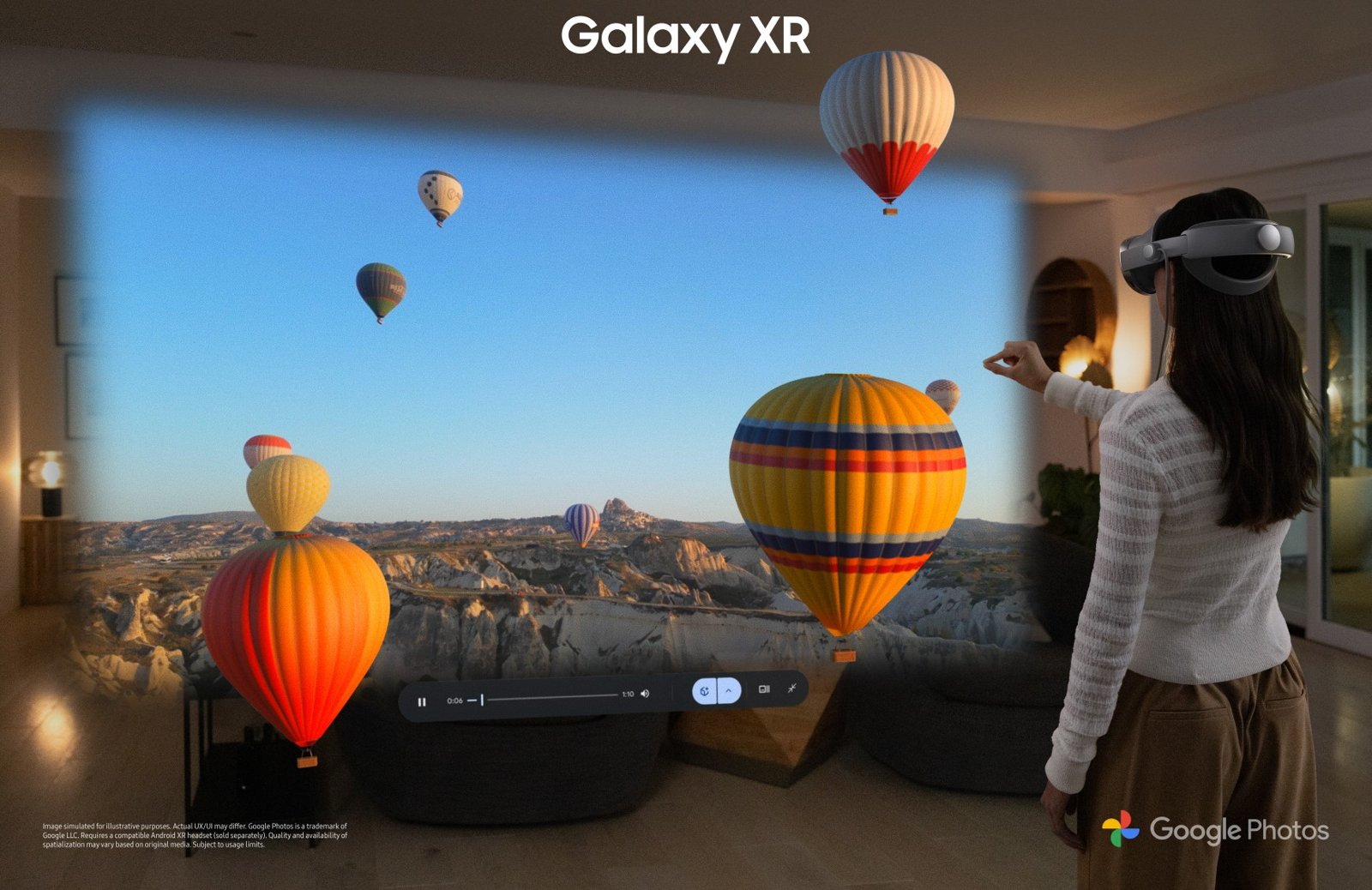
- Explore: an immersive Google Maps and 3D-converted photos in Google Photos.
- Play: immersive games from studios Google cites such as Owlchemy Labs, Resolution Games and Mirrorscape, plus more than 50 XR experiences from partners including Adobe, Calm, Fox Sports and MLB at launch.
- Ask: Gemini Live with camera sight, and Circle to Search on things you look at, physical or digital.
Developers have their own tooling, including Jetpack XR libraries and the Android XR Engine Hub; our report on how Engine Hub skips APK rebuilds, with limits covers its current requirements.
Android XR vs. Horizon OS vs. visionOS
The three major XR platforms now take distinct paths. Meta Horizon OS has the largest games library and the cheapest hardware but runs only on Meta’s own devices. Apple visionOS is the most polished and the most expensive, and it is limited to Apple hardware. Android XR is the open, multi-vendor option: Samsung and XREAL ship on it today, it runs Play Store apps, and it is the only one of the three that spans a full headset, tethered glasses and display-free AI glasses under a single OS. Its weaknesses are a much smaller catalog of native XR games than Quest and, for now, only ONE headset to choose from.
Should you buy an Android XR device now?
If you want the best image quality short of a Vision Pro and you live in the Google ecosystem, Galaxy XR is the only Android XR headset and a credible choice. If you mostly want a giant portable screen with real spatial features, XREAL AURA is the more interesting product, but it is not yet in buyers’ hands and its battery life is unknown, so we recommend waiting for reviews. If you want everyday AI glasses, wait for Samsung’s November launch and its pricing before deciding against Ray-Ban Meta. Gamers who mainly want VR titles are still better served by Quest; see our Steam Frame vs. Quest 3 comparison.
Android XR FAQ
Is Android XR the same as Android? It is built on Android and runs Android apps from Google Play, but it adds a 3D interface, hand and eye input, and XR-specific apps.
Who makes Android XR? Google, which describes it as the platform it has built with Samsung and Qualcomm.
Do Android XR glasses work with iPhone? Google says its audio glasses will pair with both Android and iOS phones.
When do Android XR display glasses come out? Google has said only that display glasses follow the audio models. No date or price has been announced.
Sources: Android XR (Google), Google Keyword: Galaxy XR, Google Keyword: intelligent eyewear (May 19, 2026), Samsung Newsroom, XREAL, XREAL US Shop. Prices and dates are as of October 22, 2026, and we will update this guide as new devices launch.