By Metaverse Watcher staff · October 22, 2026
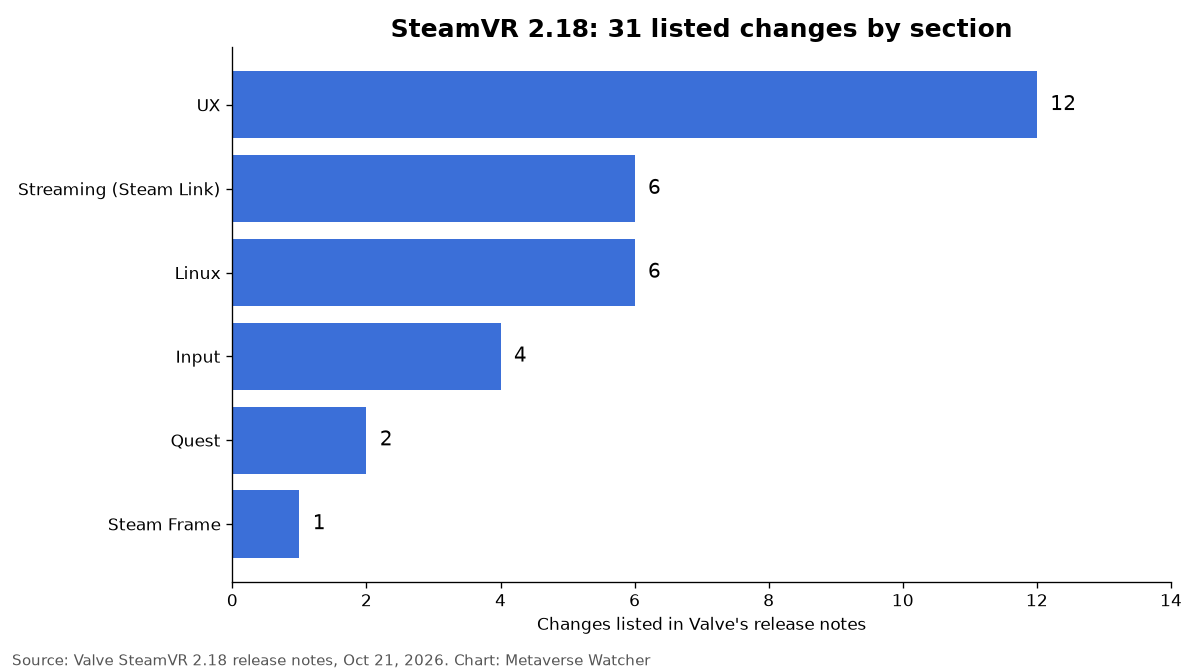
Valve has moved SteamVR 2.18 from beta to the stable branch. The update, announced on the official SteamVR news feed on October 21 at about 2:16 PM ET, adds wired USB streaming for Meta Quest headsets, exposes Steam Frame eye openness data to third-party apps, and makes a new “Aurora” environment the default home. Valve’s notes list 31 changes in total, and the largest share are bug fixes rather than new features.
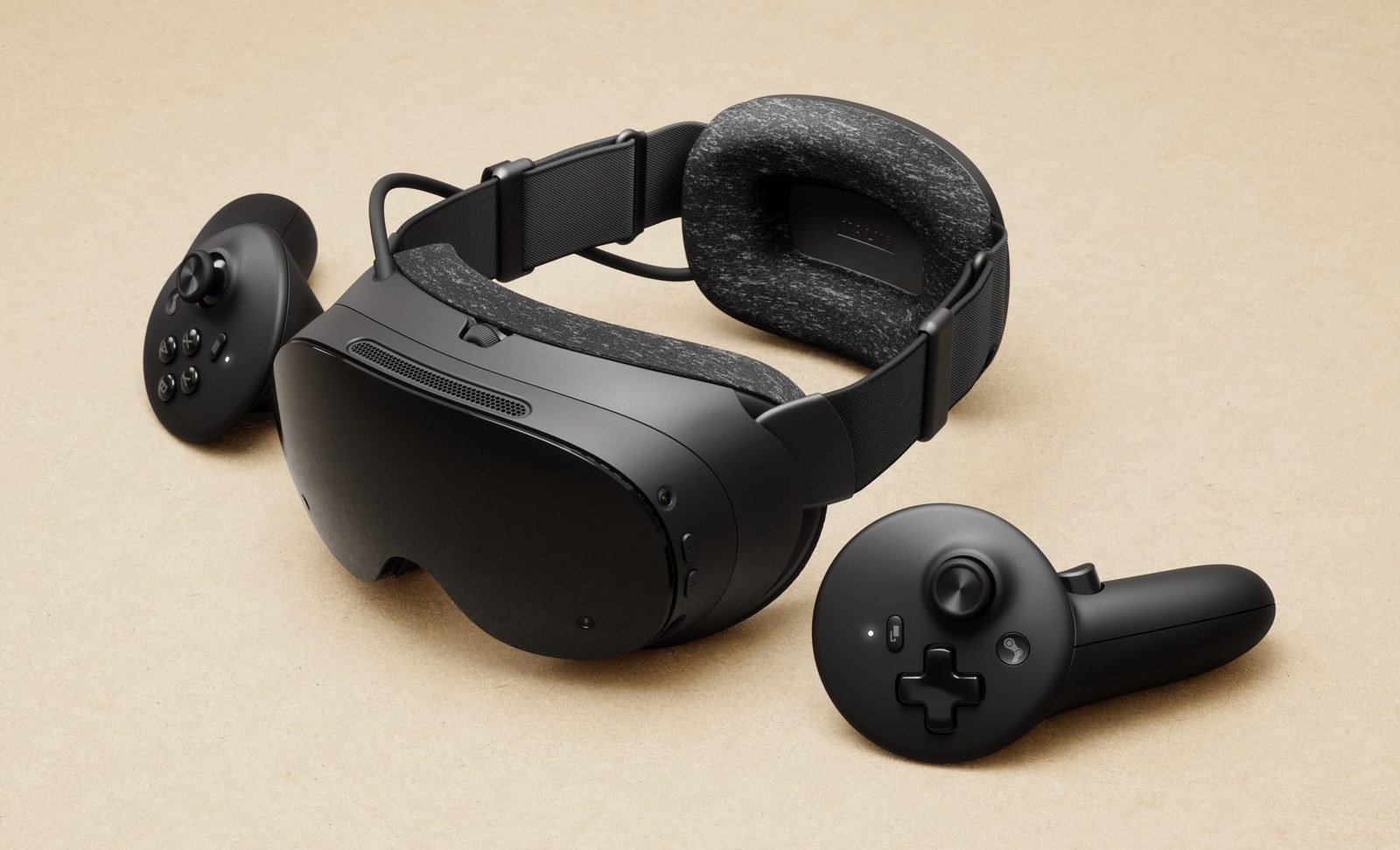
What’s new for Quest owners
The headline addition for the largest group of PC VR users is tethered streaming over USB through Valve’s Steam Link app on Quest. Until now, Steam Link on Quest was a Wi-Fi-only path into SteamVR, which left owners choosing between Valve’s app over wireless or Meta’s own Quest Link for a cable. Valve says the wired mode needs the latest Steam Link app on the headset. A second Quest change improves host frame rate behavior when the headset’s refresh rate is overridden at the operating system level.
Streaming in general gets six fixes, including more work on the long-running “Error 17” connection failure, removal of roughly 300ms gaps in frame delivery under packet loss, a fix for washed-out colors on some AMD GPUs, fewer causes of checkerboarding and stuck streams, and better automatic bitrate selection.
Steam Frame: eye openness and gamepad fallback
For Steam Frame owners, SteamVR now streams eye openness data from the headset over OSC (Open Sound Control), the protocol social VR apps such as VRChat use for avatar face tracking. It requires SteamOS 0.4.3 or later on the headset, and Valve says the same data will come to a future OpenVR SDK release, which would let games read it directly. Steam Frame controllers will also now default to gamepad input in VR games that lack VR controls; the behavior can be changed per game in Steam Input settings or in the VR Controller settings on the Now Playing page.
The update follows a fast run of Valve patches since launch. Our SteamOS 0.5.6 beta report covered the headset’s Wi-Fi power-saving fix, and the OpenXR 90Hz-to-72Hz drop logged against the 2.18.4 beta. Valve’s stable notes do not mention that refresh rate issue.
A new default home and dashboard cleanup
The user interface section is the longest, at 12 items. “Aurora” is now the default environment (it can be turned off in settings), with content-aware aurora color tinting in the theater environment. The system UI now supports gamepad navigation, less-used controls move to an “Additional Options” menu, and game dimming behind the dashboard can be disabled. Fixes cover the keyboard failing to appear in some games such as Skyrim VR, needless dashboard recentering, the per-app Throttling Behavior setting, and several startup crashes.
Linux and input fixes
Linux gets six fixes, which matters more now that the Steam Frame runs SteamOS and Valve is courting Linux PC VR users. Asynchronous reprojection should no longer fail on AMD GPUs, GPU selection works on machines with both integrated and discrete graphics, systems without systemd are supported, OpenXR games no longer crash if SteamVR wasn’t already running, and the VK_KHR_maintenance9 Vulkan requirement is gone, so older graphics drivers work again. GamingOnLinux readers who tested the beta were not all convinced the AMD reprojection fix works, so treat it as unverified until more reports arrive. On input, Valve fixed controller bindings that failed to load for some games, including Google Earth VR and Thumper.
What it means
SteamVR 2.18 is a maintenance release, but the Quest USB option is a real shift: Valve now offers its own wired route onto the most popular PC VR hardware, rather than leaving the cable to Meta. Paired with the eye openness hook for Steam Frame, it shows Valve tightening both the streaming stack it depends on and the tracking data developers can use. For buyers still weighing headsets, our best VR headsets of 2026 guide covers how Steam Frame and Quest 3 compare today.
Sources: Valve, “Introducing SteamVR 2.18”; GamingOnLinux.