An UNOFFICIAL open-source project called Rokid Lumen takes the Meta Neural Band, the sEMG wristband Meta sells ONLY with Ray-Ban Display, and uses it to DRIVE a pair of Rokid RG glasses. It gets there over a Bluetooth protocol worked out by REVERSE ENGINEERING, and its OWN security page says the setup leaves ADB over TCP listening on port 5555 on EVERY network the glasses join.
What Lumen Does
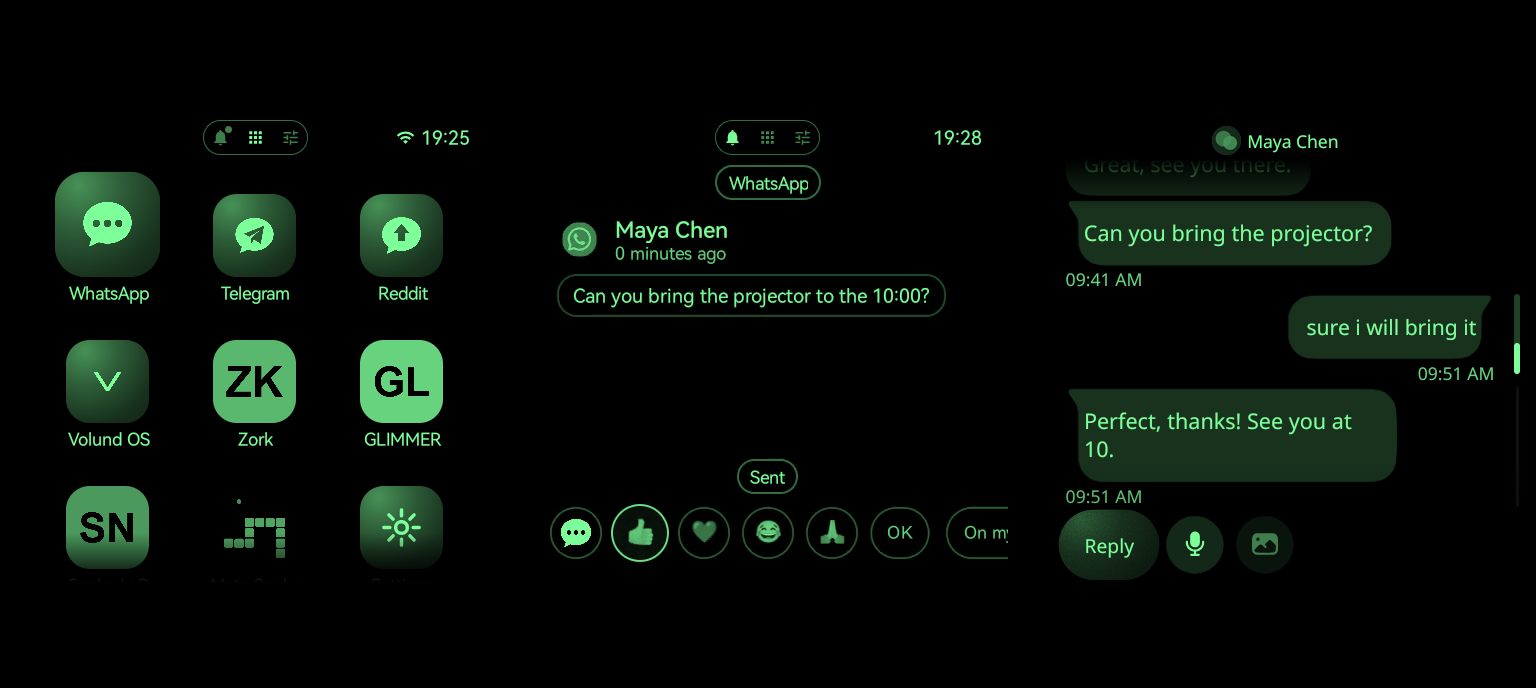
The repository describes Lumen as a layer that “turns Rokid RG glasses into a small app platform driven by the Meta Neural Band.” A thumb SWIPE moves through a grid of web apps, an INDEX tap opens one, and a MIDDLE tap goes back. A middle double tap turns the display off and on, and a pinch-and-turn adjusts VOLUME. The apps are Meta Ray-Ban Display-style web apps, either OFFLINE packages or ordinary HTTPS pages, and a COMPANION phone app forwards NOTIFICATIONS, dictation and internet access.
The glasses side targets Rokid RG hardware on Android 12 with a 480×640 monochrome green display. The band link is a Rust core built from TWO earlier community projects, kinesis, which gives macOS NATIVE controls from the band, and air-gestures. The README is EXPLICIT that “Rokid Lumen is not affiliated with Meta or Rokid.”
It is also MOVING fast. GitHub lists 13 releases between 5:55 p.m. ET on October 2 and 5:08 p.m. ET on October 6, ending at v0.2.0-beta.18, which ADDED an EXPERIMENTAL “Air Mouse” that moves a CURSOR with the FOREARM. The repository had just FOUR stars when we checked.
Meta Offers No Official Route
Lumen’s notes on the band ask whether an official Android API exists for its gestures and answer: “No, as of September 2026.” The project points to Meta’s Wearables Device Access Toolkit, whose FAQ lists camera, microphone, audio, motion and IMU access for the GLASSES, with NO Neural Band gestures. Meta does expose band input to web apps running INSIDE Ray-Ban Display, but that REQUIRES Meta’s glasses, not a phone or a THIRD-PARTY headset.
The workaround has a real COST for owners. To claim the band, the companion app signs in with a META account, and the notes WARN that this “unlinks it from Meta’s glasses and app.” The project adds: “That’s unofficial: a band firmware update could change it, and Meta doesn’t support it.”
The Handwriting Claim Is Untested Elsewhere
The NEWEST claim is that the band carries its own handwriting model. Lumen says it switches that model on through the band’s settings service, so a wearer can write with a finger on ANY surface and receive the output as inference samples. The notes say this was “Tested on a current band (2026-10-05).” That is the DEVELOPER’S statement, not an INDEPENDENT result. MIXED, which reported the project on October 7, noted that no one else has REPRODUCED it.
The project is just as direct about its DEMO. Its 35-second CLIP was recorded on the glasses, but “the band’s gestures are simulated,” and EVERYTHING on screen is demo data. Its list of items still needing HARDWARE checks includes the band’s connection from the glasses while they are ALSO linked to a phone, and navigation from band swipes inside real Rokid apps.
The Security Trade-Off
The most CONSEQUENTIAL detail sits in Lumen’s own security document, which lists FIVE known open issues. The first: a one-time “self-arm” step, which walks the glasses’ Settings to enable wireless debugging and pair with ADB, sets the ADB port to 5555 and turns USB debugging ON. As a result, ADB starts at every boot and listens “on all of the glasses’ network interfaces, not only on 127.0.0.1.” ADB keys are still REQUIRED, but the paired key never EXPIRES, and the document calls it “an exposed service on every Wi-Fi the glasses join, the phone’s hotspot included.” The app itself, it notes, ONLY needs 127.0.0.1.
The same page lists an ADB key that can be IMPORTED from external storage, helper requests passed through files on external storage, a phone proxy with no per-session AUTHENTICATION yet, and web-app secrets stored UNENCRYPTED on the glasses. The README tells users to read that page before running the self-arm, and the project documents how to UNDO it.
Why It Matters
Lumen is a SMALL project, but it shows DEMAND that NEITHER company is serving. Meta keeps the Neural Band tied to its OWN glasses, and Rokid, which led AR and AI glasses shipments in the first half of 2026 according to Counterpoint, ships its OWN launcher and input. Developers who want the band as a GENERAL input device are building the bridge THEMSELVES. For owners, the TRADE is plain: Lumen offers a BETTER input method for a HUD, at the price of an UNSUPPORTED, unlinked band and a debugging port left OPEN. Until Meta PUBLISHES a real band API, every route like this one will rest on reverse ENGINEERING that ONE firmware update could BREAK.
Sources: Rokid Lumen on GitHub; Lumen Neural Band notes; Lumen security document; Lumen releases; kinesis on GitHub; MIXED.