Samsung is already scoping a second wave of AI glasses — this time with a color microdisplay — according to a September 9 report from The Elec. The company asked Samsung Display last month for an ultra-small panel that can sit inside a frameset, with requirements covering form factor, information area, color, and price. Independent coverage from Gizmodo frames the move as a direct chase of Meta’s Ray-Ban Display tier.
What The Elec actually says
Per The Elec’s industry sources, Samsung wants a microdisplay of roughly 0.2 inch or smaller, magnified by an optical path onto the lens so simple visuals — text, notifications, icons, navigation arrows — sit across the wearer’s forward view. Panel candidates under evaluation include OLEDoS (OLED-on-silicon) and LEDoS (LED-on-silicon). Timing is not locked: officials cited a window from the second half of 2027 into the first half of 2028, contingent on panel development and product validation.
Color depth is intentionally limited. Samsung is pursuing about 4-bit gradation per channel (16 brightness levels) rather than photo-grade 8-bit. That choice favors readable symbols over rich media — a different bet from video AR glasses, and closer to a heads-up notification stack than an XREAL-style floating desktop.
Binocular versus monocular is still open. The Elec says Samsung has not decided whether both eyes get a display or only one. That matters because Meta’s Ray-Ban Display is monocular (600×600, ~20° FOV) and offset to the side of the right lens. Samsung’s reported preference for information “across the front of the lens” implies a wider FOV problem that has to be solved without blowing cost or battery.
Separate from this year’s display-free pair
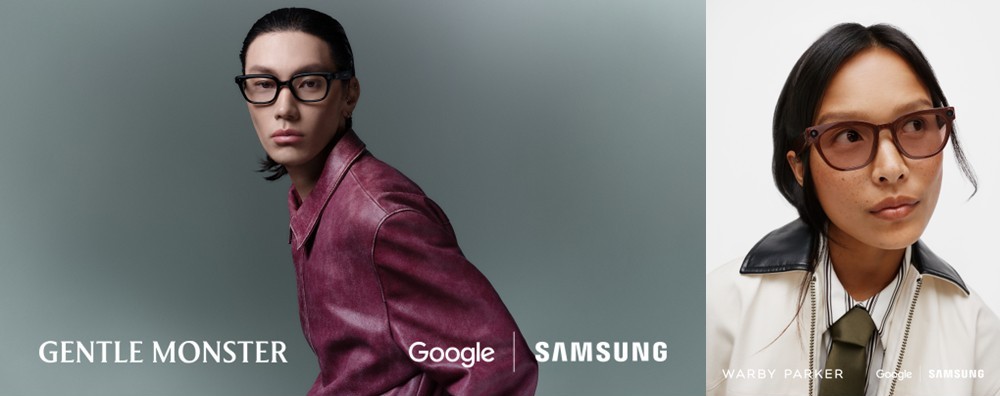
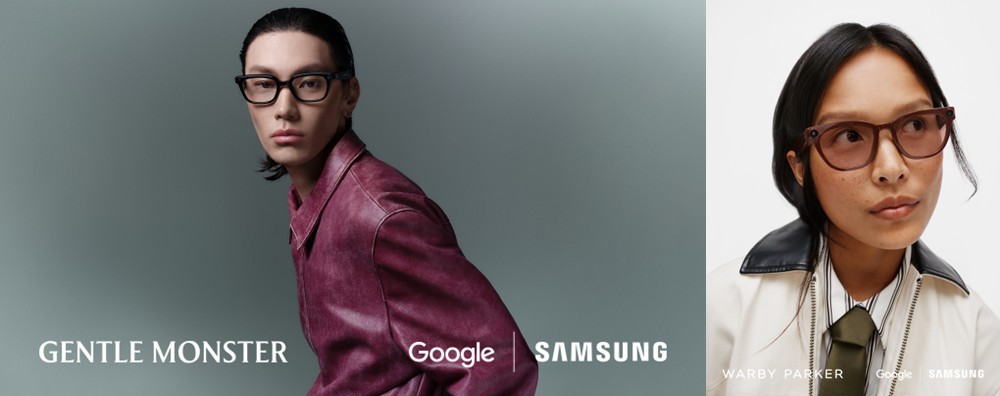
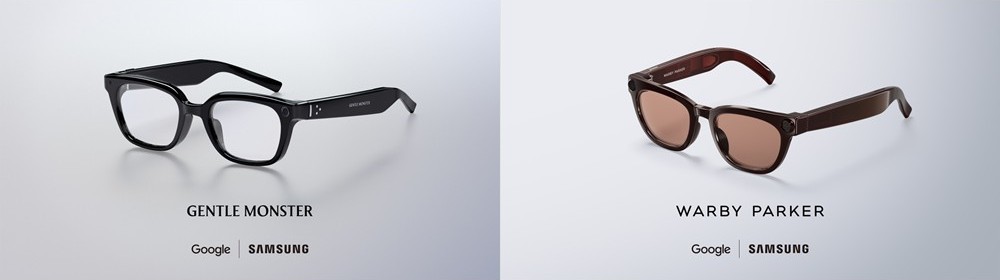
This is not a redesign of the 2026 intelligent eyewear Samsung showed with Google, Gentle Monster, and Warby Parker. Those frames are camera- and voice-first companions scheduled for select markets this year, with no display. The Elec report describes a later product line aimed at the same smartphone-companion role Meta already occupies with Display frames — notifications and glanceable UI without pulling out a phone.
Why the panel choice matters
Industry officials quoted by The Elec lean toward white OLEDoS (white OLED plus color filters) as the practical path on cost and yield. RGB OLEDoS skips filters but is harder to manufacture at volume. LEDoS brings brightness advantages and still struggles with color reproduction and mass-production yields. None of that is a Samsung confirmation — it is supply-chain reporting — but it maps cleanly onto the constraints every glasses maker hits once text has to appear on glass without turning the frames into a headset.
Samsung has not confirmed the project, a ship date, a panel vendor, or a binocular/monocular choice. Treat the Elec sourcing as a development signal, not a SKU. The competitive read is still clear: after Meta put a color HUD on Ray-Ban Display in 2025, Samsung’s 2026 display-free glasses look like the first layer, and a 2027–2028 microdisplay pair would be the second.
Sources: The Elec, Gizmodo, Samsung Newsroom (July 2026 intelligent eyewear).