
Two days before sale, RayNeo is selling a split: a 33g heads-up AI pair and a cinema-grade GT line, not one glasses-that-do-everything compromise.
RayNeo puts the iO smart glasses and the GT / GT Max AR line on sale September 4, 2026 through its site and Amazon, with live demos the same week at IFA 2026 in Berlin (Hall 21A, September 4–8). The company framed the dual launch in an August 21 press release: ambient productivity on one side, portable cinema on the other. Founder and CEO Howie Li’s line is blunt. One device that tries to do everything is the compromise they are refusing.
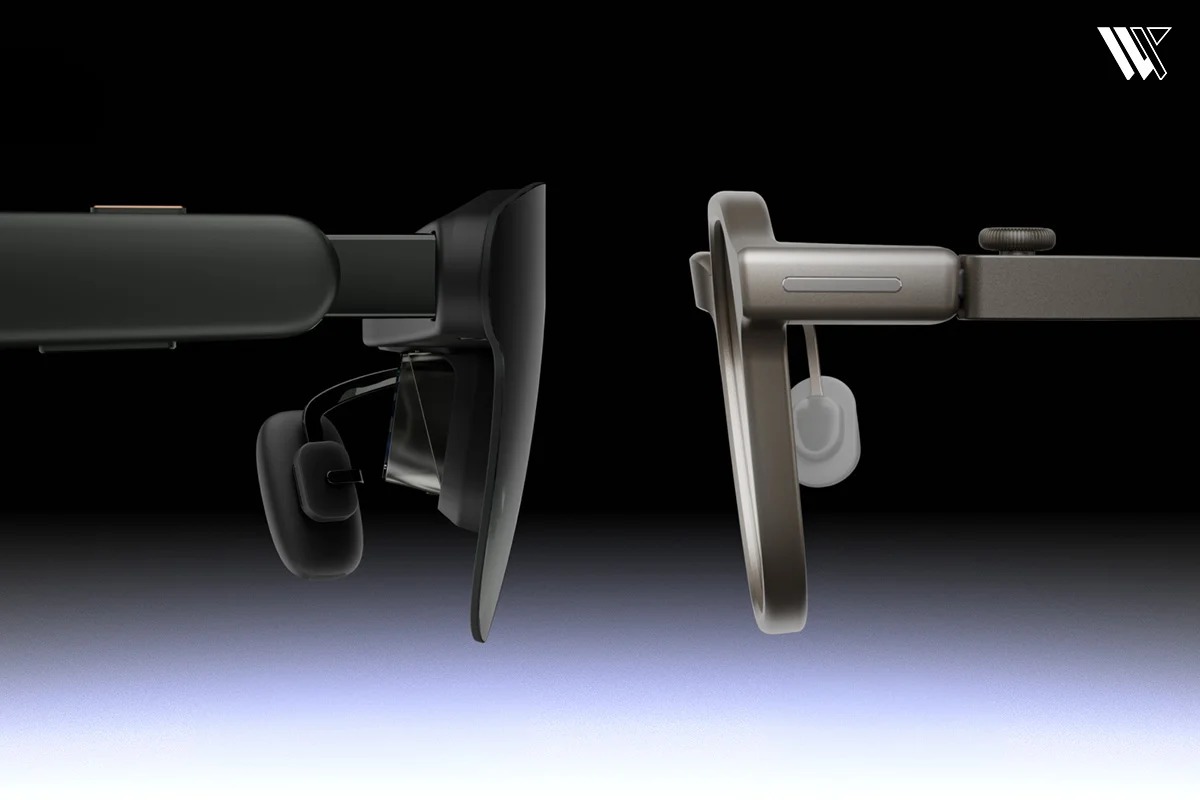
iO: 33 grams, green text, no speakers
The iO is the everyday pair. RayNeo lists a 33g chassis with Crown Panto styling, AZ91D magnesium-aluminum front, titanium temples, and a claimed 50:50 front-to-rear balance. The display path is a 0.085cc monochrome green Firefly Nano Engine feeding a diffractive “Blue Lake” waveguide: 23.5° FOV, 97% optical transparency, and up to 1,300 nits at eye level. Text is meant to be glanceable to the wearer and invisible to people across the table.
Software pitch is Ambient AI Life Log plus RayNeo AI and Gemini 3.1 Flash Lite, with an optional multi-model tier that can switch among Gemini, ChatGPT, Claude, and DeepSeek in the companion app. Android Authority puts that multi-model add-on at $9.99/month. Live translation rides Timekettle BabelOS 3.0: RayNeo’s PR sheet says streaming text across 55 languages and 109 accents at about one second of latency, plus an auto-teleprompter that scrolls with speaking pace.
There are no speakers. A four-mic array and a bone-conduction sensor are for capture only. Battery is a 240mAh cell: up to two days of typical use, 18 hours of continuous recording, or 6.2 hours of continuous translation per the press sheet. Hardware includes a Smart Crown dial, Bluetooth 5.4 with Apple MFi licensing, IP54 sealing, and a hardwired LED that lights when recording or translation is active. Colors at launch: Polar Night (dark grey) and Dune (gold).

GT and GT Max: the private theater
The GT line is the opposite product. Dual-chip architecture pairs a Vision 4000 display chip with a Zone 360 3DoF chip. GT Max uses Peacock Optical Engine 3.0 Max and a 5.5th-gen tandem MicroOLED for a 59° FOV and three virtual screen scales RayNeo quotes as 227 / 267 / 307 inches. The standard GT is birdbath optics, 46° FOV, and scales up to a claimed 231-inch virtual screen. Weights: 68g (GT) and 78g (GT Max). GT Max ships in three physical IPD chassis sizes rather than software crop alone.
RayNeo says pairing with the Pocket TV Pro makes the GT series the first AR glasses system with native Dolby Vision playback plus AI SDR-to-HDR conversion. Audio is a Bang & Olufsen co-tuned racetrack quad-speaker setup with head-tracked spatial audio and a Whisper Mode. Zone 360 drives Steady, Pinned, and Follow viewing modes. Prescription inserts are supported on both GT models.
Price and the September window
Android Authority and Digital Trends both report GT at $299 and GT Max at $399. Android Authority separately lists iO at $479 (with an introductory discount noted in its write-up) and a $529 bundle that includes a charging case; Pocket TV Pro pricing was still unannounced in that coverage. RayNeo’s own PR release did not publish sticker prices, so treat the dollar figures as reporting, not a RayNeo price sheet.
The company also claims 23.7% global consumer AR smart-glasses shipment share in Counterpoint’s Q1 2026 data. That is a press-release citation, not independent verification in this piece. What is concrete is the calendar: sale opens September 4, IFA demos land the same day, and the product split itself is the story. One line for heads-up work. One line for a private screen. September is already crowded with Snap SPECS, Meta Connect, and whatever Valve does with Steam Frame. RayNeo is not waiting for any of them.
Sources: RayNeo / PR Newswire, Android Authority (iO), Android Authority (GT), Digital Trends, WearableXP.
1 thought on “RayNeo Splits the Bet. iO and GT Go on Sale September 4.”