RayNeo’s camera-free iO now has a full wear test, not just an IFA booth walk. On September 10, The Ghost Howls published a detailed review of a review unit: 33 grams, monochrome green waveguide, crown-and-voice control, and a battery that actually lasts. The same piece is blunt about comfort, Life Log privacy, and what “no camera” does not solve.
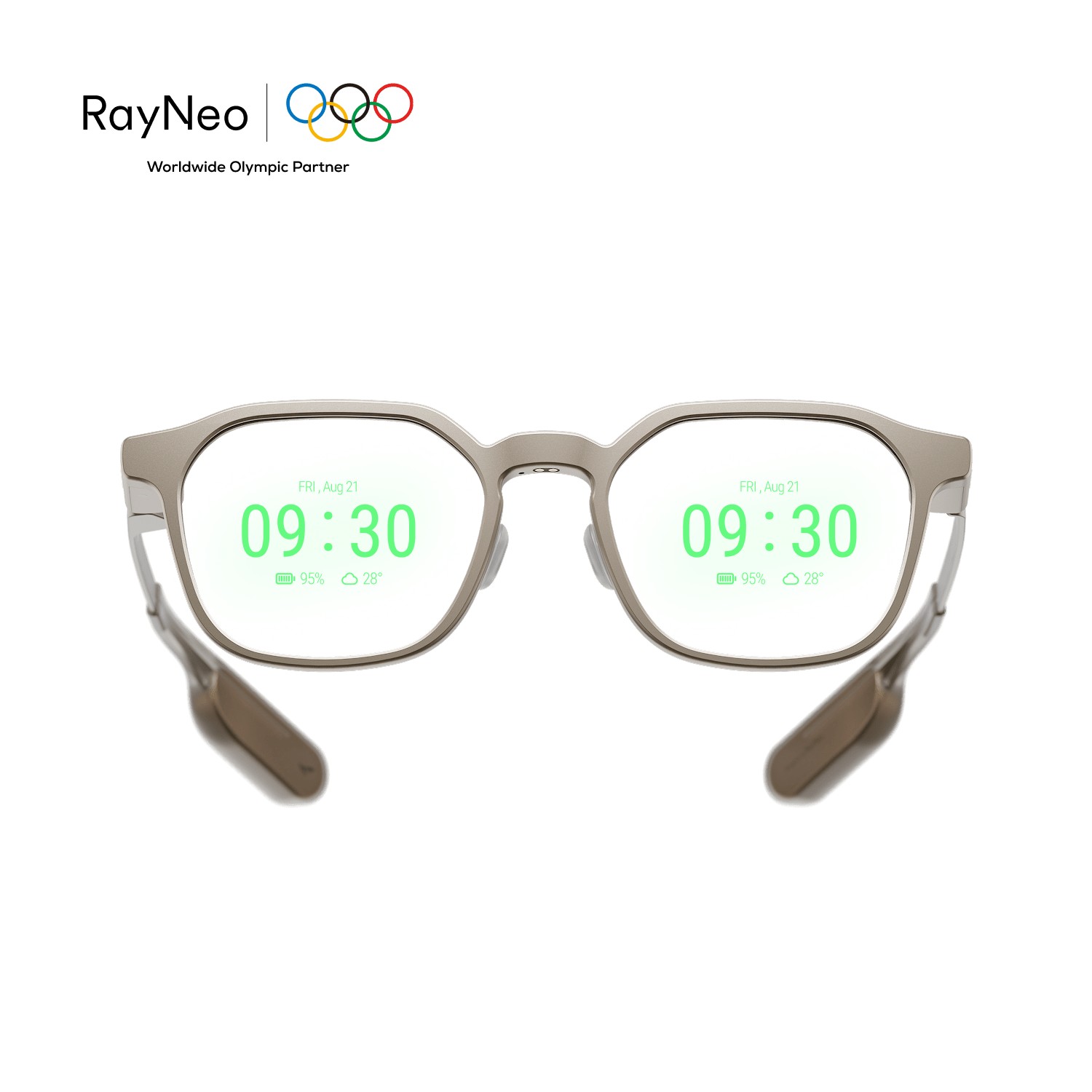
We covered the IFA hands-on on September 8. This is the longer take: multi-hour wear, live captions, teleprompter, Life Log, and a verdict aimed at buyers who are not collecting booth photos.
What held up
Skarredghost confirms the pitch sheet that matters. Weight is 33 g. The Firefly Nano / MicroLED waveguide text stays readable indoors and usable outdoors at peak brightness (RayNeo lists up to about 1,200–1,300 nits). Transparency is high enough that the lenses do not darken the room. The Smart Crown is preferred over temple swipes. Microphone arrays separated the wearer’s voice from speakers in front and to the side. Live captions and translation worked well with a solid connection across English, Chinese, and Italian. Battery claims tracked: roughly 40% drain after about eight hours with Life Log on, which supports RayNeo’s “up to two days” everyday-use line and the store’s ~6.2-hour continuous translation figure.
The companion app did most of the real work. Brightness, dashboard widgets, caption languages, and teleprompter text are configured on the phone; the glasses stay a thin client. RayNeo AI and a free Gemini option are available; other models sit behind a paid VIP tier on RayNeo’s product page ($9.99/month for unlimited multi-model access).
Where the all-day promise cracked
Comfort is the headline caveat. After more than an hour, pressure built at the nose and behind the ears. After eight hours the reviewer removed the frames with visible marks. Temple tip sleeves helped skin contact but made the temple ends thicker. Nose pads in the box did not change the geometry enough to fix a large-nose fit. Other reviewers have not all reported the same pain, so the review treats ergonomics as face-dependent rather than a universal fail — and still calls it a redesign target for a device sold as an all-day companion.
The display sits high in the lens. Fine for glanceable notifications. Strain shows up on teleprompter and long caption sessions. Looking up while talking also reads as inattention to people across the table. There is no speaker path: answers are text-only, calls and music are off the table, and that puts iO in a different category from Ray-Ban Meta even before you notice the missing camera.
Privacy without a camera is still messy
RayNeo markets camera-free “privacy by design.” The review’s Life Log test undercuts the slogan. All-day audio capture, multi-language transcription, GPS breadcrumbs, and cloud AI summarization logged personal conversations the wearer forgot were running. The privacy LED sits near the ear tip — easy to miss, easy to hide under hair. Displays leak green text to people facing the wearer. You cannot fully power the glasses off; standby still drains. GDPR language and on-device anonymization claims do not erase the practical issue: microphone-first glasses still record rooms.
Live Cues, the contextual AI helper that is supposed to interrupt without a wake word, mostly needed explicit questions and stayed quiet through a full work meeting. The review leaves it as a beta that “sounds good” more often than it helps.
Price and who it is for
RayNeo’s store lists iO around $499 with a standard case (launch discounting applies; prescription packages run higher). The Ghost Howls’ buying advice is narrow: deaf users who need captions, sales or meeting-heavy jobs that live on spoken notes, and people who want a camera-free assistant aesthetic. Everyone else is told to match the feature set to their work before spending half a thousand dollars on a frame that may not survive an eight-hour day on their face.
Primary sources: The Ghost Howls full review (September 10, 2026) and RayNeo’s iO product page for current MSRP, battery, and AI model notes. Our earlier IFA hands-on remains at RayNeo iO Hands-On Puts Weight First.