Road to VR (Scott Hayden, Sep 29) puts three live options on one scorecard: Meta Quest 3, Valve’s Steam Frame, and Meta VR Glasses. The POINT is not a single winner — it is which BUYER each headset actually SERVES in late 2026.
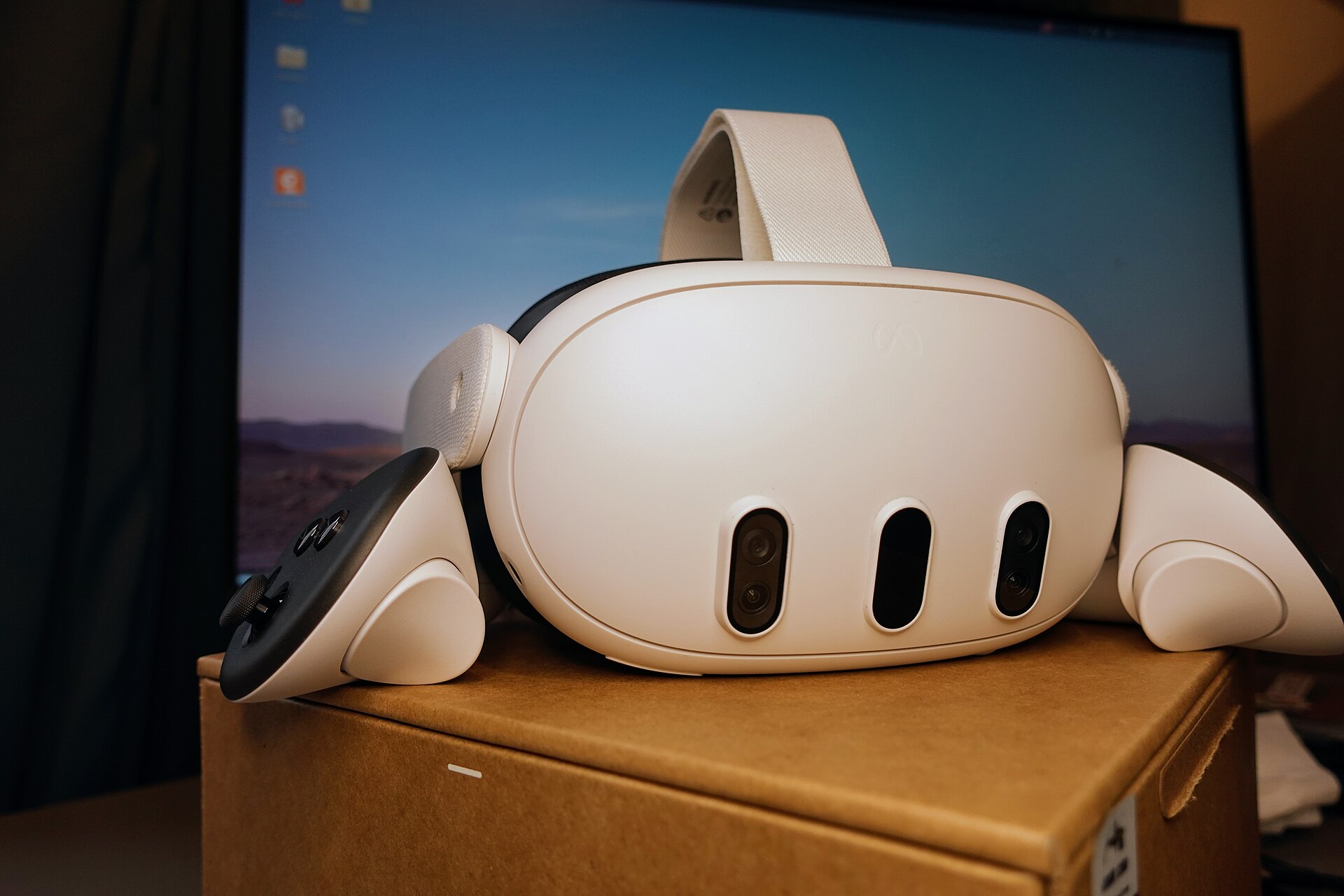
Quest 3 remains the catalogue and ease-of-use baseline Hayden measures the other two against. Photo: Roy.wonder.cohen / Wikimedia Commons (CC BY-SA 4.0)
Hayden’s quick conclusion is clean. Steam Frame is for POWER-USERS and TINKERERS who want SteamOS and expandable storage. Quest 3 is for budget-conscious buyers who want ease and a MASSIVE game catalogue. Meta VR Glasses — $1,299.99 in SPRING 2027 — are for PRODUCTIVITY and personal theater first, with Quest games as a compatible side path rather than the MAIN pitch.
Steam Frame: available now, built to tinker
Steam Frame started at $1,059 for 256 GB (and $1,299 for 1 TB) when Valve shipped it in September 2026. Road to VR lists a Snapdragon Series 8 Gen 3 chipset, 16 GB of RAM, SteamOS, Wi-Fi 7, pancake optics, LCD panels at 2,160 × 2,160 per eye, refresh up to 144 Hz, and FOV up to 110°. Eye tracking is present; hand tracking is not. Passthrough stays MONOCHROME unless you add a third-party color upgrade such as Arcturus.
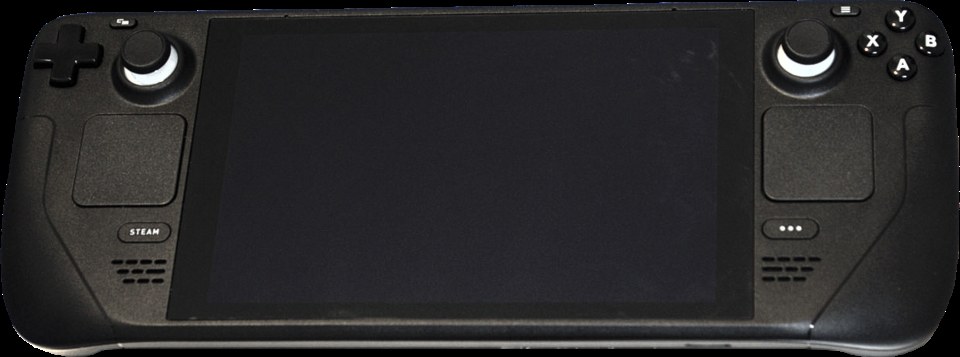
SteamOS hardware DNA — Valve’s Deck made the brand portable; Steam Frame extends that OS into standalone VR. Photo: Valve / Wikimedia Commons (CC BY-SA 4.0)
Hayden stresses that standalone play can still STRUGGLE on demanding titles, so Frame-certified badges matter. The UNLOCKED bootloader and PC streaming path are the real differentiators versus more console-like rivals.
Quest 3: still the practical gaming default
At about $600 for 512 GB, Quest 3 (October 2023) carries Snapdragon XR2 Gen 2, 8 GB of RAM, Horizon OS, color passthrough, hand tracking, and included Touch Plus controllers. Weight sits near 515 g with roughly 110° horizontal FOV — WIDER than the glasses Meta just showed at Connect.
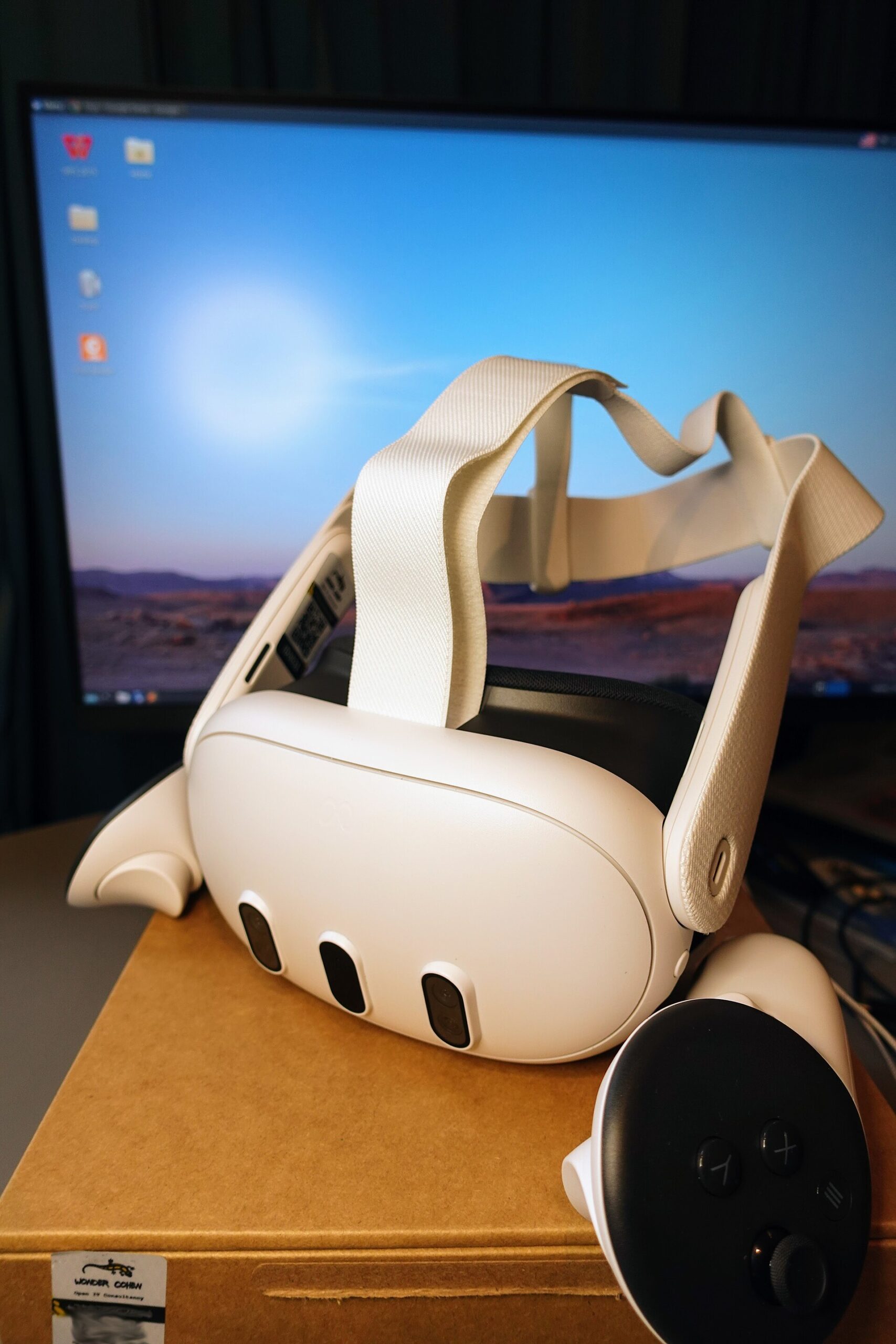
Quest 3’s ~110° FOV and onboard battery still define the immersive gaming silhouette. Photo: Roy.wonder.cohen / Wikimedia Commons (CC BY-SA 4.0)
Road to VR’s Frame-versus-Quest price GAP is about $460 at the base Frame SKU. Spec sheets are closer than that gap implies — Quest even LEADS in some optics areas — so the PREMIUM buys Steam library access and tinkerer freedom more than a clean hardware blowout.
Meta VR Glasses: light face, narrower FOV, later ship
Meta VR Glasses put about 100 grams on the face and move compute plus battery into a ~300-gram PUCK. Hayden’s table lists micro-OLED at 2,412 × 2,288 per eye, up to 120 Hz, about 37 pixels per degree, and a 70° × 66° FOV — SHARPER but NARROWER than Quest 3. Eye and hand tracking are onboard; Touch Plus is supported, not bundled. Horizon OS keeps Quest content reachable on the same store rails.
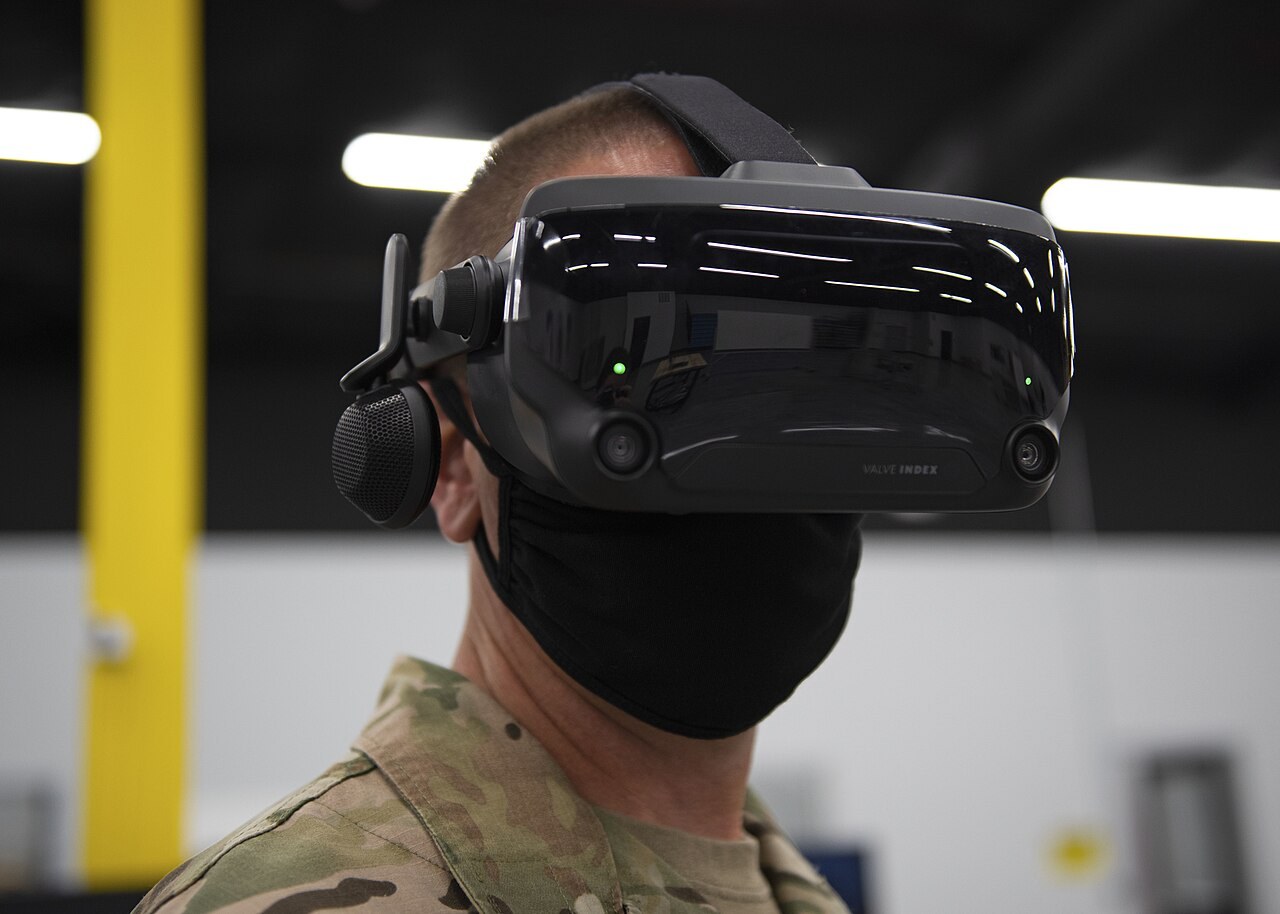
Valve’s prior Index generation was pure PC VR tether culture; Steam Frame flips that lineage toward standalone SteamOS. Photo: U.S. Air Force / public domain
That trade — immersion WIDTH for all-day wear and private monitors — is why Hayden refuses to treat Glasses as a straight Quest upgrade. Buyers who NEED Beat Saber–class field of view may stay on Quest or Frame; buyers who WANT cinema, sports, and multi-panel WORK get the Glasses brief instead.
How to choose without waiting for a mythical “best”
If you want to buy today and play a deep Quest library with minimal friction, Hayden’s map still POINTS at Quest 3. If you want SteamOS, PC streaming, and room to TINKER, Steam Frame is the open bet. If you can WAIT until spring 2027 for lighter glasses aimed at productivity and stereoscopic film, Meta VR Glasses are the HOLD — not a day-one gaming replacement.
Full spec table and use-case notes: Road to VR — Meta VR Glasses, Quest 3 & Steam Frame Compared (Scott Hayden, Sep 29, 2026).