By the Metaverse Watcher newsroom. Published Sunday, November 15, 2026. Specs checked against Valve’s official Steam Frame spec sheet on November 15, 2026. We will update this guide when Valve changes a spec, price or accessory.
Steam Frame specs are easy to find in fragments and hard to find in one place. Valve’s own spec sheet lists more than 25 line items, from the 4 nm Snapdragon 8 Gen 3 to the 140 mm maximum glasses width, and several of them matter more to buyers than the headline numbers. This guide collects every official spec, the current price and what is in the box, then explains what each number means in practice and where the Frame stands against the Meta Quest 3.
The short answer: the Steam Frame is a 440 g, streaming-first PC VR headset with 16 GB of RAM, 2160 x 2160 LCD panels per eye, eye tracking for foveated streaming and only monochrome passthrough. It costs $1,059 (256GB) or $1,299 (1TB) in the US, and the power supply is NOT included.
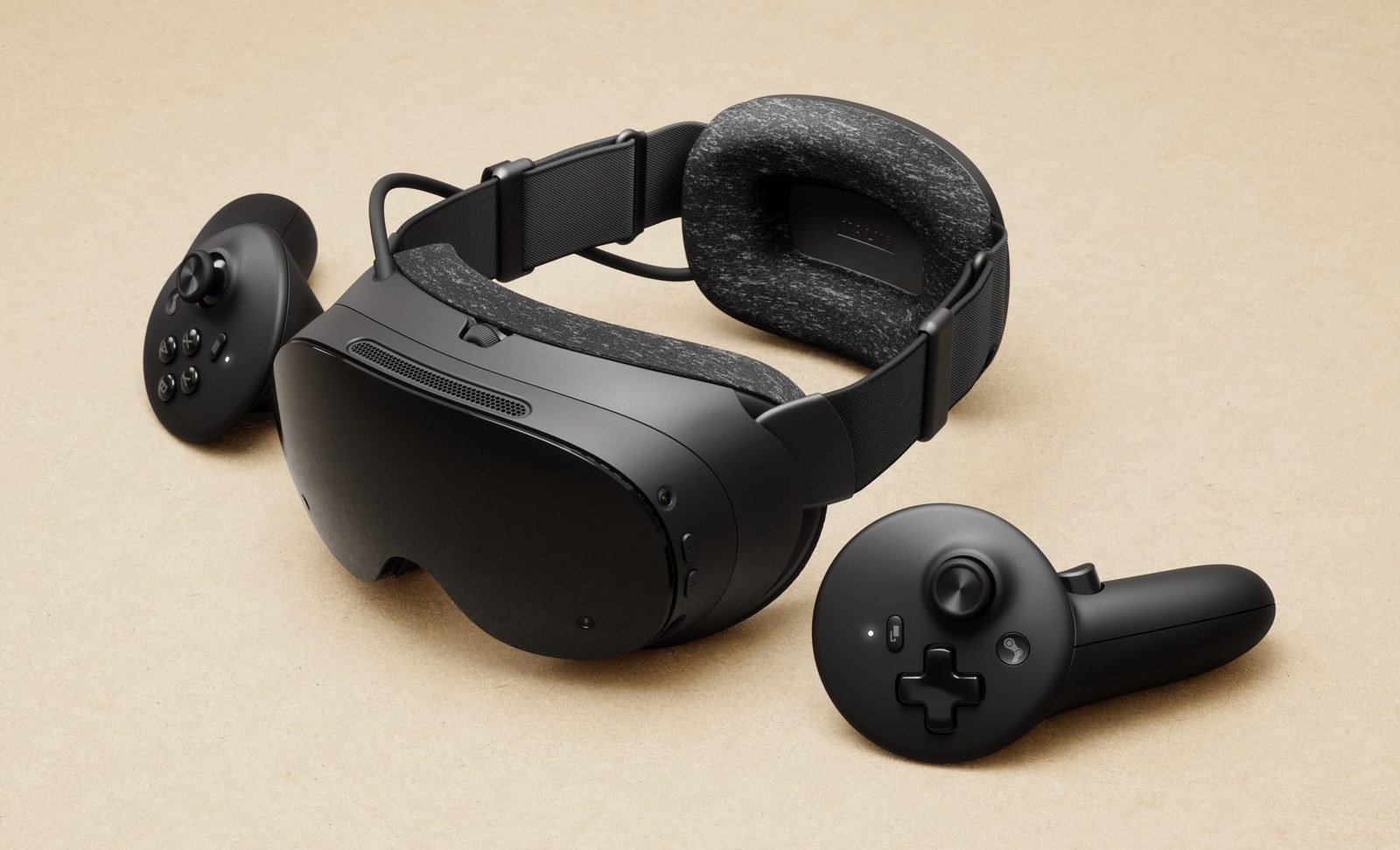
Steam Frame Specs at a Glance
| Spec | Steam Frame (official) |
|---|---|
| Processor | 4 nm Snapdragon 8 Gen 3, ARM64 |
| RAM | 16GB unified LPDDR5X |
| Storage | 256GB or 1TB UFS, plus microSD card slot |
| Display | 2160 x 2160 LCD per eye |
| Refresh rate | 72–144 Hz (144 Hz experimental) |
| Optics | Custom pancake lenses, glass and non-glass elements |
| Field of view | Up to 110 degrees |
| IPD target range | 60–70 mm |
| Max eyeglasses width | 140 mm |
| Tracking | Inside-out, 4 outward monochrome cameras; no base stations |
| Eye tracking | 2 interior cameras, used for foveated streaming |
| Passthrough | Monochrome, with IR illuminators for low light |
| Wi-Fi | Wi-Fi 7, 2×2, dual radios (5 GHz Wi-Fi and 6 GHz VR streaming at once) |
| Wireless adapter | Included, Wi-Fi 6E (6 GHz) direct link to the PC |
| Bluetooth | 5.4, plus a dedicated 2.4 GHz link for the controllers |
| Battery | 21.6 Wh Li-ion, in the rear of the headstrap |
| Charging | One USB-C 2.0 port, 15V 3.0A (45 W max) |
| Audio | Dual speaker drivers per ear in the strap; dual-microphone array |
| Expansion | Front expansion port: dual camera interface (8 lanes at 2.5 Gbps MIPI) or PCIe Gen 4 x1 |
| Weight | 440 g with headstrap; 185 g core module; 245 g headstrap |
| Size | 175 x 95 x 110 mm (core module and facial interface) |
| Operating system | SteamOS 3 (Arch-based), KDE Plasma desktop |
| Controllers | 6-DOF tracking, full gamepad layout, magnetic TMR thumbsticks, capacitive finger tracking, one AA each (40-hour rating), 130 g with battery |
Steam Frame Price and What’s in the Box
Valve announced pricing on September 14, 2026. Both kits include the headset, two Steam Frame Controllers, the Wi-Fi 6E wireless adapter and a copy of Half-Life: Alyx, which Valve says is redeemed in Settings and cannot be claimed if the game is already in your library.
| Region | 256GB Kit | 1TB Kit |
|---|---|---|
| United States | $1,059 | $1,299 |
| Canada | C$1,529 | C$1,859 |
| European Union | €1,049 | €1,279 |
| United Kingdom | £889 | £1,089 |
| Australia | A$1,609 | A$1,969 |
Budget for the extras. Valve sells a 45 W power supply for $29 and says a Steam Deck charger or any 45 W or higher USB-C charger works. The $59 Ergonomic Accessories Kit adds a top strap, controller hand straps and an extended light blocker, and a $49 Accessory Replacement Kit covers the face gasket, head cushion and light blocker. Valve’s FAQ says first-party accessories are only available when added to the cart with a Steam Frame purchase.
Buying one is the harder part. Valve sells the Frame through a randomized reservation queue and regional waitlists rather than open orders, and reservation holders get 72 hours to check out once their email arrives. Third-party tracker Steam Hardware Stock showed both US kits as waitlist-only on November 15. Our guide to the Steam Frame order wait explains how to check whether your email is due by December or in 2027.
What the Steam Frame Specs Mean in Practice
Chip and RAM: A PC on Your Face, With Caveats
Valve describes the Frame as “a PC” running SteamOS, and the 16 GB of RAM is double the Quest 3’s 8 GB. That headroom matters for standalone play, where many Windows games run through FEX and Proton translation on an ARM chip. Translation costs performance and power, which is why standalone runtimes are short. The Snapdragon 8 Gen 3 is a phone-class part, not a dedicated XR chip like Meta’s XR2 Gen 2.
Displays and Lenses: Sharp, but LCD
The 2160 x 2160 LCD panels per eye are slightly higher than the Quest 3’s 2064 x 2208 in total pixel count, behind pancake lenses with a field of view of up to 110 degrees. Reviewers have been lukewarm here: PC Gamer said the displays “aren’t anything special.” The 144 Hz mode is still labeled experimental, and Tom’s Hardware found its games defaulted to 72 Hz.
IPD and Glasses: Check Your Measurements
Two specs most buyers skip are the ones most likely to cause a return. The 60–70 mm IPD target range is narrower than many people assume, so anyone outside it should measure before buying. The 140 mm maximum eyeglasses width sets a hard limit for frames; Engadget noted a tight fit with glasses. Prescription inserts are the cleaner fix, and several makers sell inserts for popular headsets.
Wireless: The Real Headline Feature
The Frame’s most important spec is its networking. The headset’s two Wi-Fi 7 radios let one stay on your home network while the other carries a dedicated 6 GHz stream from the included Wi-Fi 6E adapter plugged into your PC. Combined with eye-tracked foveated streaming, that is why reviewers consistently rate wireless PC VR as the Frame’s best feature. Road to VR wrote that the average user “wouldn’t be able to tell (by latency or fidelity)” whether an image was streamed or tethered.
Passthrough: The Biggest Gap
Passthrough is monochrome only. The four outward cameras are built for tracking, with IR illuminators so tracking and passthrough work in the dark, but there is no color mixed reality out of the box. According to VR.org, Valve lists the separately sold Arcturus Vision camera as a Steam Frame Compatible accessory for color passthrough, at $149. If mixed reality matters to you, the Quest 3 is still the better buy.
Battery and Weight: Light Front, Short Runtime
Moving the 21.6 Wh battery to the rear strap keeps the core module at just 185 g and the whole headset at 440 g, 75 g lighter than a Quest 3 with its stock strap. Valve publishes no hours-per-charge figure. Reviewers measured about one hour of demanding standalone play and roughly 1.5 to 2 hours when streaming from a PC; our Steam Frame battery life guide has every published test and the settings that buy minutes back.
Expansion Port and Modularity
The front expansion port, with a dual high-speed camera interface or a single PCIe Gen 4 lane, and the detachable core module are unusual for a consumer headset. They are what make third-party add-ons such as color cameras and alternative straps possible, and they underpin the open-platform argument many owners make for the Frame:
No doubt Valve still believes in VR. Steam Frame has been criticized for its price and specs. But I think its biggest strength is being overlooked. It’s an open platform.
— Wu Xu (@xuwu) October 29, 2026
Steam Frame vs Quest 3: Key Spec Differences

| Spec | Steam Frame | Meta Quest 3 |
|---|---|---|
| US price | $1,059 / $1,299 | $599.99 (512GB) |
| Chip / RAM | Snapdragon 8 Gen 3 / 16GB | Snapdragon XR2 Gen 2 / 8GB |
| Display per eye | 2160 x 2160 LCD | 2064 x 2208 LCD |
| Refresh | 72–144 Hz (144 experimental) | 72, 90, 120 Hz |
| Weight | 440 g | 515 g |
| Eye tracking | Yes | No |
| Passthrough | Monochrome | Full color with depth sensor |
| Storage expansion | microSD | None |
| Charger in box | No | Yes |
On paper the Frame wins on memory, weight, eye tracking and storage expansion. The Quest 3 wins on price, color mixed reality and an included charger, and it is in stock at retail today. For the full buying decision, see our Steam Frame vs Quest 3 comparison, and for what reviewers concluded after testing, our Steam Frame reviews roundup (average score: 75/100).
Who the Steam Frame Specs Suit
- Buy it if you own a capable gaming PC, your library lives on Steam and wireless PC VR is your main use. The networking and foveated streaming are built for exactly that.
- Think twice if your IPD falls outside 60–70 mm, you wear wide frames, or you want long untethered sessions.
- Skip it if you want color mixed reality, the lowest price or a headset you can buy this week.
Steam Frame Specs: Quick Answers
Does the Steam Frame need base stations? No. It uses inside-out tracking from four onboard cameras.
Does it have eye tracking? Yes. Two interior cameras handle eye tracking, which Valve uses for foveated streaming.
Can I add storage? Yes. Both kits have a microSD card slot.
What charger does it need? Any USB-C charger rated 45 W or higher; the headset accepts up to 15V 3.0A.
How heavy are the controllers? 130 g each with the AA battery, 107 g without, with a rated 40 hours per battery.
Sources: Valve Steam Frame spec sheet and FAQ (checked November 15, 2026); UploadVR and VR.org pricing reports; Steam Hardware Stock; PC Gamer, Engadget and Road to VR reviews; Meta Quest 3 specifications.