Reservations opened today. The comparison buyers actually need is not another price recap — it is how Valve’s Steam Frame stacks against the headset most people already own: Meta Quest 3.
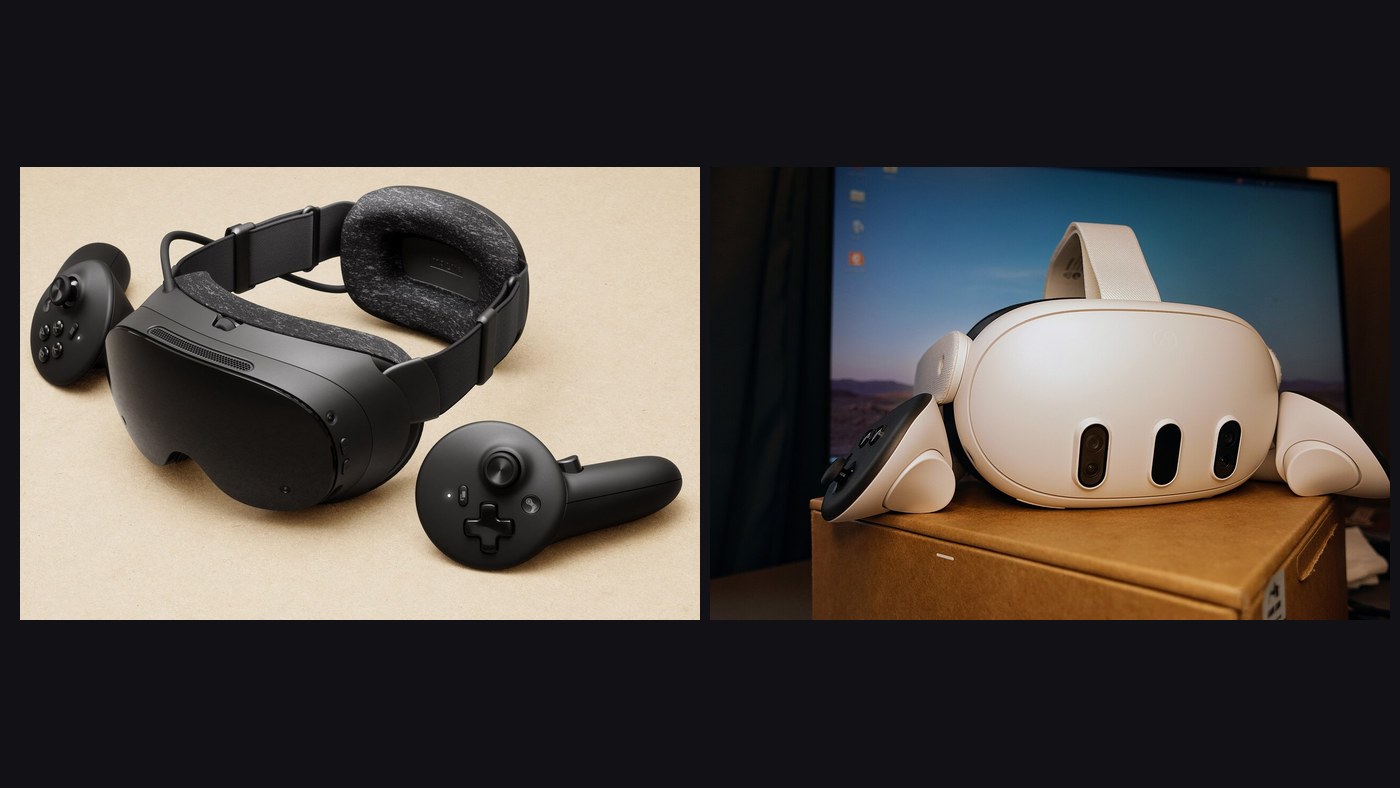

Road to VR’s September 14 specs breakdown puts the two headsets on the same table the day Valve locked pricing. The pattern is clear: Frame wins on PC streaming path, open software, and expandable hardware. Quest 3 still wins on price, color mixed reality, and a certified native library that does not need a lottery email.
Streaming path and silicon
Both headsets can do wireless PC VR. Quest 3 usually routes through a home Wi‑Fi router — PC to router to headset — which introduces a congestion point. Frame ships with a dedicated Wi‑Fi 6E 6 GHz dongle that plugs into the PC and cuts the router out of the path. Road to VR’s earlier hands-on called that streaming quality promising; full reviews landing today are still treating the software stack as early-access class.
On silicon, Frame pairs a Snapdragon 8 Gen 3 with 16 GB of unified LPDDR5. Quest 3 runs Snapdragon XR2 Gen 2 with 8 GB. Frame’s edge is not only clock speed. SteamOS plus Valve’s compatibility layers let it attempt x86 Windows and Linux titles from Steam in standalone mode. Quest 3 stays ARM-native for its store catalog — smaller surface area, much tighter certification.
Weight, displays, and the MR gap
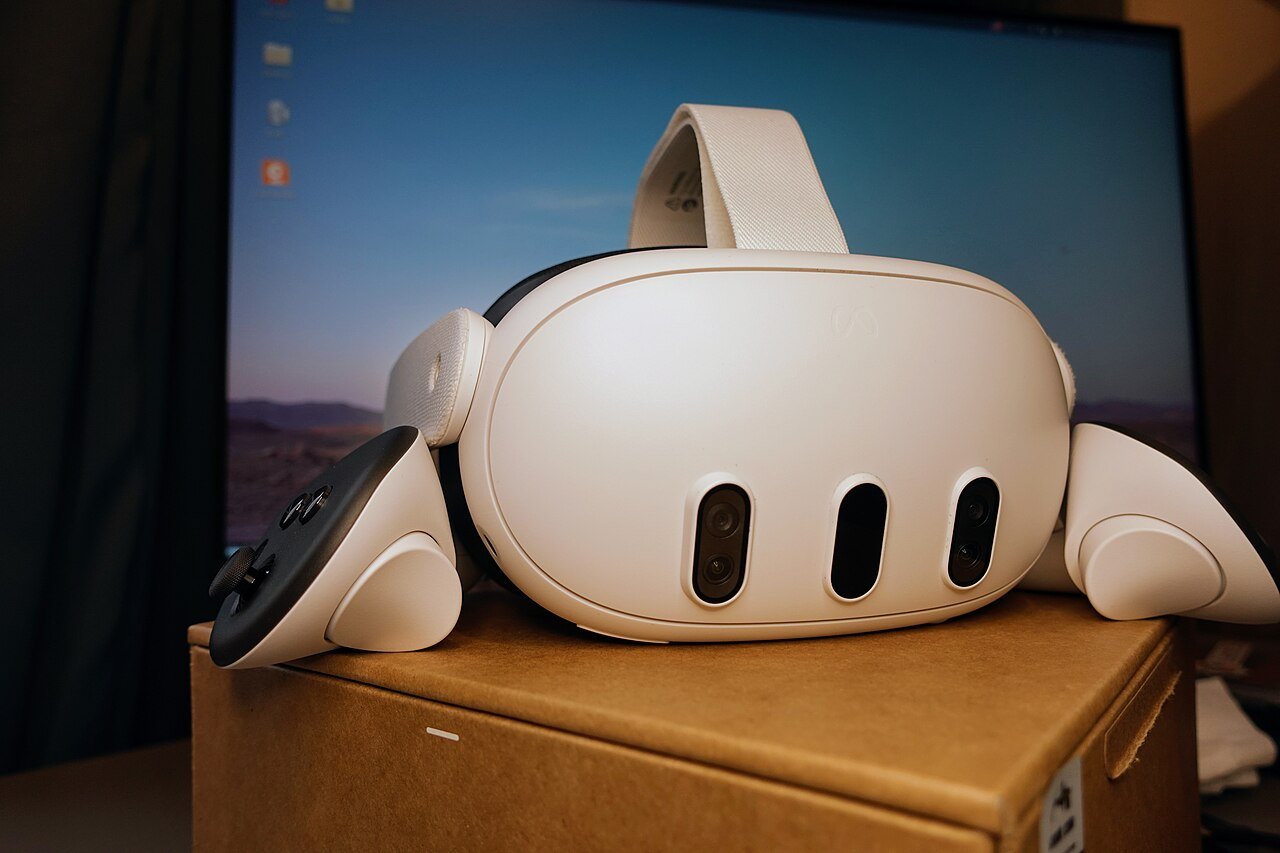
Road to VR lists Frame’s front core at about 190 g and the full package around 435 g with strap and rear battery. Quest 3 sits near 515 g with the stock cloth strap. Displays are close on paper: Frame at 2,160 × 2,160 per eye LCD, Quest 3 at 2,064 × 2,208, both in a 72–120 Hz band, with Frame advertising an experimental 144 Hz mode. Horizontal FOV claims land around 110 degrees for both.
Passthrough is the cleanest product split. Quest 3 ships color passthrough. Frame ships monochrome passthrough and points buyers at a third-party color camera — today’s Arcturus Vision Camera at $149 — if they want mixed reality that looks like 2024–2026 Quest. Frame counters with eye tracking and eye-driven foveated streaming for PC wireless; Quest 3 has no eye tracking and relies on fixed foveated rendering for on-device work.
Open box vs closed garden
Frame runs SteamOS and exposes a user-accessible gen4 PCIe expansion port plus a microSD slot (Road to VR cites up to 2 TB). Valve told the site SteamOS “would be great for other [VR] devices.” Quest’s Horizon OS stays locked. That is the philosophical fork: Frame is a Steam Deck that straps to your face; Quest 3 is a finished consumer appliance with the largest native VR storefront.
Price keeps the fork honest. Frame’s 256 GB model is $1,059; 1 TB is $1,299, with a reservation lottery through September 17 at 10 a.m. PT. Quest 3 still sells from $499–$599 depending on storage. Buy Frame if your library lives on Steam and you want the cleanest wireless PC VR path Valve has shipped. Stay on Quest 3 if color MR, a certified standalone catalog, and a sub‑$600 ticket matter more than open hardware.
Sources: Road to VR — Steam Frame vs. Quest 3 Specs; The Verge — Steam Frame pricing.