By Metaverse Watcher staff. Published October 26, 2026.
Samsung’s first smart glasses are now weeks away. A Samsung official told The Korea Herald on October 1 that the company’s Android XR “intelligent eyewear” will launch in NOVEMBER, and the most detailed leak so far, published by SammyGuru, fills in nearly everything Samsung has not said on stage: a 41-gram frame, a Snapdragon AR1 Gen 1 chip, a 12MP camera and around two dozen frame and color combinations from Gentle Monster and Warby Parker. What is still missing is the one number most buyers care about: the PRICE.
Below is what Samsung and Google have confirmed, what has only leaked, and how the glasses stack up against Meta’s lineup, which already owns this category.

What Samsung has officially confirmed
Samsung introduced the glasses at Google I/O in May and showed more designs at Galaxy Unpacked in London on July 22. The official spec sheet is short but concrete:
- No display. These are audio glasses. Gemini answers through open-ear speakers in the temples.
- Chip: Qualcomm Snapdragon AR1 Gen 1, with some processing handed off to the paired phone.
- Battery: up to nine hours per charge, plus up to seven more full charges from the case.
- Camera: a built-in camera for photos, point-of-view video and “ask about what you see” queries.
- Controls: voice (“Hey Google”), a touch surface on the frame, and wrist gestures through a connected Galaxy Watch.
- Phones: Google says the glasses pair with both Android and iOS, though some Galaxy features need a Samsung phone.
The software list comes largely from Google’s I/O 2026 announcement: turn-by-turn walking directions, calls and texts, summaries of missed messages, live speech and sign translation, photo capture with Nano Banana edits, multi-step tasks such as preparing a DoorDash order, and app actions through Uber and Mondly. Samsung adds a Galaxy-specific trick: capture a whiteboard or meeting and have the key points organized in Samsung Notes. Samsung’s fine print warns that translation, navigation and other features vary by language, region and app.
The leaked specs: 41 grams and a 12MP camera
SammyGuru’s October leak, later summarized by 9to5Google and Android Central, adds the hardware details Samsung has not published. Treat these as reported, not official:
| Spec | Reported figure |
|---|---|
| Weight | About 41 g with standard lenses |
| Chip | Snapdragon AR1 Gen 1 (confirmed by Samsung) |
| Memory / storage | 2GB RAM / 64GB |
| Camera | 12MP, 3K video at 30fps (Android Headlines reports a Sony IMX681 sensor) |
| Audio | Two open-ear speakers, four microphones |
| Battery | 155mAh, up to 9 hours; 72 hours total with case |
| Charging | 5W, per a UL Demko certification listing |
| Durability | IPX4 (glasses only; the case is not water-resistant) |
| FCC model numbers | SM-O200J and SM-O200P (filed September 30) |
The weight is the headline. Earlier renders and Korean reports put the glasses at 46 to 50 grams. At 41 grams they would be roughly 10 grams lighter than Meta’s camera-equipped Ray-Ban Meta (Gen 3), which Android Police puts at about 51.5 grams, and still a couple of grams under Meta’s camera-free Ray-Ban Meta Audio. Prescription lenses will add weight, and how much depends on the frame.
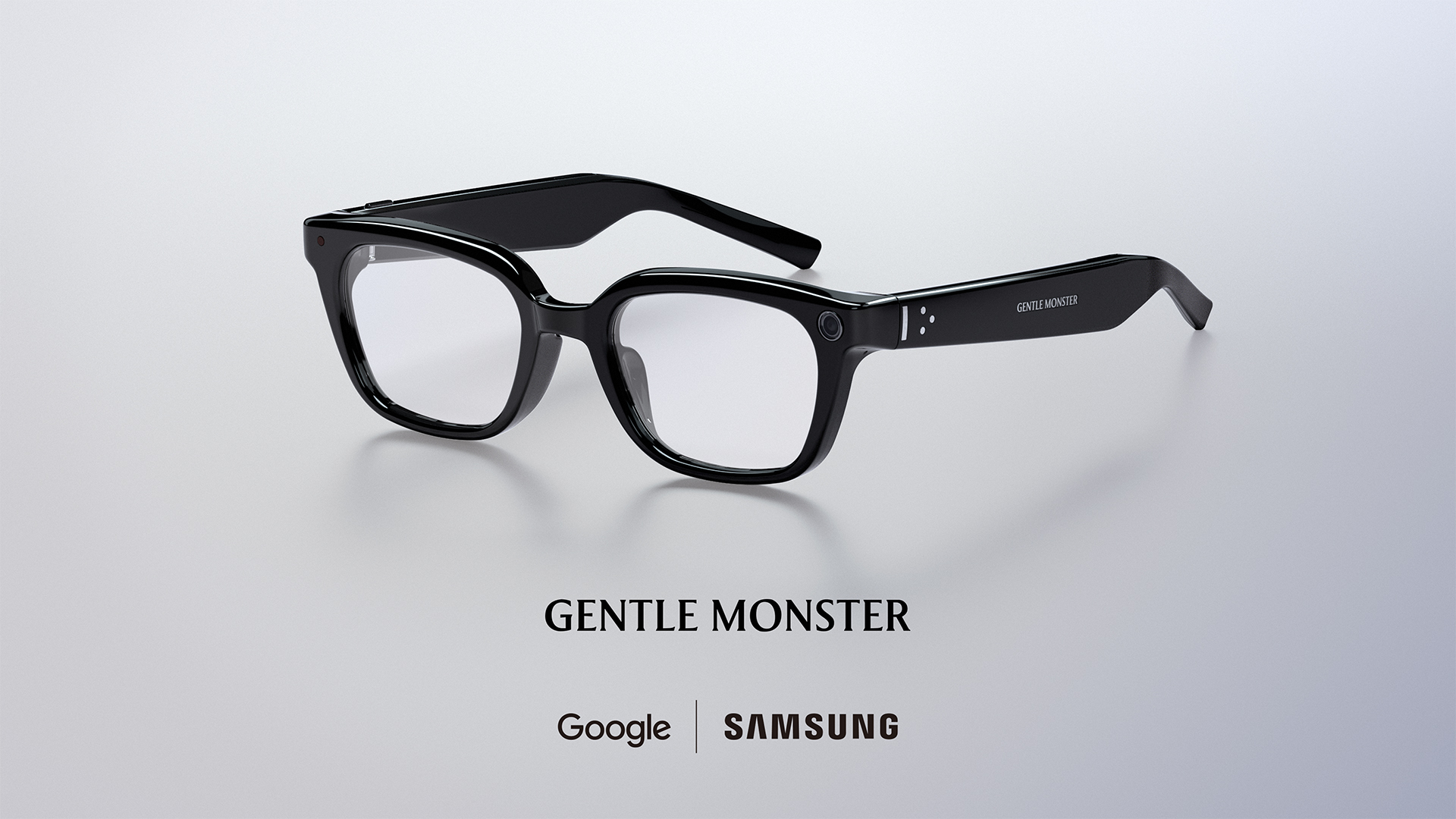
Styles: Gentle Monster and Warby Parker
Samsung is leaning on eyewear brands rather than its own logo. According to the leak, Gentle Monster will offer six frame styles across 16 variants, in colors including gray, purple, burgundy and brown. Warby Parker will offer three: Alden (rounded), Reid (squarer) and Wren (cat-eye), in black, brown and green. Gentle Monster frames are expected in South Korea and the US, with prescription lenses available; Warby Parker frames are reported as US-only at launch. Sales are expected through the two brands’ own stores and websites and Samsung Experience Stores in the US. Samsung itself only commits to “select markets.”
Price: still unannounced
Samsung has not set a price, and its official told The Korea Herald that pricing was still undecided as of October 1. SamMobile has reported a $349 to $499 US range, and Android Headlines previously reported $379 to $499; neither cited a source. Choi Jae-in, who leads Samsung’s XR R&D team, told The Korea Times the glasses would be priced at a “reasonable level” but sit initially in the premium range.
That range lands squarely on Meta. Ray-Ban Meta (Gen 3) starts at $449 and Ray-Ban Meta Audio at $349. Samsung’s own Galaxy XR headset, by contrast, launched in October 2025 at about $1,800, a reminder of how different the glasses market is from the headset market.
How Galaxy Glasses compare with Ray-Ban Meta
| Samsung Galaxy Glasses (reported) | Ray-Ban Meta (Gen 3) | |
|---|---|---|
| Display | None | None |
| Weight | ~41 g | ~51.5 g |
| Camera | 12MP, 3K30 | 12MP, 3K30 |
| Battery | 9 h / 72 h with case | Similar, per 9to5Google |
| Assistant | Gemini (Android XR) | Meta AI |
| Price | Not announced (rumored $349–$499) | From $449 |
On paper, the camera and battery are a near match for Meta’s third generation, which is the core challenge for Samsung. Its real differentiators are weight, Gemini’s hooks into Google Maps and Android app actions, and Galaxy extras like Samsung Notes and Galaxy Watch gestures. For readers weighing every option on the market, our best smart glasses of 2026 guide covers the Meta, XREAL, Even Realities and Snap alternatives.
Privacy safeguards
Samsung says the glasses carry an outward-facing recording LED and an inner one for the wearer, stop recording when taken off, and disable capture if the outer LED is covered. It also says audio, video and screen-sharing data are not used to train AI models. Those safeguards arrive as regulators look harder at camera glasses; Norway, for one, is weighing limits on them in some public places, as we explained in our look at the Norway smart glasses proposal.
What about display glasses?
Not this year. Google has said display glasses are part of the Android XR roadmap but has not named a maker or date. The Elec has reported that Samsung is developing a color microdisplay for a model that could arrive in the second half of 2027 or early 2028, and Android Authority found the codename “Haean” (SM-O500) in Samsung firmware. The supply chain is moving too: Samsung Display and LG are both building OLEDoS panels for AR glasses, as we reported in our AR glasses display supply chain story.
The Metaverse Watcher take
Samsung is not trying to out-spec Meta; on camera and battery it is matching it. The bet is that a lighter frame, two credible fashion brands and Gemini’s reach across Google services are enough to pull Android users away from a market leader on its third generation. Price will decide whether that bet works. At $349 it undercuts Ray-Ban Meta Gen 3 outright; at $499 Samsung is asking first-generation buyers to pay a premium for a lighter frame and a different assistant. If you own a Galaxy phone and are shopping now, waiting a few weeks for official pricing and the first reviews is the sensible move. For background on the platform these glasses run, see our guide to what Android XR is and which devices use it.
Sources: Samsung Newsroom, Samsung Newsroom (I/O 2026), Google, SammyGuru, 9to5Google, Android Police, Android Central.