AUTOMATON WEST published a September 15 email interview with Valve’s Steam Frame team — the most detailed developer briefing since preorders opened September 14. Interviewer Nobuaki Shibuya pressed on launch timing, the standalone Half-Life: Alyx build, APK-only titles, Lepton, and why passthrough ships monochrome.
This is not another price or review roundup. The Automaton Q&A puts Valve quotes on record about inventory constraints, software priorities, and how far SteamOS tooling travels beyond Frame.
Why Frame waited: storage and memory, then a production path
Asked why Steam Frame arrived now after memory-driven delays across Steam hardware, Valve pointed at supply rather than feature creep. “The delay came from storage and memory availability,” the team wrote. Two gates had to clear before launch: enough inventory to ship day one, and “a path to continue production over the life of the product.” Both took time.
Shibuya’s note ties that to the late-2025 surge in AI-sector memory and storage buying — a constraint other device makers have already cited. Valve’s framing is operational: launch stock alone was not enough; sustained manufacturing had to be credible.
Primary goal: comfortable wireless PC VR, with Deck lessons
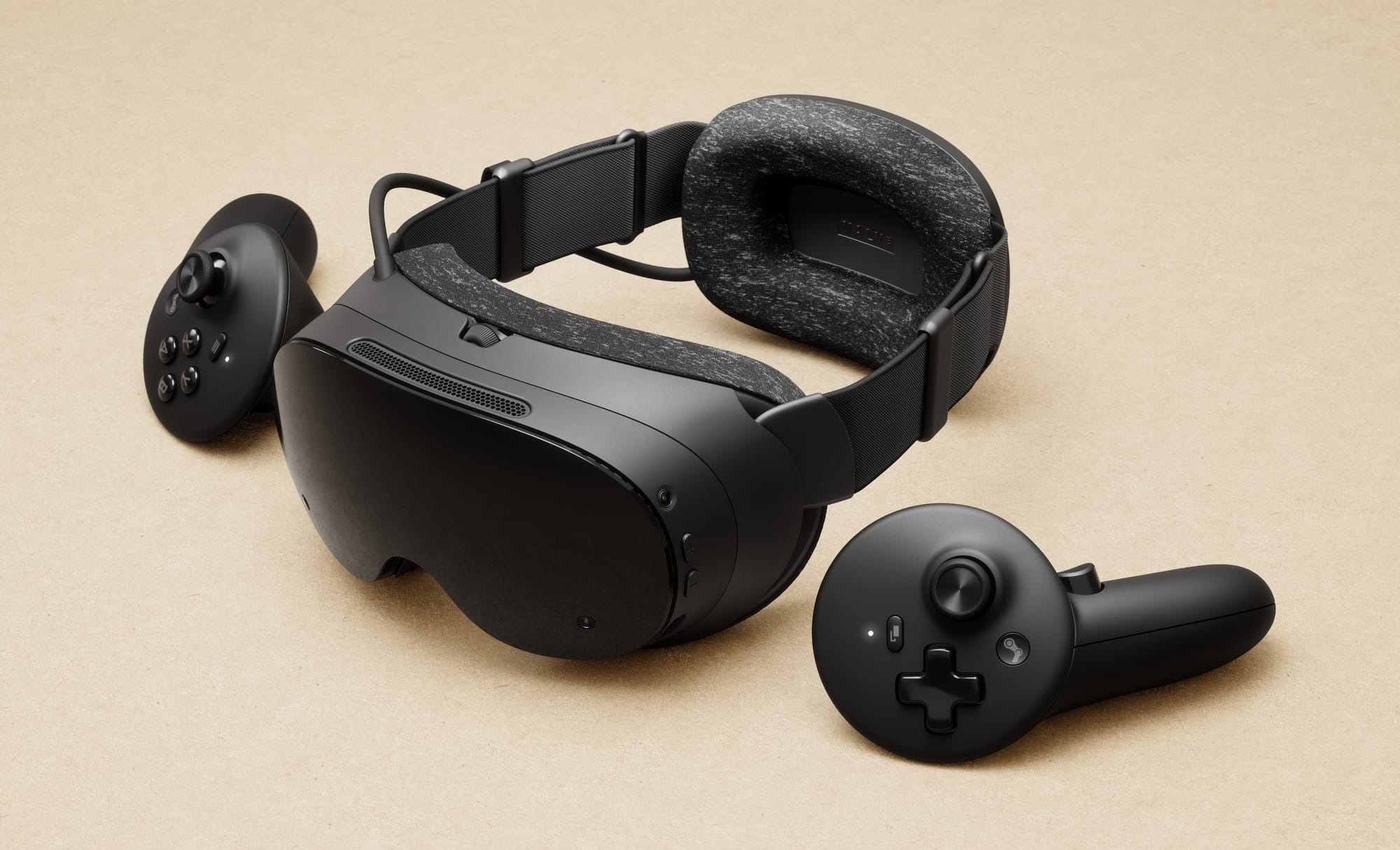
Valve’s stated priority for Frame is straightforward: “a comfortable, wireless PC VR headset.” Deck experience — accessibility, portability, ease of use, and tight Steam integration — “were equally important to Steam Frame,” the team said. That sits beside the headline standalone story: Frame still treats wireless PC VR as the design center, not a secondary mode.
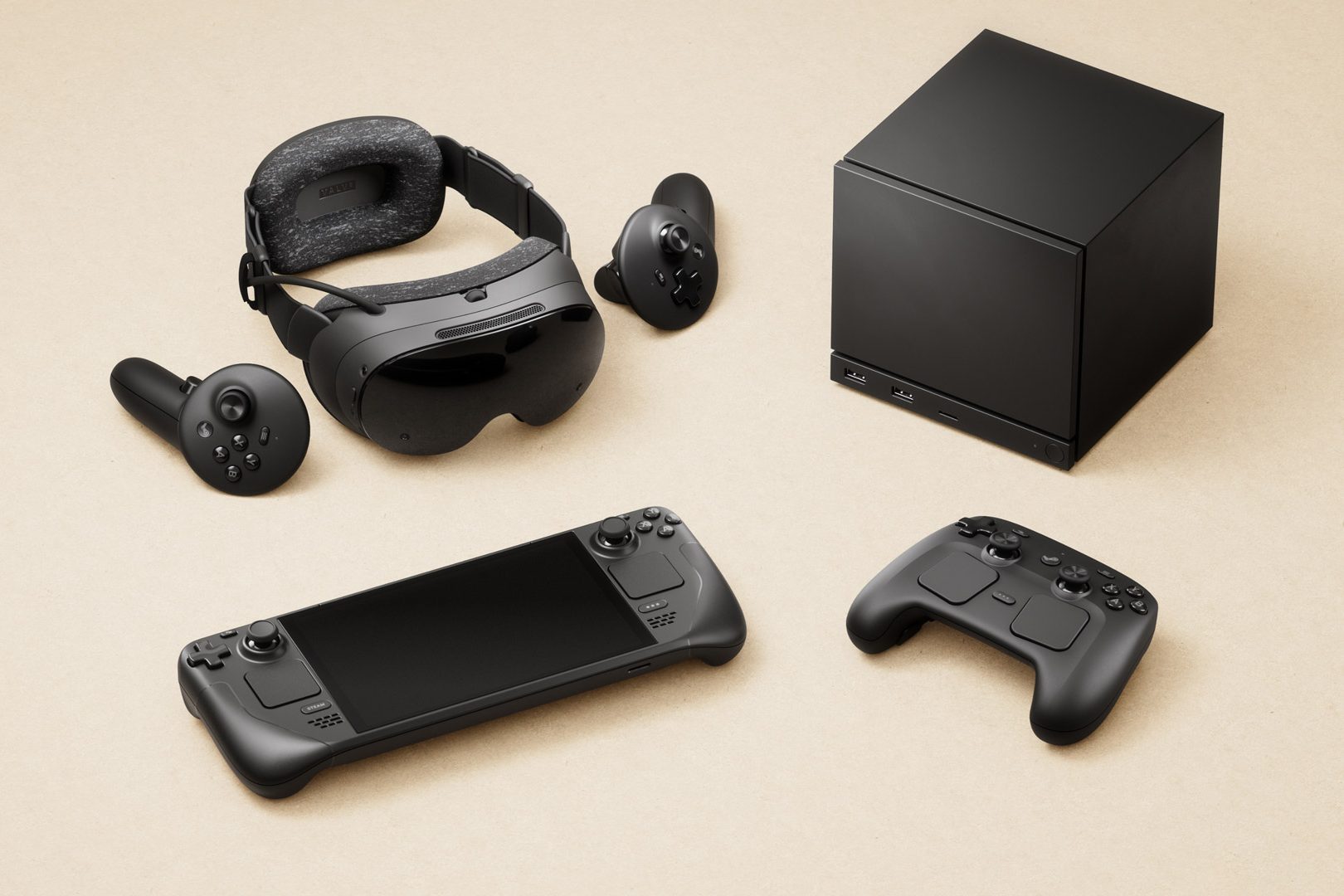
Non-VR Steam games on a virtual screen are not a side demo. Valve said the experience “informed both our software efforts (FEX, Proton) and core hardware decisions (for example, the controller inputs).” Controllers split standard gamepad buttons across left and right units so flatscreen Steam titles remain usable in-headset without breaking VR layouts.
Alyx standalone: unchanged assets, eye tracking, and catalog spillover
The surprise Valve wants on the record: “Surprisingly, the in-game assets are unchanged.” Early foveated rendering and eye-tracking experiments, plus 16 GB of RAM, convinced the team a standalone Alyx pass was even possible. Once it looked viable, Valve refused content edits so Workshop mods keep working and the experience stays aligned with the original PC launch.
The engineering was never only about one title. Alyx work drove graphics-driver improvements, new Vulkan features, and depth-reprojection options Valve expects to help “much of the VR catalog.” The company calls the Frame build “the best version of Alyx we’ve shipped yet” — and an intentional ceiling-raiser for what standalone content can look like.
APK-only titles welcome; Linux Arm64 is optional
On Quest-style APK exclusives that never target PC, Valve was explicit: partners who ship on Steam may “target any platforms they think make sense.” There is “no requirement that a game must have a PC target.”
Native Linux Arm64 is likewise a recommendation, not a mandate. Teams should pick “a target that makes sense for their project.” Alyx’s team chose Linux/ARM from familiarity; Valve says performance gaps across Windows executables, APKs, and native Arm64 “will be minimal in many cases.” The goal is least-effort content arrival, not a single canonical binary format.
Lepton and FEX stay Frame-first for now
Lepton (Android APKs on SteamOS) and FEX sit inside a broader SteamOS-on-varied-hardware ambition, but Valve refused to promise other devices yet. “At this time, we are focused on making that a great experience on Steam Frame,” the team wrote. Cross-device Android distribution and non-Valve SteamOS environments remain future talk, not a commitment in this interview.
Monochrome passthrough is intentional; RGB rides accessories
Monochrome tracking cameras for passthrough were “intentional and carefully considered” for system-level balance of power, weight, and other factors — not a last-minute cost cut alone. Valve knew some buyers would want RGB-optimized cameras, which is why Frame exposes a high-bandwidth, low-latency accessory path for third-party passthrough gear. Color MR is optional hardware, not the base SKU.
Sources: AUTOMATON WEST — Steam Frame developer interview (Nobuaki Shibuya, Sep 15, 2026), Metaverse Watcher — Frame preorders & pricing, Steam Frame store.