Updated October 30, 2026. By the Metaverse Watcher staff. Prices checked on Apple’s and Samsung’s U.S. stores on October 30, 2026.
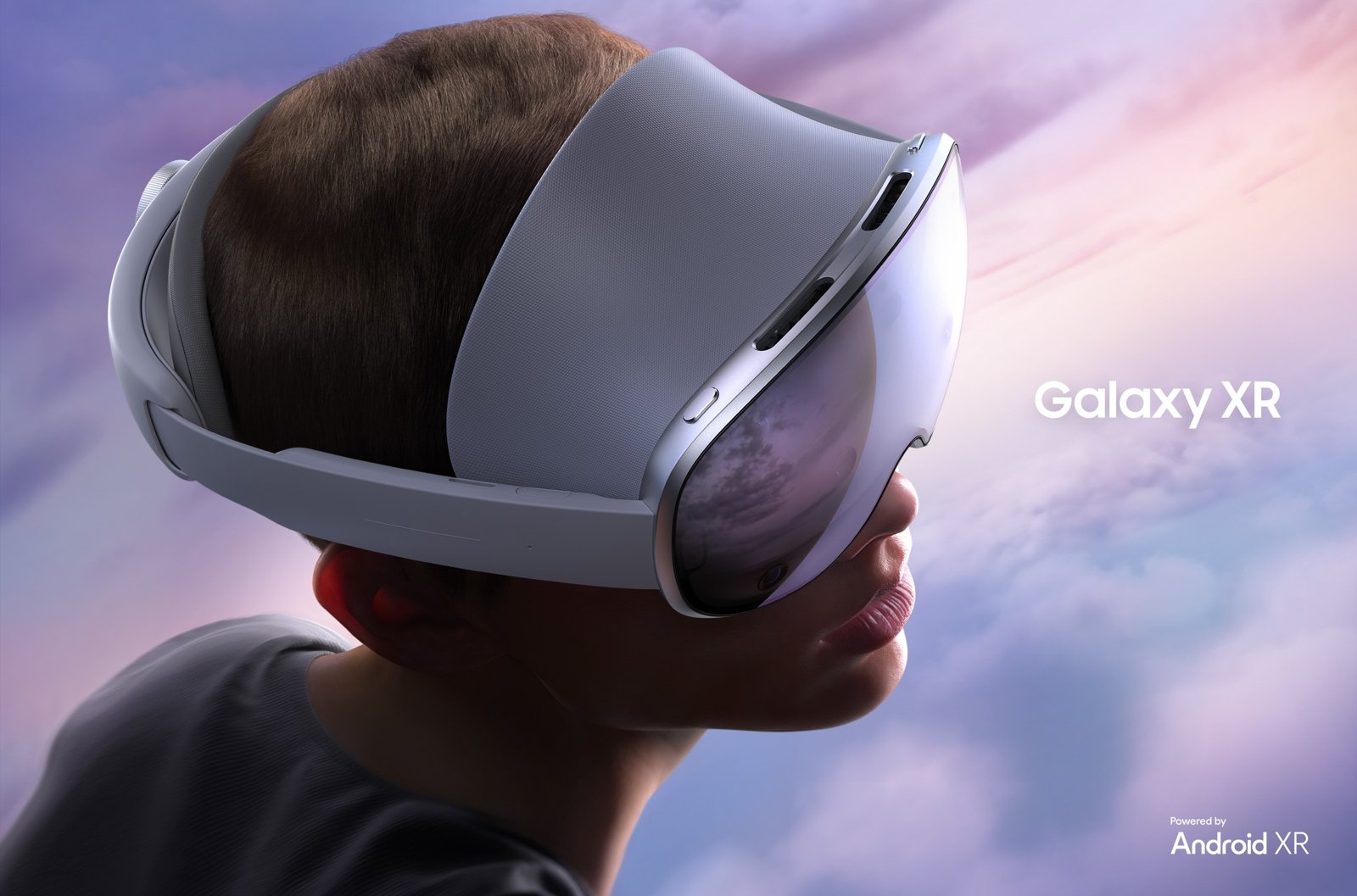
Samsung’s Galaxy XR and Apple Vision Pro are the two premium mixed-reality headsets most people shortlist when they want something more capable than a Meta Quest. They look alike on paper: both use micro-OLED displays, both are controlled mainly with your eyes, hands and voice, and both run a separate battery pack on a cable. The differences that matter are price, comfort, software and which phone and computer you already own. This guide compares them point by point and ends with a clear recommendation.
The short answer
Buy Galaxy XR if you want a premium eye-and-hand headset at roughly HALF the price, use an Android phone or Windows PC, or care about games and open standards. Buy Vision Pro if you live in Apple’s ecosystem, want the best passthrough and the smoothest Mac integration, and the extra $1,900 is not a deciding factor. If gaming is your main goal, neither is the obvious pick; see our Steam Frame vs Quest 3 guide instead.
Galaxy XR vs Vision Pro: price
Samsung’s U.S. store lists Galaxy XR at $1,799.99 for the only configuration, 16GB of memory and 256GB of storage. In the UK it launched on July 10, 2026 at £1,699, according to Samsung’s UK newsroom.
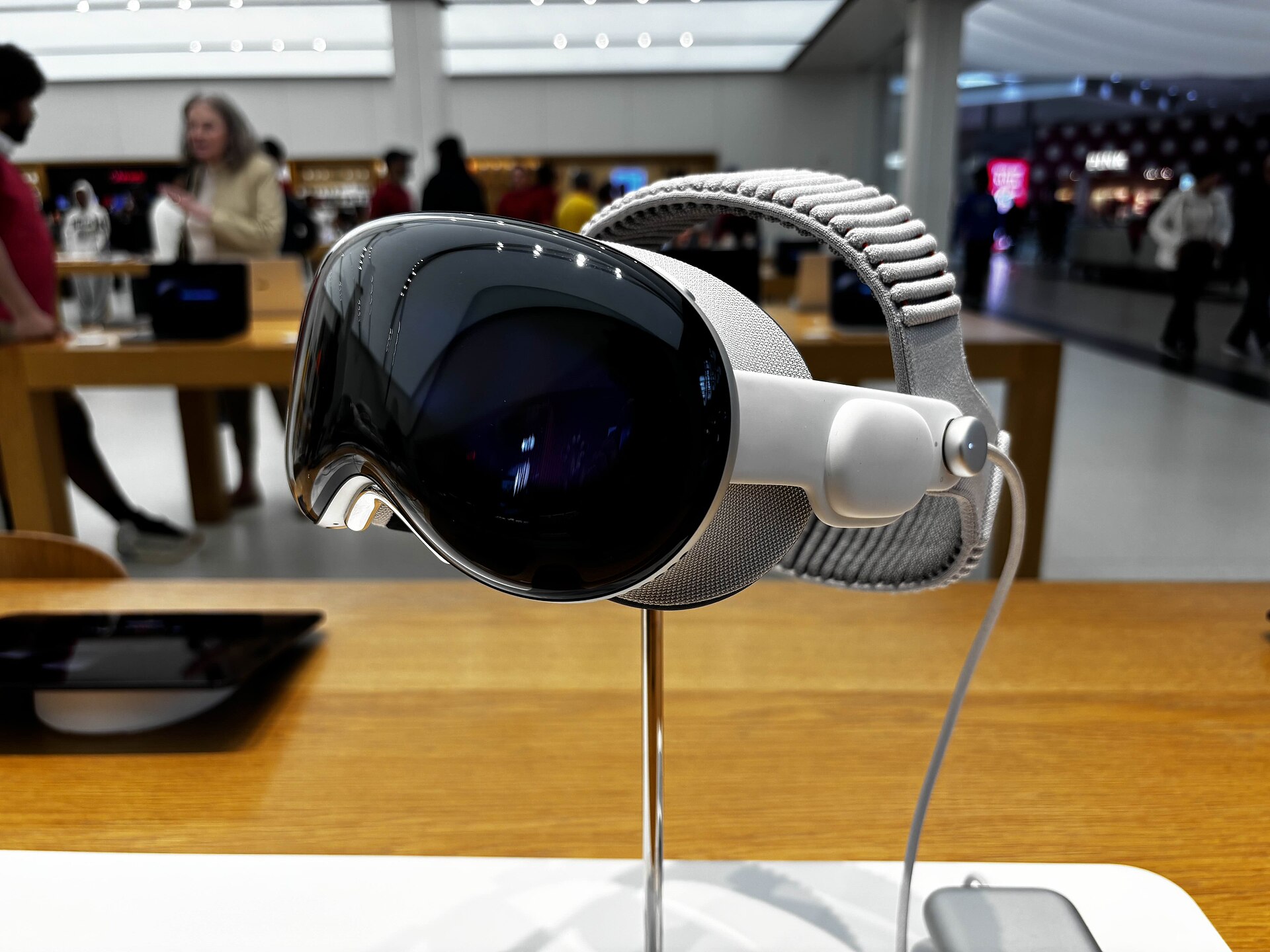
Apple’s U.S. store lists Vision Pro (M5) at $3,699 for 256GB, $3,899 for 512GB and $4,199 for 1TB. Those prices are $200 higher than at launch; Apple raised all three tiers in June 2026, as we explained in our Apple Vision Pro 2026 guide.
Like for like at 256GB, Vision Pro costs $1,899.01 more, or about 2.05 times the price of Galaxy XR. Both companies sell prescription inserts separately, so glasses wearers should budget extra for either headset.
Specs side by side
The figures below come from Apple’s official Vision Pro tech specs and Samsung’s Galaxy XR spec sheet, as summarized in our Android XR explainer.
| Spec | Samsung Galaxy XR | Apple Vision Pro (M5) |
|---|---|---|
| U.S. price (checked Oct 30, 2026) | $1,799.99 (256GB) | $3,699 (256GB), $3,899 (512GB), $4,199 (1TB) |
| Operating system | Android XR (Google) | visionOS 27 (Apple) |
| Chip | Qualcomm Snapdragon XR2+ Gen 2 | Apple M5 plus R1 sensor chip |
| Memory | 16GB | 16GB unified memory |
| Displays | Micro-OLED, 3,552 x 3,840 per eye (about 27 million pixels) | Micro-OLED, 23 million pixels total |
| Refresh rate | 60Hz, 72Hz (default), up to 90Hz | 90Hz, 96Hz, 100Hz, 120Hz |
| Field of view (official) | 109° horizontal, 100° vertical | Not published by Apple |
| Headset weight | 545g with forehead cushion | 750–800g with Light Seal and band |
| Battery pack | 302g, external | 353g, external |
| Battery life (rated) | Up to 2 hours general use, 2.5 hours video | Up to 2.5 hours general use, 3 hours video |
| Eye tracking | Yes, four cameras; iris unlock | Yes, four cameras; Optic ID |
| Controllers | Optional, sold separately | None included; supports PS VR2 Sense controllers and Logitech Muse |
Displays and visuals
On raw pixel count, Galaxy XR is ahead: Samsung quotes about 27 million pixels against Apple’s 23 million. Apple, however, runs its panels at up to 120Hz, and its R1 chip delivers passthrough at a quoted 12 milliseconds photon to photon. Reviewers have consistently rated Vision Pro’s passthrough and color accuracy as the best in the category. Galaxy XR defaults to 72Hz, which saves battery but can look less fluid in fast head movement; you can raise it to 90Hz.
In practice, both headsets are sharp enough to read small text on virtual monitors, which is the use case that separates this tier from a Quest 3. The deciding factor for most buyers will be comfort and software, not the panel.
Comfort and battery
Weight is Galaxy XR’s clearest win. At 545 grams, it is roughly 200 to 250 grams lighter than Vision Pro on your face, and its open, halo-style design puts less pressure on the cheeks. Apple’s Dual Knit Band, introduced with the M5 model, adds a top strap that spreads the load better than the original Solo Knit Band, but Vision Pro is still the heavier headset for long sessions.
Battery life favors Apple by about 30 minutes: up to 2.5 hours of general use versus Samsung’s 2 hours. Both can run while plugged in, which is how most people use them for long work sessions or films.
Software and apps
This is where the two headsets differ most. Android XR gives Galaxy XR access to Google Play, including 3D versions of YouTube, Maps, Photos, Chrome and Meet, plus ordinary Android phone and tablet apps in flat windows. Gemini can see what you see through the cameras and answer questions about it. Google also supports OpenXR, WebXR and Unity, so studios can bring games over from Quest and PC VR with less work. For the full picture, read What Is Android XR?
visionOS 27, released on September 14, 2026, brought the new Siri AI, Visual Intelligence, curved windows and new Environments to Vision Pro. Apple’s strengths are Mac Virtual Display, which turns a Mac into a large high-refresh virtual screen, compatibility with most iPad apps, and the best library of 3D films and Apple Immersive Video. Native app growth has been slow, though, and Apple’s platform is closed to other hardware makers. See our visionOS 27.2 coverage for the latest update.
Games
Neither headset is a gaming machine in the way a Quest or Steam Frame is. Galaxy XR has the more OPEN path: OpenXR support makes ports easier, and optional controllers make traditional VR games playable. Vision Pro’s native game library has barely moved in a year, with Apple Arcade carrying most titles, although PS VR2 Sense controller support and community projects help. Our report on running Quest games on Vision Pro shows how far enthusiasts are pushing it. If games are the point, our best VR headsets of 2026 ranking will serve you better.
Ecosystem: the real deciding factor
Vision Pro is at its best next to an iPhone, iPad and Mac. Spatial photos and videos shot on an iPhone, Mac Virtual Display, iCloud and FaceTime all work with very little setup. Galaxy XR is the more natural choice for Android phone owners and Windows users, and it ties into Google accounts, Gemini and Google Play. Neither headset is locked to a phone, but each one rewards you for owning the matching devices.
Which should you buy?
- Choose Galaxy XR if you want a premium headset for productivity and media at $1,799.99, prefer a lighter headset, use Android or Windows, or want easier access to ported VR games.
- Choose Vision Pro if you already use a Mac and iPhone daily, watch a lot of 3D and immersive video, or are building apps for visionOS. Pick the 256GB model unless you plan to store large spatial video libraries.
- Choose neither if you mainly want VR games, or if you are waiting for lighter glasses. Samsung’s camera-equipped Android XR glasses are due in November, and we track every upcoming pair in our upcoming smart glasses 2026–2027 guide.
Try before you buy if you can. Apple offers in-store Vision Pro demos, which also help with Light Seal sizing, and Samsung has run Galaxy XR demos at selected stores. Fit matters more on these headsets than on any spec sheet.
Quick answers
Is Galaxy XR cheaper than Vision Pro? Yes. At $1,799.99 versus $3,699 for the base 256GB models, Galaxy XR costs about half as much in the U.S.
Which has the better display? Galaxy XR has more pixels (about 27 million versus 23 million). Vision Pro has higher refresh rates of up to 120Hz and is widely rated as having the better passthrough.
Which is lighter? Galaxy XR, at 545 grams versus 750 to 800 grams for Vision Pro, not counting either battery pack.
Can I use either with my iPhone? Vision Pro is built around Apple’s ecosystem. Galaxy XR works best with a Google account and Android devices.
Related coverage: Apple Vision Pro in 2026: Price, Specs and Should You Buy?, What Is Android XR?, Best VR Headsets 2026 and Quest 3 vs Quest 3S.